A guide to sealing outdoor surfaces in Mallorca
Almost every problem we see on paving and terraces around the island has the same root: the layer that was meant to protect the surface wore out and nobody renewed it. This guide sums up what damages each surface, which protection suits it and how often it has to be renewed.
Guides
What does your surface need?
Choose a surface to see what damages it, how it is protected and how often.
Stamped concrete
- What damages it
- Sun and UV, salt, algae in shade, aggressive washing.
- How it is protected
- Two coats of acrylic sealer, with a UV filter and anti-slip additive where needed.
- How often
- Every 2 to 4 years; sooner by the pool or on the seafront.
Outdoor microcement
- What damages it
- Standing water, scratches, sun, chlorine.
- How it is protected
- Aliphatic polyurethane sealer, renewed before it wears through.
- How often
- Every 2 to 4 years outdoors.
Tiled terrace
- What damages it
- Open joints, hollow tiles, drains, parapets.
- How it is protected
- A liquid membrane over the tiles, or new waterproofing under a new floor.
- How often
- Joints and drains checked every year; the membrane according to the system.
Natural stone and marès
- What damages it
- Water, stains, algae, salt, efflorescence.
- How it is protected
- A breathable water repellent or impregnator, on clean, dry stone.
- How often
- Every 3 to 6 years depending on exposure.
Pavers
- What damages it
- Weeds in the joints, stains, joints washed out by rain.
- How it is protected
- Cleaning, refilling the joints and a stain protector.
- How often
- Every 3 to 5 years.
Private asphalt
- What damages it
- Sun, cracks, water getting in through them, roots.
- How it is protected
- Crack sealing, patching and slurry or a surface seal.
- How often
- Cracks every year; the surface every 3 to 5 years.
Plain or polished concrete
- What damages it
- Dust, stains, wear, salt.
- How it is protected
- Sealer or hardener depending on use.
- How often
- Every 3 to 5 years.
Microcement or tiles: which suits each case
Microcement versus tiles in bathrooms, kitchens, floors and outdoors: looks, building work, thickness, showers, wear, maintenance, repairs and cost.
Read the guide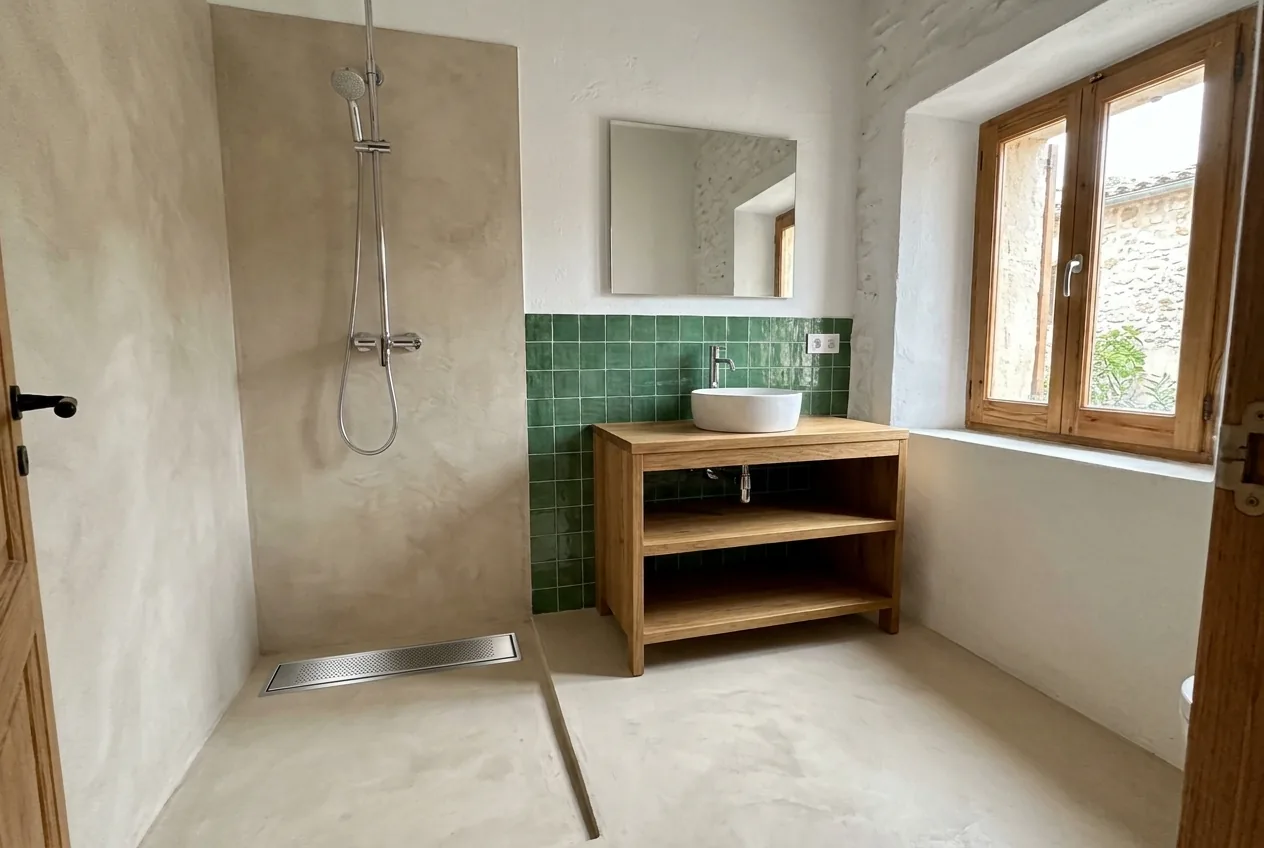
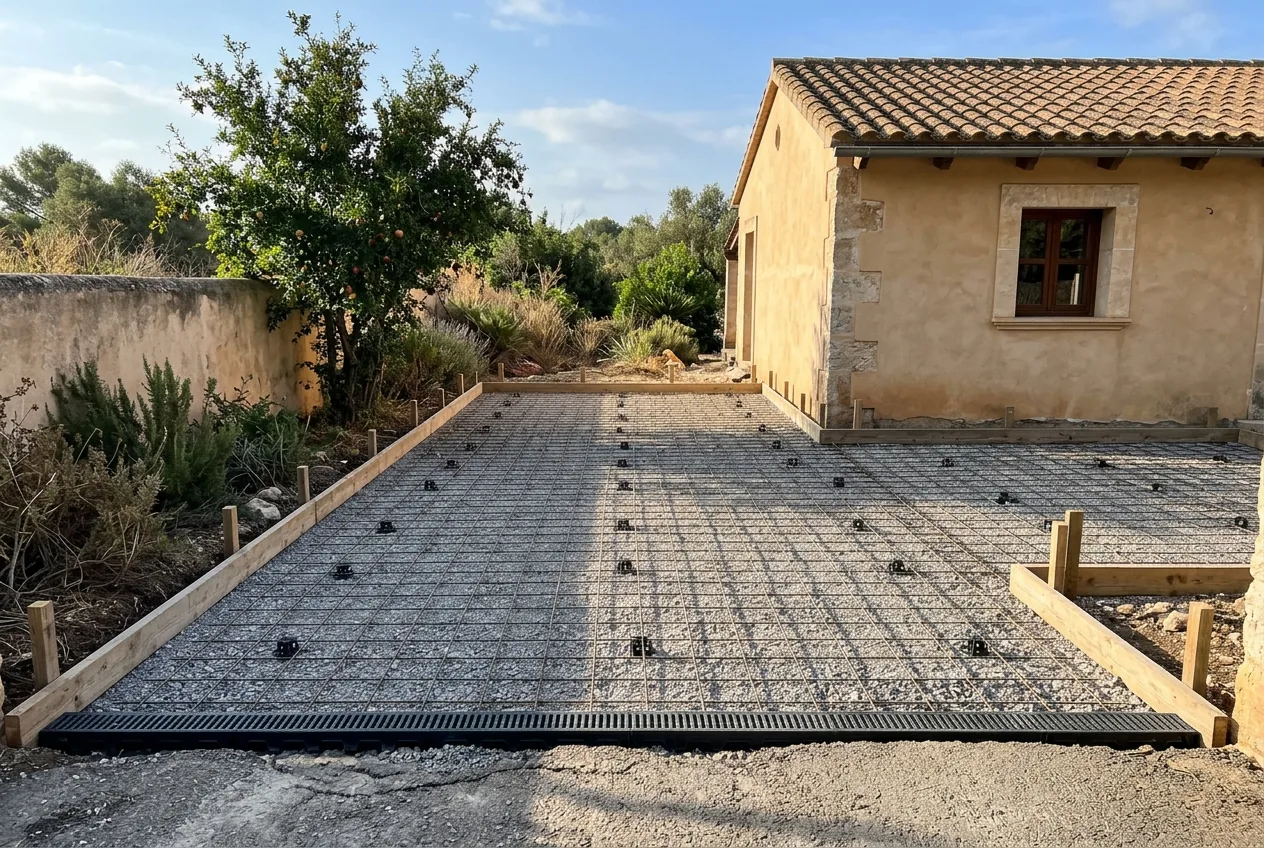
Stamped concrete quotes: what goes into them and how to compare them
The items that make up the price of stamped concrete per square metre in Mallorca, how to read a quote, why cheap ones cut the sub-base or the sealer, and how to compare.
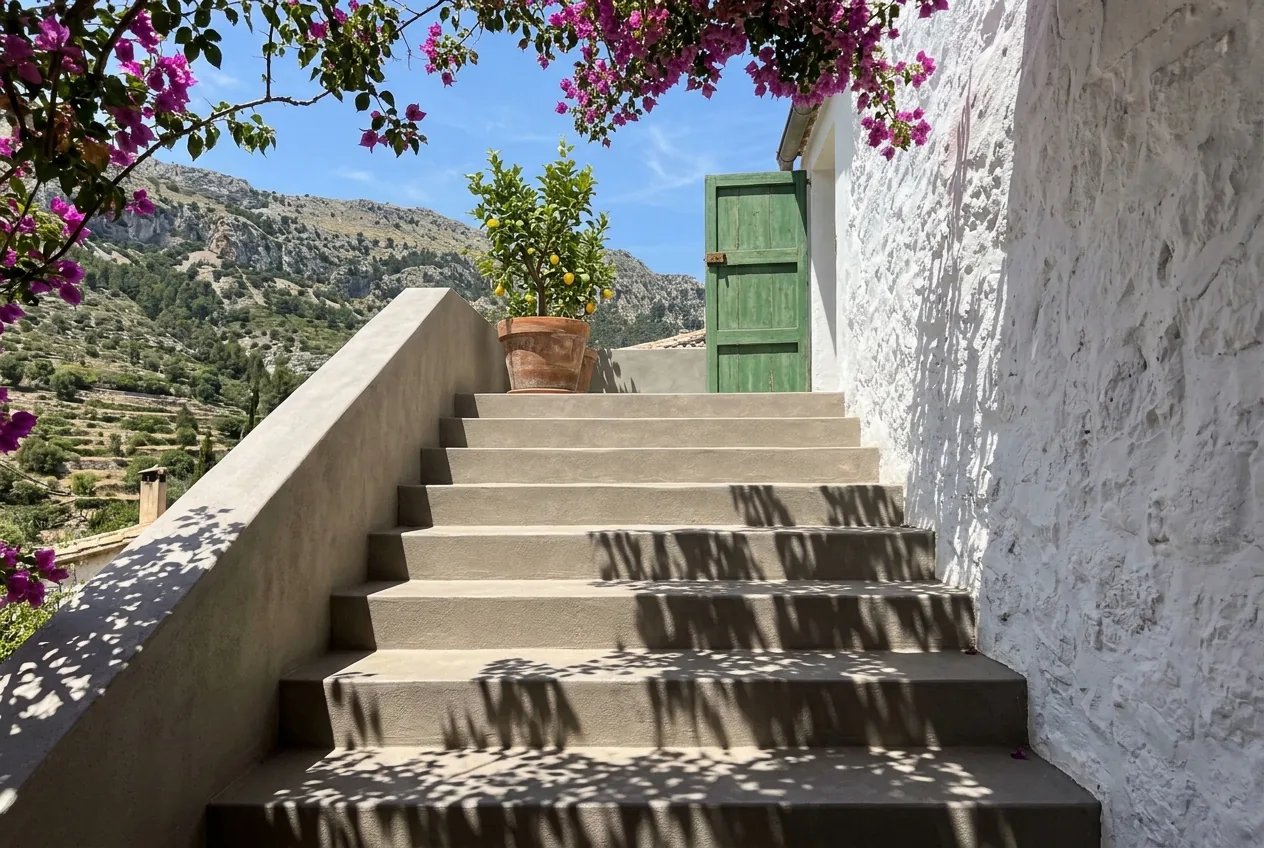
Does microcement last outdoors? Sun, salt, rain and pools
What microcement withstands outdoors and what it does not: sun, salt air, pools, torrential rain, thermal movement, sealers, slip resistance, maintenance and the base.
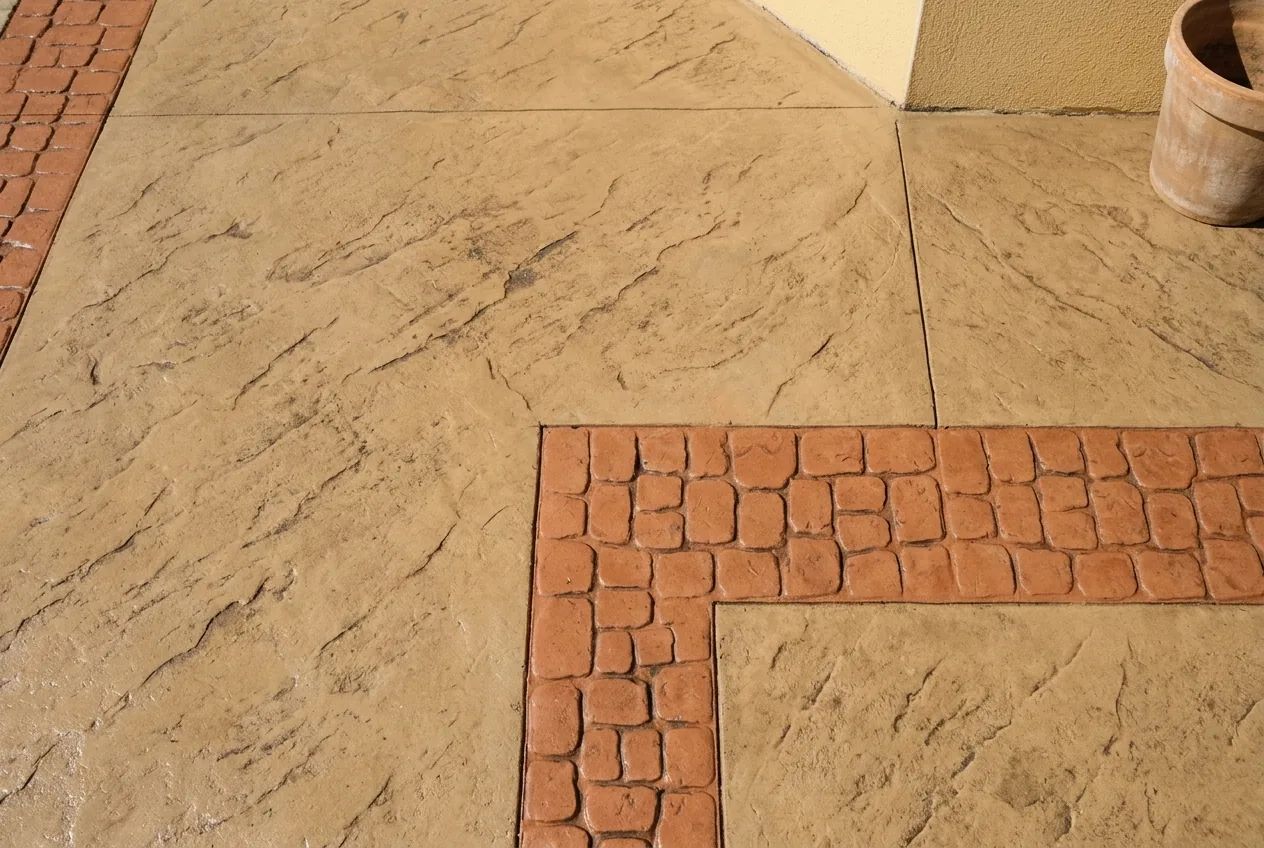
How to choose the colour and pattern of your stamped concrete
How to choose the colour and pattern of stamped concrete: colour and pattern families, how the colour is built up, how it ages in the sun and what suits houses in Mallorca.
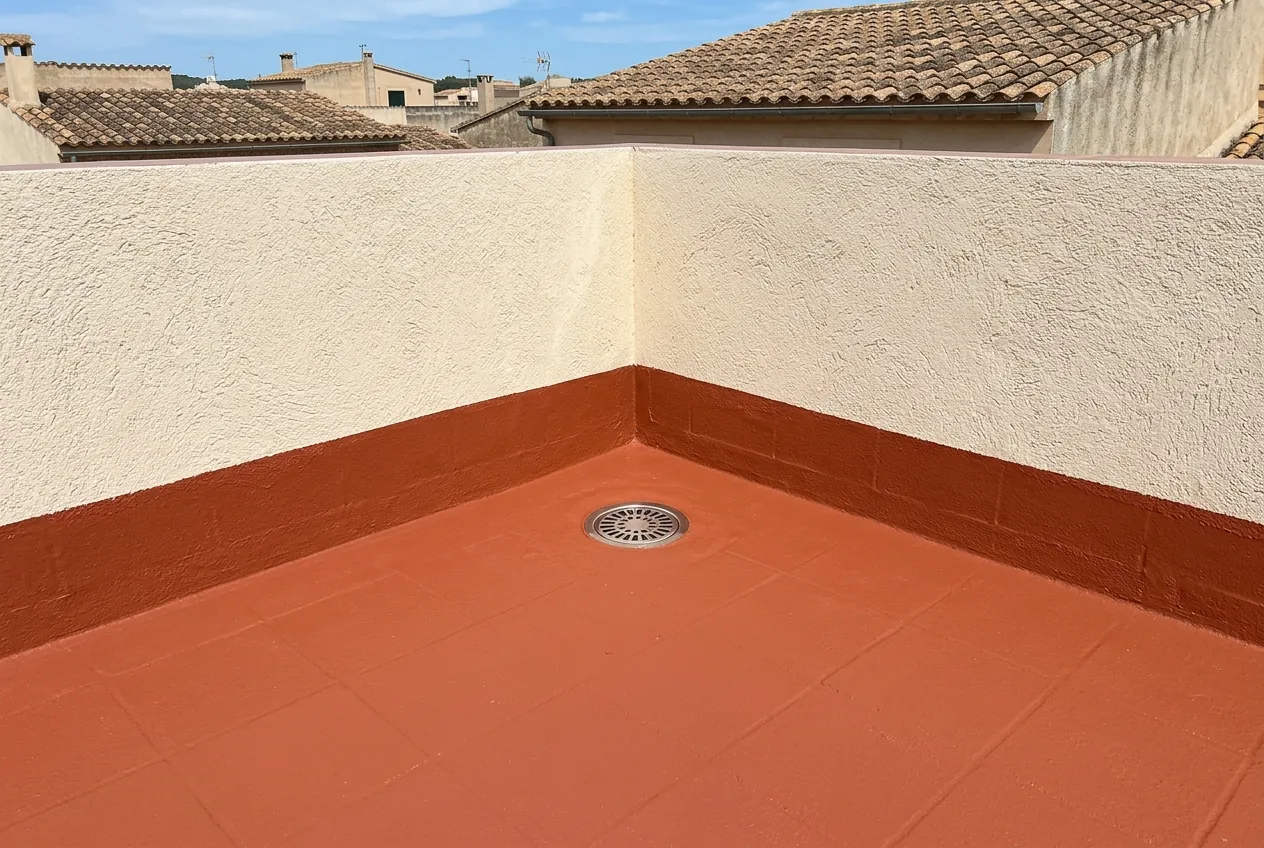
Waterproofing over the existing tiles: when it works and when it does not
When terrace waterproofing with a liquid membrane over the tiles works, when it does not, how the surface is prepared, what happens with drains and falls, and how long it lasts.
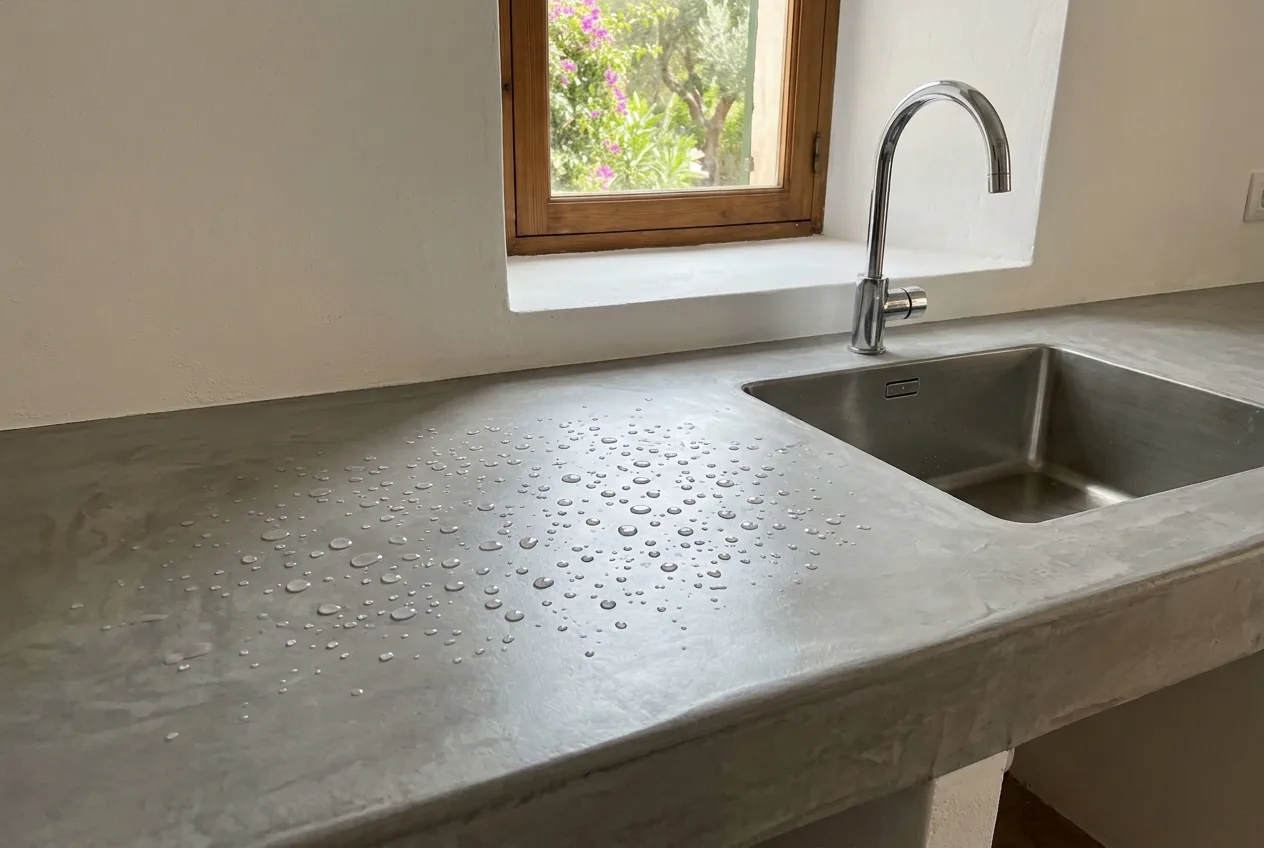
How to clean and care for microcement
Everyday cleaning of microcement, products that damage the sealer, limescale and stains, kitchens and outdoors, the water test and how often the sealer is renewed.
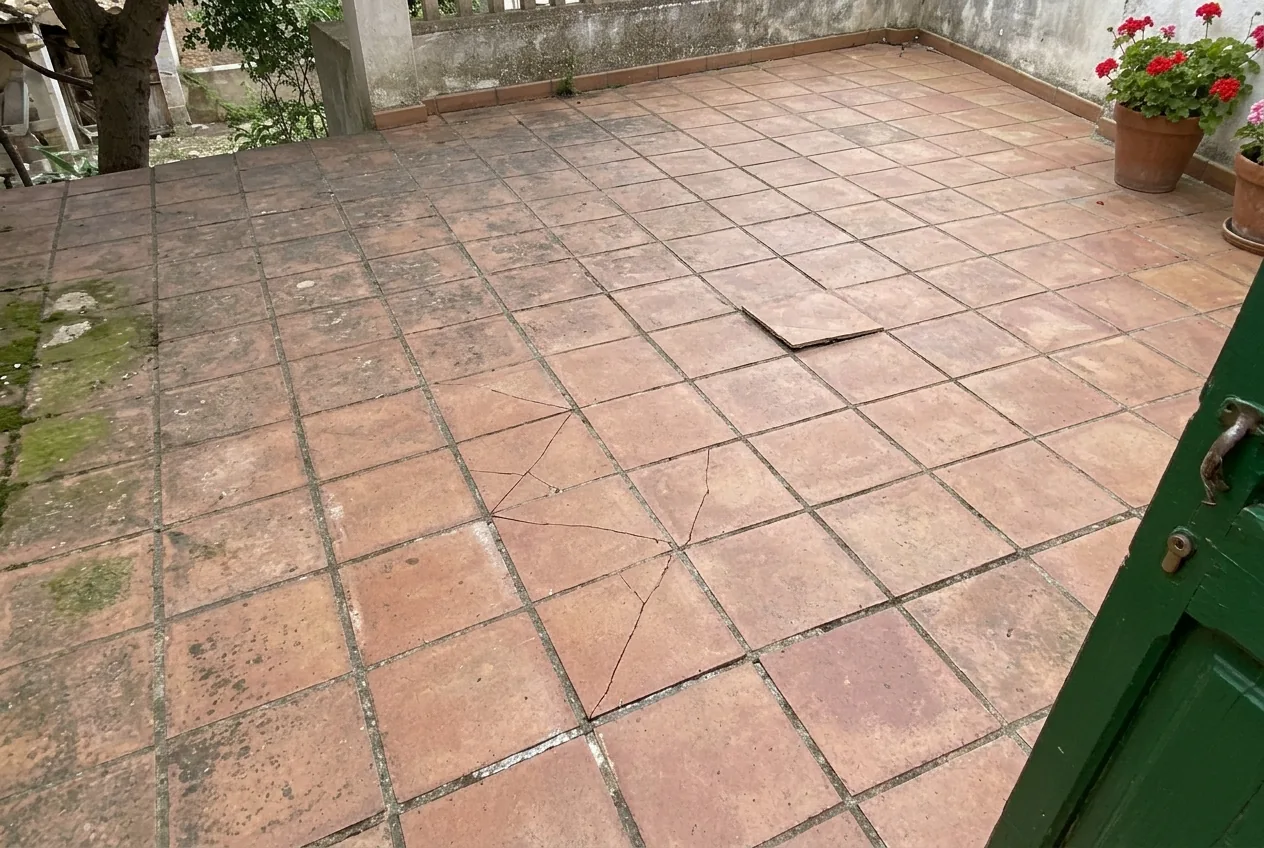
Stamped concrete or tiles for terraces and pools
Stamped concrete versus ceramic and stone tiles on terraces and pool surrounds: joints, slip resistance, heat, cost factors, repairs and lifespan.
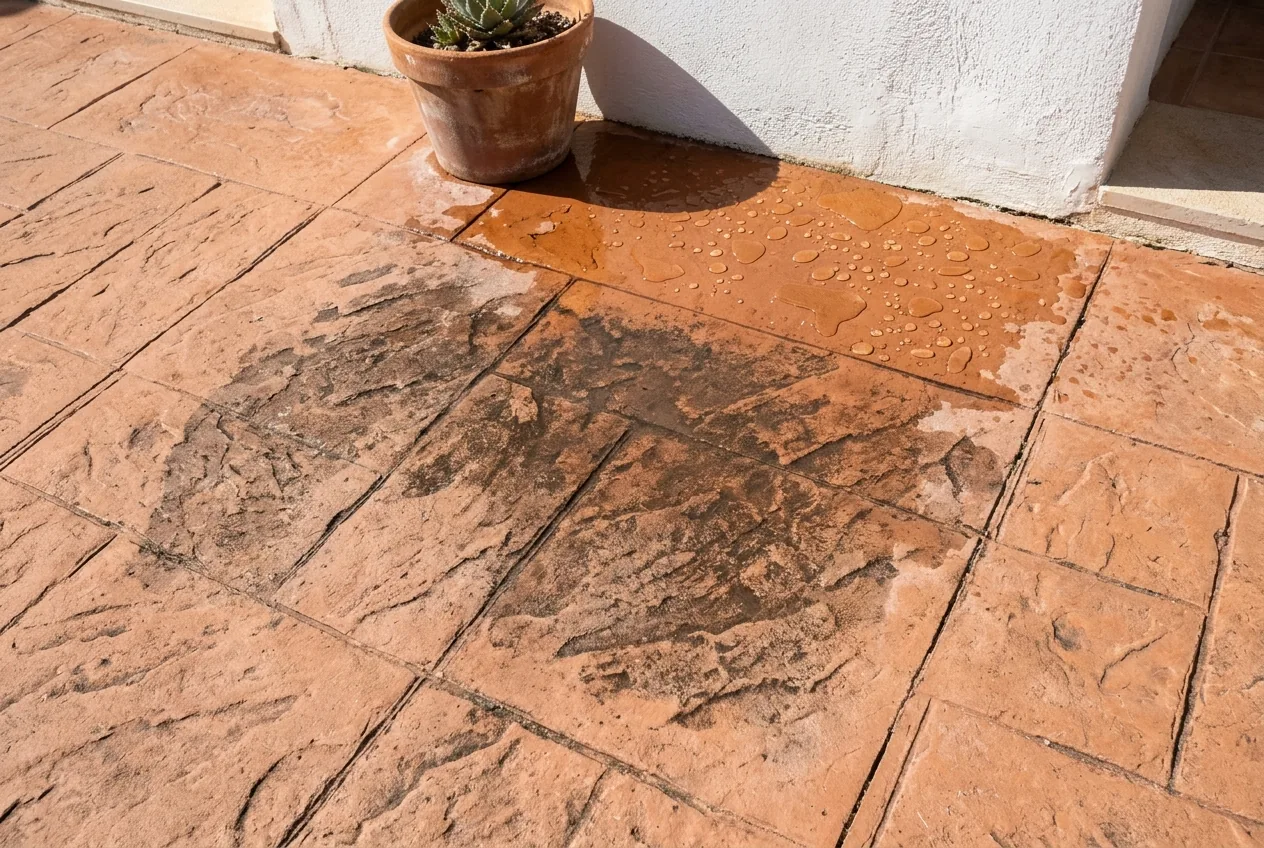
How to seal stamped concrete and how often to reseal it
The resealing cycle for stamped concrete in Mallorca, the signs that it is due, the right steps and the mistakes that ruin a coat of sealer.

Microcement or epoxy resin: the differences and when to choose each
Microcement and epoxy resin compared in homes, on terraces, in garages and in commercial spaces: what each is, looks, sun, chemicals, damp, grip, repairs and cost.
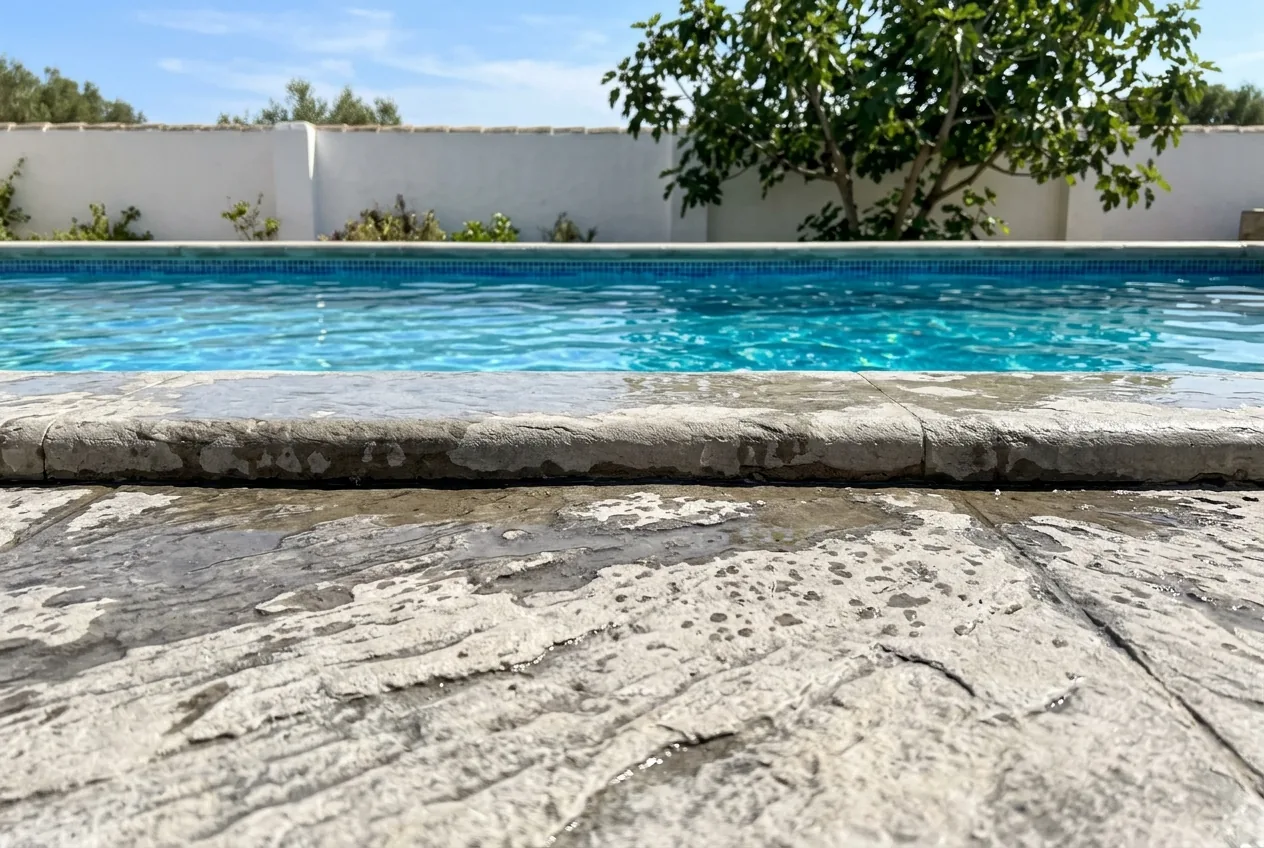
Non-slip floors around the pool
What slip class 3 requires around a pool, how textures and additives achieve it, and how stamped concrete, microcement, natural stone and porcelain tiles compare.

White patches and grey areas on stamped concrete
Four different causes make stamped concrete look white or grey, each with its own diagnostic test and its own solution.
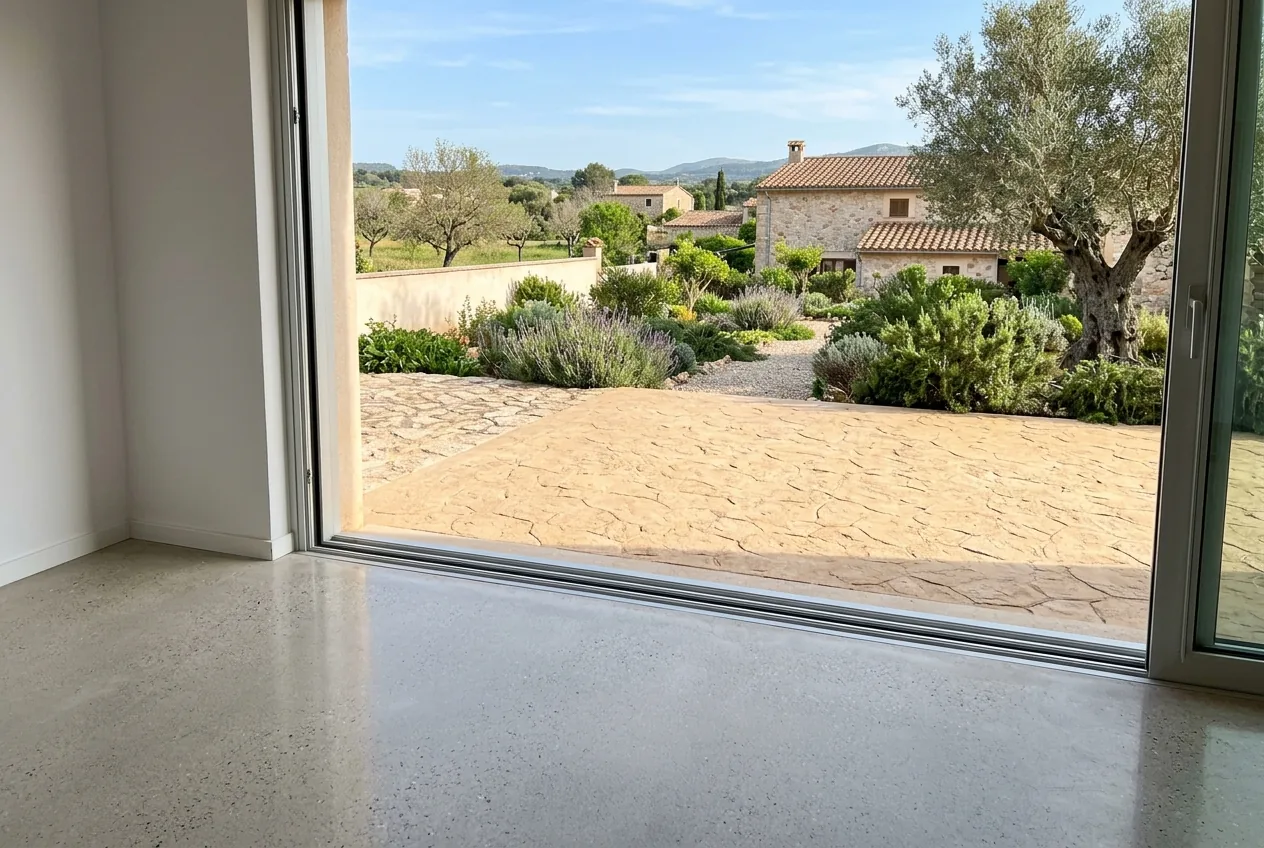
Stamped or polished concrete: which to choose
Stamped and polished concrete compared on terraces, pool surrounds, driveways and interiors: looks, grip, heat, maintenance and repairs.
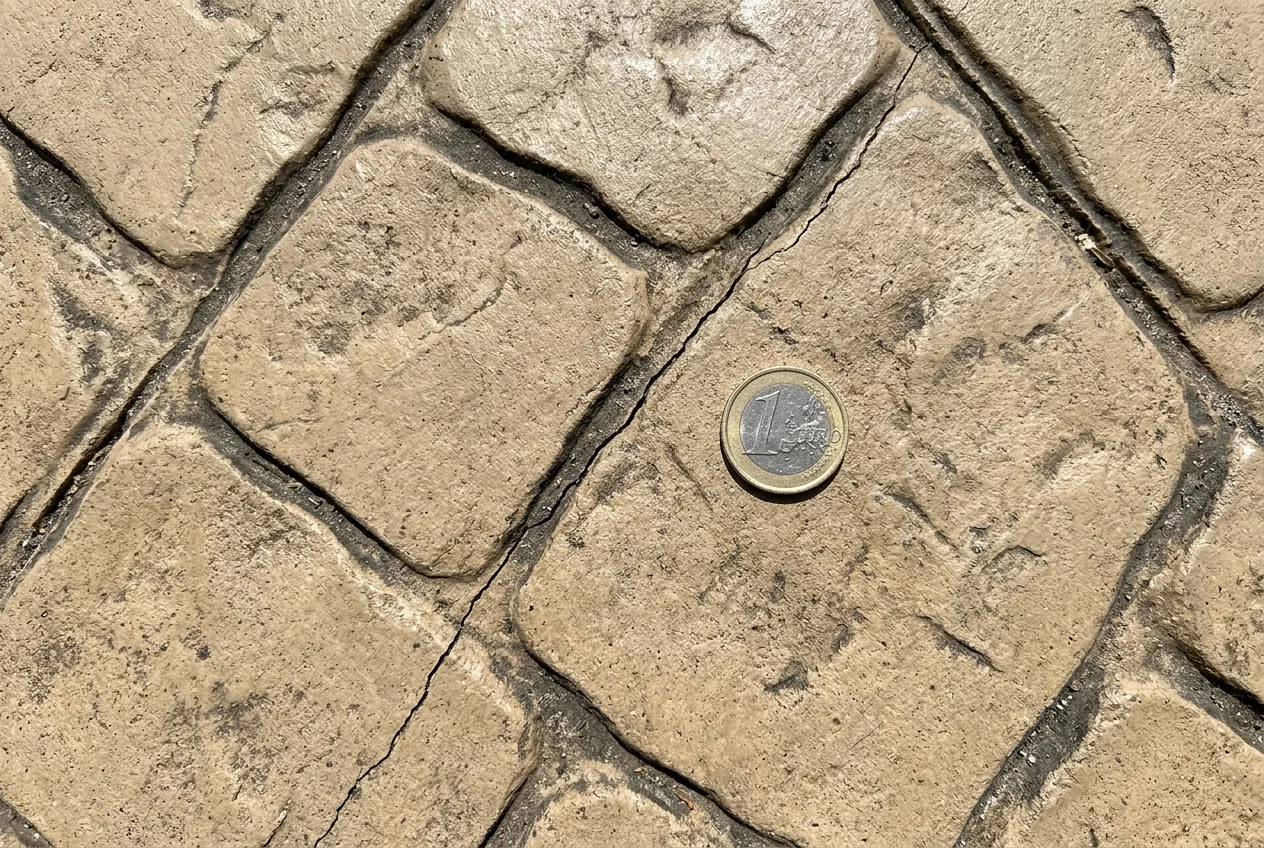
Cracks in stamped concrete: why they appear and how they are treated
Which cracks appear in stamped concrete, what causes them, how they are repaired and disguised, and when a section has to be replaced.

Water-based or solvent-based sealer for stamped concrete
What separates solvent-based acrylic, water-based acrylic and polyurethane sealers for stamped concrete, and when each one makes sense.
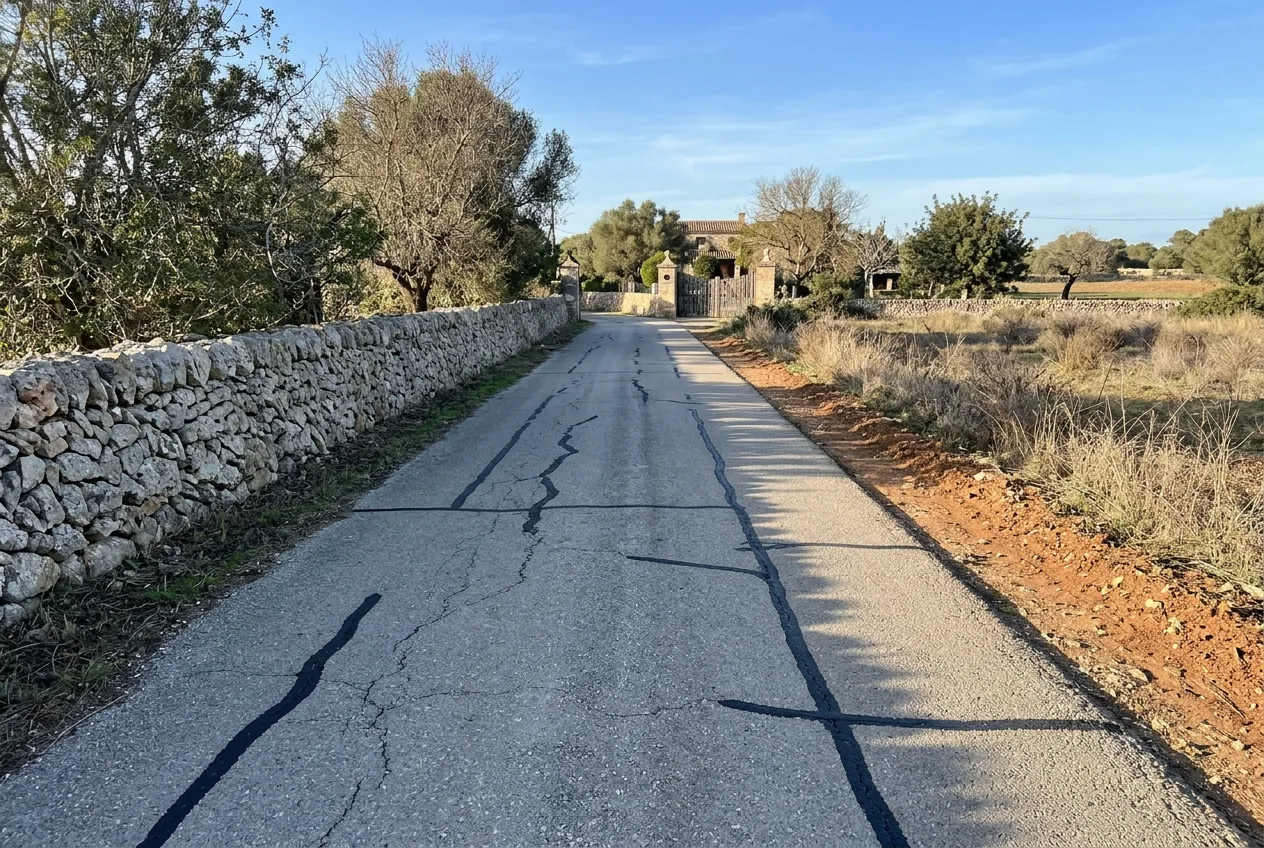
Sealing and maintaining private asphalt in Mallorca
How to maintain the asphalt on finca tracks, community and hotel car parks and garage ramps: crack sealing, patching, slurry seal, the right time of year and when it is not enough.
An outdoor floor in Mallorca takes sun that heats the surface above 60 degrees, torrential rain in autumn, salt kilometres inland from the coast, limestone dust, algae in the shade, chlorine beside the pool and oil on the driveway. No surface stands up to that unprotected. Every one of them carries a sacrificial layer that takes the punishment, and that layer has a limited life.
Which surface needs which protection
| Surface | What damages it | Protection | How often |
|---|---|---|---|
| Stamped concrete (hormigón impreso) | Sun, water, chlorine, colour wear | Acrylic or polyurethane resin, two coats | 2 to 4 years |
| Plain concrete slab | Dust, oil, water, surface dusting | Acrylic sealer, or a consolidant plus water repellent | 3 to 5 years |
| Outdoor microcement | Sun, standing water, scratching | Aliphatic polyurethane with UV filter, two coats | 2 to 4 years |
| Natural stone (marés sandstone, Santanyí, Binissalem) | Water, salt, algae, grease stains | Siloxane water repellent, no sheen | 2 to 4 years |
| Pavers | Open joints, weeds, stains | Water repellent, or a sealer that stabilises the joints | 3 to 5 years |
| Private asphalt (tracks, car parks) | Sun, oxidation of the bitumen, water in cracks | Crack sealing and a sealing emulsion | Cracks every year, sealing every 3 to 5 years |
| Walk on terrace over tiles | Water through the joints, leaks into the flat below | Continuous liquid polyurethane membrane | Annual check, renewal after about a decade |
These are the intervals the trade works to. A north facing area in shade lasts longer; a south-facing pool surround in Cala d'Or, less. The surface itself tells you when: once water stops beading and starts to darken the material, the protection has gone.
Why almost everything is a sealing problem
Stamped concrete that turns white has nothing wrong with the concrete: its resin is spent and there is water trapped underneath. A terrace that leaks rarely has broken tiles: it has open joints and no continuous membrane. A blackened Santanyí stone has never had a water repellent and is full of algae. Asphalt that crumbles at the edges started with a crack that nobody sealed.
Renewing the protection on time costs a fraction of restoring or rebuilding. That is why we treat building, protecting and restoring as a single job, and why every quote for new work comes with its resealing schedule.
The guides below go into the detail, from how often to reseal stamped concrete to waterproofing a terrace without lifting the floor and maintaining private asphalt.
Let's talk about your exterior
A few photos and the approximate size are enough to start. We'll tell you what the surface needs, what it doesn't, and how long it takes.