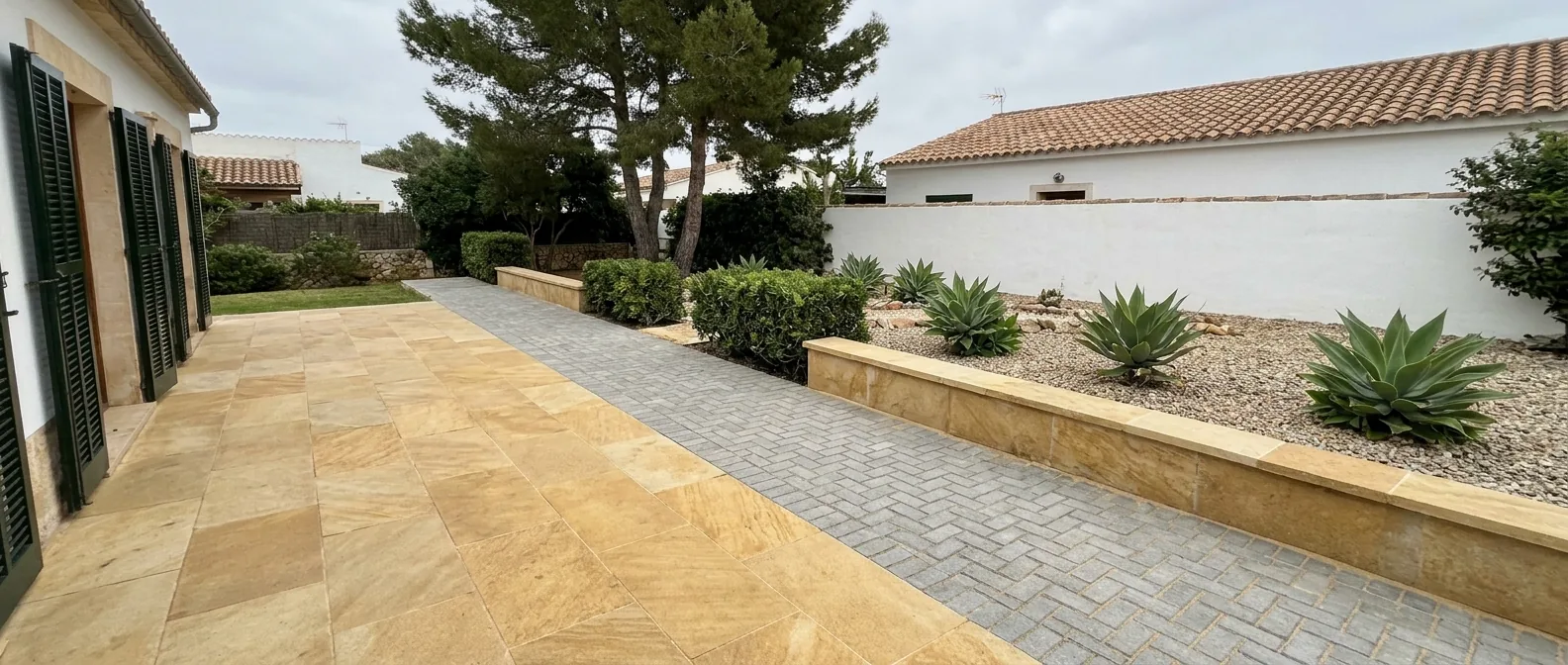
Patio sealing: protecting natural stone and pavers
Mallorcan stone is porous and absorbs water, salt and oil. On natural stone, what is usually called patio sealing is a water repellent that protects it from within without changing its look, together with a stain-proofing impregnator where grease and wine are the risk. Here we explain what each stone needs, how it is prepared and how often it is repeated.
The stones used for paving in Mallorca are soft, porous limestones. Marés (the island's soft, sandy limestone), Santanyí stone and other limestones soak up water like a sponge, and with the water come salt, oil, iron from furniture and green algae. Terracotta behaves in the same way, and concrete pavers somewhat less. Protecting these materials does not mean sealing them under a glossy film, which changes their appearance and ends up peeling: it means making them water repellent, so that the pores repel water from within while the stone keeps breathing.
Water repellents: how they work and what they do not do
A water repellent is a solution of silanes or siloxanes, water or solvent-based, that penetrates 2 to 10 millimetres into the pores of the stone and reacts with it. The pores stay open, so water vapour can get out, but their walls become repellent and liquid water cannot get in. The result is stone that looks the same, dries sooner after rain, does not darken with damp, develops less efflorescence and algae, and stands up much better to salt air.
What it does not do: it gives no sheen or colour, it does not hide stains that are already there, it does not waterproof a terrace with a home underneath, and it does not protect against oil or wine. That is what the impregnator is for.
Stain-proofing impregnator
On the terrace where you eat, around the barbecue or in a stone outdoor kitchen, the problem is not rain but grease. A stain-proofing impregnator, also called an oil repellent, is a water repellent that also repels oils: oil, wine and coffee stay on the surface long enough to be cleaned off with water and a neutral detergent. It comes in a natural finish, which does not change the tone, and in a wet-look, which slightly darkens the stone and brings out its grain without forming a layer. It is the usual product on Santanyí stone and polished limestone terraces.
Consolidants, in passing
Some soft, old stones, marés above all, are powdering: the surface sheds grains when you run a hand over it. Before the water repellent goes on, the stone has to be consolidated with an ethyl silicate that binds the grains together again from within; otherwise the treatment comes away with the grains. We spot this at the visit and include it when it is needed.
Joints
A stone or paver floor is only as watertight as its joints. A cracked mortar joint lets water in under the piece and makes the surface treatment useless. On stone, open joints are cleaned out and repointed with a compatible mortar before the water repellent. On pavers, sand joints emptied by washing or rain are refilled with dry sand or with polymeric sand, which hardens with water and resists sweeping, weeds and ants better. The treatment is applied afterwards and, on pavers, helps to fix the joint.
Efflorescence
The white powder that appears on new stone, on pavers and in the joints is soluble salts that water carries out of the mortar or the material itself and that crystallise as it evaporates. It appears mostly in the first year and after the autumn rains. It has to be removed before protecting, because a water repellent applied over it seals it in, in full view. It is brushed off dry and, if it persists, treated with a very mild specific cleaner and rinsed well, never with salfumán (hydrochloric acid, as it is sold in Spain) on limestone. Once the stone is water repellent, it stops absorbing the water that brings the salts.
Cleaning first
The stone has to be clean and dry for the product to penetrate. Cleaning is done with moderate pressure, 80 to 120 bar with a fan nozzle, because a pencil jet wears marés away and empties the joints. Algae get an algaecide first, rust a rust remover suitable for calcareous stone and grease an alkaline degreaser. Strong acids are ruled out on limestone and marés: they dissolve the stone and leave it dull and more porous. Then several days of drying without rain. The details are on the page on pressure washing.
Concrete and stone pavers
Concrete pavers lose their colour in the sun and pick up oil stains on driveways. For them, patio sealing can mean either of two things: a water repellent that protects them without changing their look, or an acrylic film sealer that brightens the colour, gives a satin sheen and binds the sand in the joints, at the cost of repeating it every 2 to 4 years. Natural stone pavers are treated like stone: water repellent or impregnator, and the joints checked. In both cases, the treatment is applied with the joints filled and the paving dry.
How often it is repeated
A water repellent on stone lasts between 3 and 6 years. On the seafront, with salt air and wind, it is closer to 3; in an inner courtyard or a covered area it can go beyond 6. A stain-proofing impregnator in a dining area is topped up every 2 to 3 years, because use and frequent cleaning wear it sooner. The test is simple: a few drops of water on the dry stone. If they bead, the treatment is still working; if they darken the stone within seconds, it is time to repeat. Repeating does not require stripping, because there is no film: cleaning, drying and a new coat. On the page on pavement sealing we summarise the cycles for every surface.
Solera Mallorca
How we work
- 01
Identification
We identify the stone, its porosity and any earlier treatment with a drop test.
- 02
Cleaning
Moderate pressure washing, neutral or mild alkaline cleaners, never strong acids on limestone.
- 03
Efflorescence and joints
Salts are removed and open joints repaired.
- 04
Drying
Several days without rain; the pores must be dry for the product to penetrate.
- 05
Application
One or two coats by roller or low-pressure sprayer, removing the excess.
- 06
Test and handover
We check the water repellency and tell you when to repeat.
FAQ
Questions
Something else? Ask us when you request a quote.
What is used for patio sealing on natural stone and pavers?
On stone paving, it usually means a silane or siloxane water repellent, which penetrates the pores and makes them repel water without forming a layer or changing the look, plus a stain-proofing impregnator where oil and wine are a risk. On concrete pavers, an acrylic film sealer is the alternative when a richer colour and a satin sheen are wanted. A film-forming waterproofing is meant for terraces with a home underneath, not for garden stone.
How is a water repellent applied to stone?
On clean, dry stone, by roller, brush or low-pressure sprayer, in one or two coats wet on wet until the pores stop absorbing. The excess is wiped off with a cloth before it dries so that no shiny patches remain, and it must not rain in the following 24 hours.
Which water repellent suits marés and Santanyí stone?
For soft, very porous limestones, a deep-penetrating silane and siloxane water repellent, solvent-based if the stone is very dry and water-based where odour is a concern. If the marés is powdering, it has to be consolidated first. More than the brand, what matters is the preparation and that the pores are dry when it is applied.
Does a water repellent change the colour of the stone?
A natural finish water repellent changes neither the colour nor the sheen; the stone looks the same, only the water runs off it. Wet-look versions slightly darken the tone and bring out the grain. We do a sample in a corner before treating the whole surface.
How do you remove white stains from stone and pavers?
It is efflorescence, salts that water carries to the surface and that crystallise as it evaporates. They are brushed off dry and, if they persist, treated with a very mild efflorescence cleaner and rinsed well, never with salfumán on limestone. Once the stone is water repellent, it stops absorbing the water that brings them.
How often should stone be treated again?
Every 3 to 6 years for the water repellent, sooner by the sea and later in covered areas; every 2 to 3 years for the stain-proofing impregnator in dining areas. The test is to pour water on the dry stone: if it beads, it is still protected; if it darkens the stone within seconds, it is time to repeat.
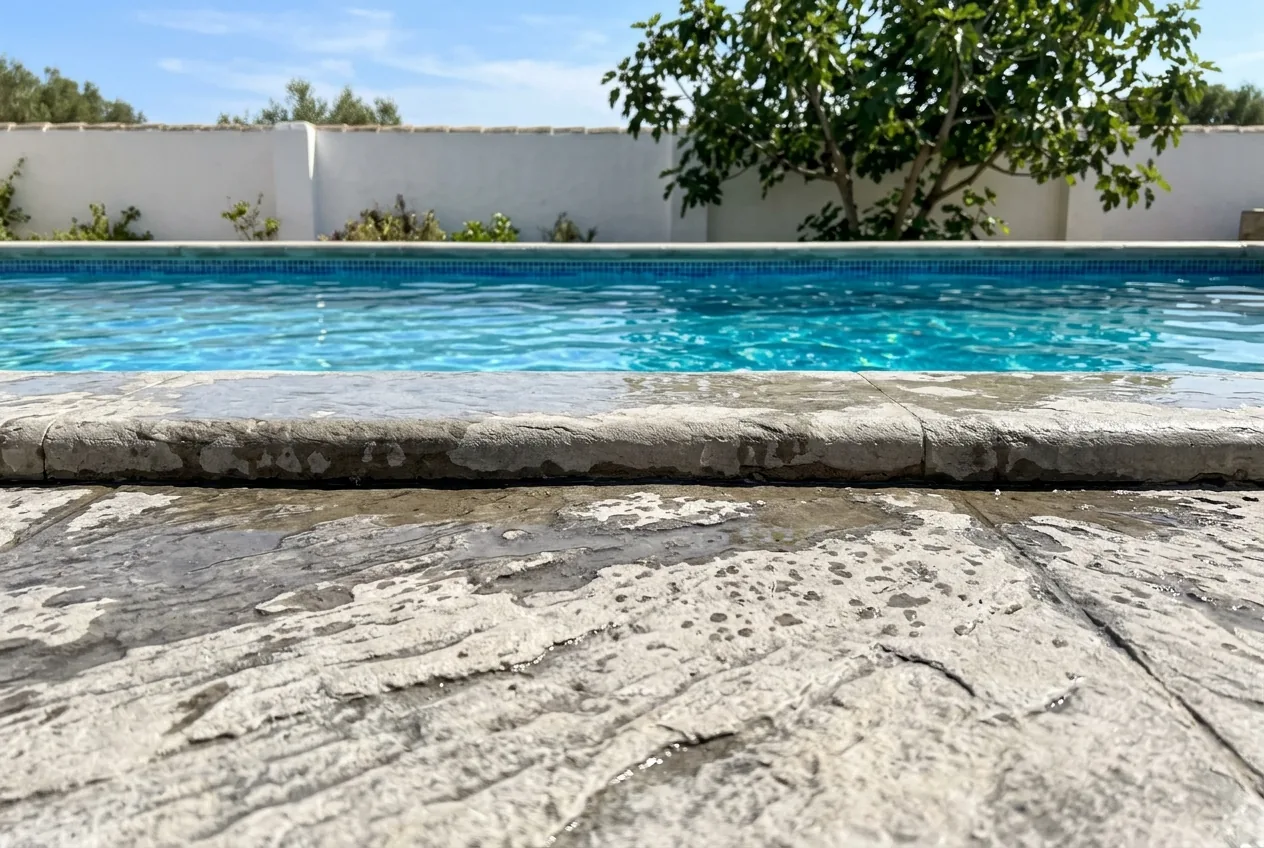
Solera Mallorca
Tell us what stone you have and where
A close-up photo of the stone, a general one, and whether it is by the sea, under pines or around a pool are enough for us to propose the treatment.