Microcement
Microcement or tiles: which suits each case
Microcement versus tiles in bathrooms, kitchens, floors and outdoors: looks, building work, thickness, showers, wear, maintenance, repairs and cost.
In a renovation over an existing finish, microcement usually works out cheaper than retiling, because it goes over the firm tiles and saves the demolition, the rubble and the laying. In new build or on bare walls, a mid range tile, laid, usually costs less. And price is not everything: tiles need less looking after and stand up better to hard wear; microcement gives a seamless surface, with almost no added height and no building work.
Microcement or tiles, criterion by criterion
| Criterion | Microcement | Tiles |
|---|---|---|
| Appearance | Seamless, with watermarks and tonal variation | Modular, with joints; uniform colour |
| Building work | Over firm tiles, no rubble | Old tiles broken out, or new ones laid on top if firm |
| Height added | 2 to 3 mm | 1 to 1.5 cm if laid on top |
| Shower | Waterproofing underneath; tray with no cuts | Waterproofing underneath; grout is not watertight |
| Wear | Scratches with grit; a knock leaves a mark | Barely scratches; a sharp knock can crack a tile |
| Maintenance | Neutral soap; periodic resealing | Face needs nothing; joints need cleaning and regrouting |
| Repair | Repaired and resealed; the tone shows | Tile replaced if there are spares from the batch |
| Slip resistance | Aggregate in the sealer for class 3 | Depends on the tile, class 1 to 3 |
| Outdoors | UV filter sealer, resealing every 2 to 4 years | Unaffected; joints and hollow tiles fail |
Appearance
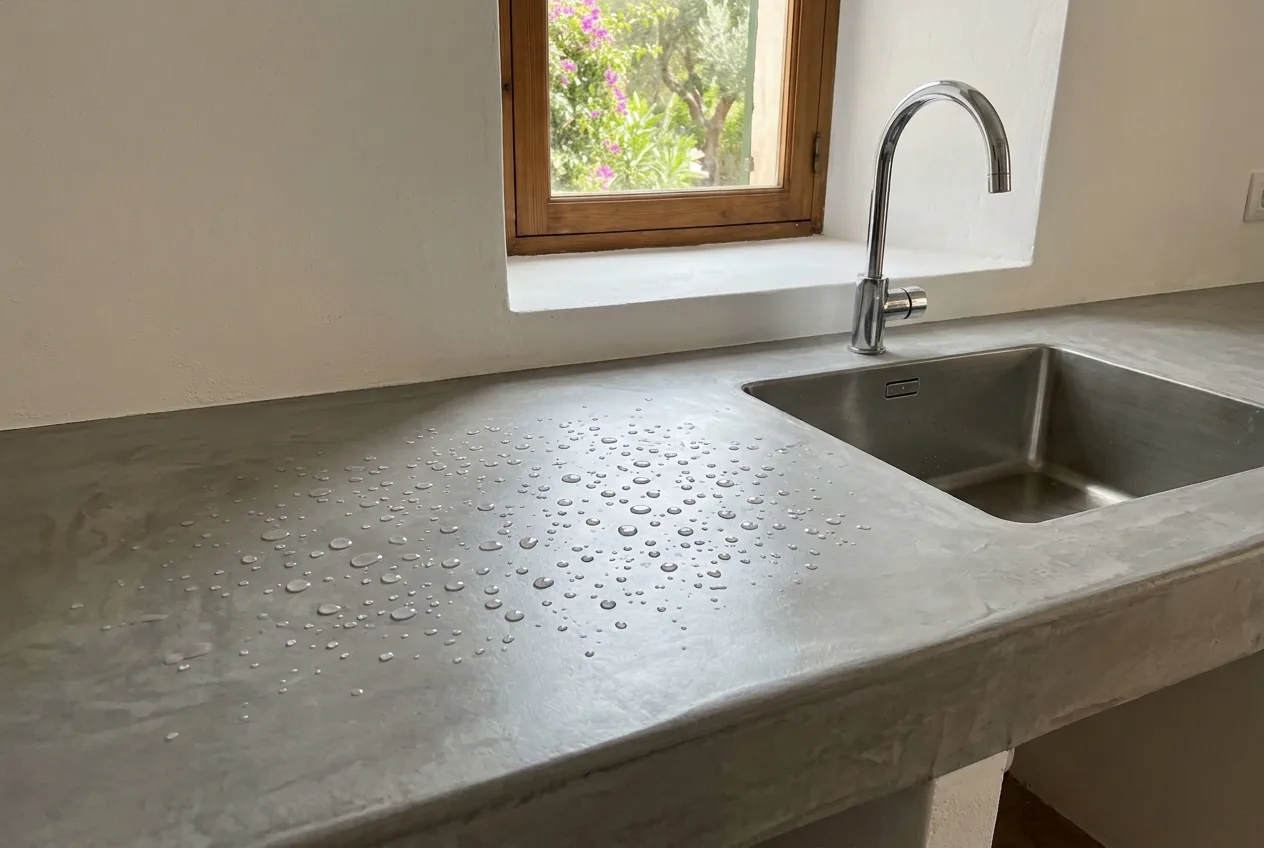
Microcement is a single surface that runs from floor to wall and into the shower tray, with the watermarks and tonal variation of a hand-applied finish. Tiles, ceramic or porcelain, draw a grid of joints, but give a flat colour and any design. The shades are on microcement colours.
Building work, rubble and thickness
Microcement goes over the existing tiles if they are well bonded: hollow tiles are removed, the joints levelled and a primer applied. It adds 2 to 3 mm, with no door trimming and no work on the taps. The checks are on microcement over tiles.
New tiles usually mean breaking out the old ones, with noise, dust and rubble: in a flat in Palma, that means sacks down the stairs and often a skip with a council permit. Laying them over the old tiles, if those are firm, avoids demolition but adds 1 to 1.5 cm with a tile of normal thickness: doors trimmed, a step up from the hallway and tap fittings that need extending.
The shower: both need waterproofing underneath
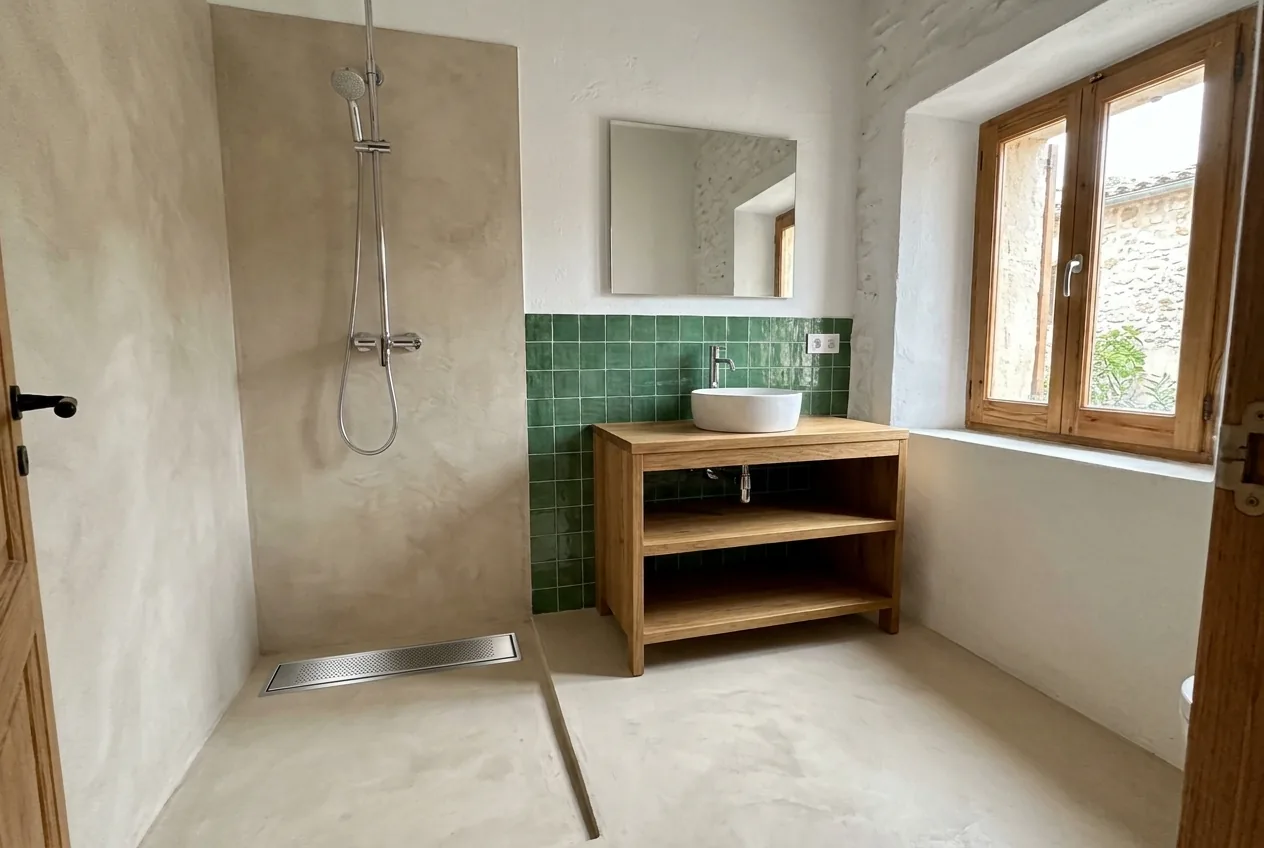
Neither is waterproof as a system. Porcelain barely absorbs water, but the grout and the adhesive do: a tiled built-in shower has waterproofing underneath, just like microcement, where we apply two coats of flexible cementitious mortar, as explained on microcement bathrooms. The difference is the tray: microcement forms it in one piece, with a 2 percent fall; tiles need envelope cuts towards the drain, or a linear drain. In both cases, the drain needs a flange made for the waterproofing.
Wear and repairs
Porcelain is harder: it does not scratch with grit or chairs, and its face does not age for decades. A sharp knock can crack a tile; it is replaced, and the repair is invisible if there are spares from the same batch, so it is worth keeping a box.
Microcement is harder than paint and softer than porcelain. Grit under a metal chair or the castors of an office chair mark it. It is not replaced piece by piece: a scratch is dealt with by resealing the panel, and a knock is filled with the same material and sealed, although the patch shows in the tone.
Maintenance and resealing
The face of a tile needs nothing; the joints do. In the shower they darken with Mallorca's hard water, soap and mould, need scrubbing with a brush and, over the years, regrouting. Microcement has no joints, but it needs neutral soap, no bleach, ammonia, vinegar or limescale remover, and a squeegee after showering. Its sealer is renewed by sanding lightly and applying two coats: every 3 to 5 years on the shower tray, every 2 to 4 on a sunny terrace, much less often in a bedroom. More in cleaning and maintaining microcement.
Slip resistance
This depends more on the finish than on the material. There are floor tiles from class 1 to 3 under the Spanish building code (Código Técnico), and polished porcelain that is slippery when wet. Smooth microcement is slippery too; in showers, around pools and in wet outdoor areas it takes aggregate in the sealer to reach class 3. Ask for the class of the finished surface.
Outdoors: sun and salt
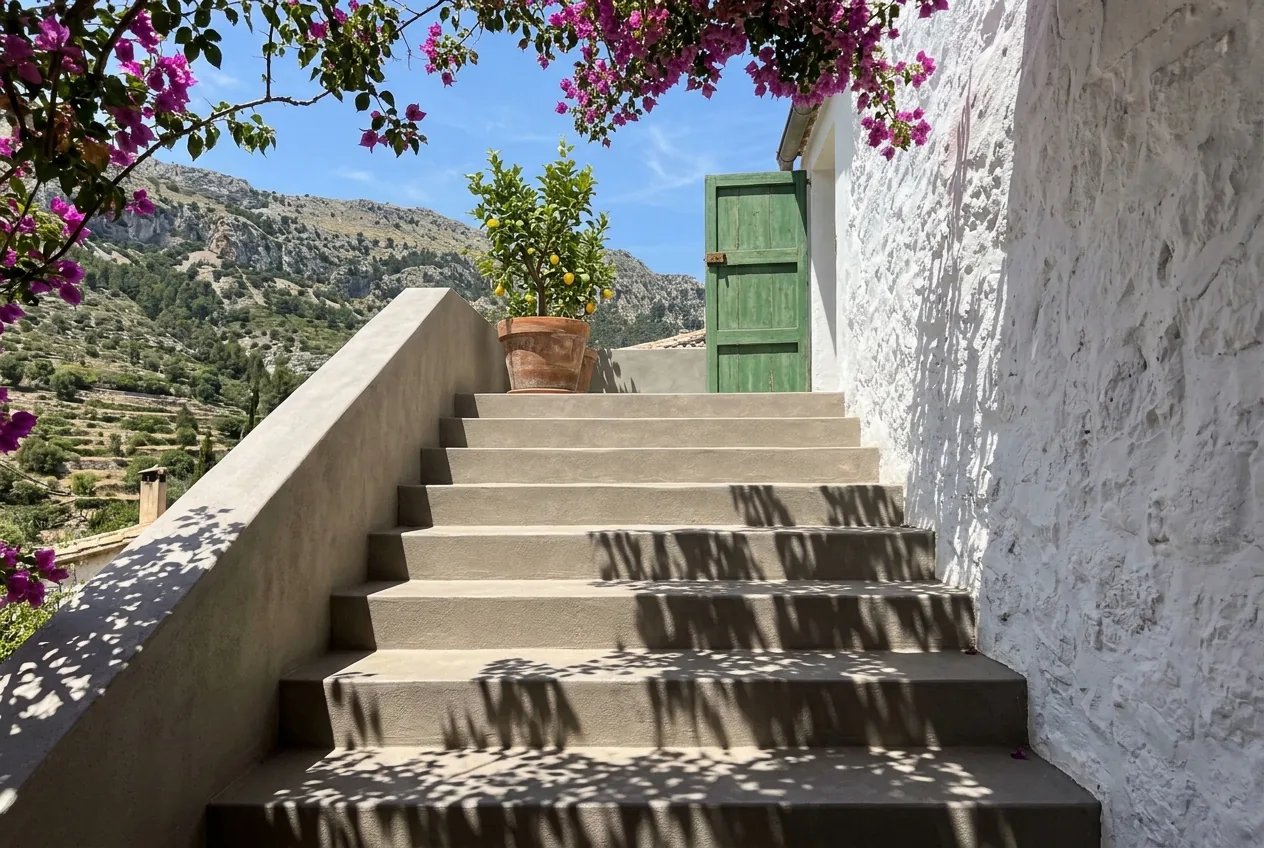
Outdoor porcelain keeps its colour; what fails are the joints and badly bonded tiles, which lift during a heatwave. Outdoor microcement needs an aliphatic sealer with a UV filter, aggregate where it is walked on wet, a fall of 1 to 2 percent and the joints in the substrate respected; near the sea, once the sealer is spent, salt leaves white stains. More in the guide to outdoor microcement.
Underfloor heating and timescales
Both work with underfloor heating if the heating screed has been through its start-up procedure: porcelain with a flexible adhesive, microcement with the heating off from 48 hours before until a week after sealing.
A microcement bathroom takes five to eight calendar days, with the first shower after 7 days. Tiles do not wait for any sealer, but breaking out, levelling, waterproofing, tiling and grouting usually take longer.
What moves the cost
We do not give figures without seeing the space, but we can say what they depend on.
Microcement. The state of the substrate, the item that varies most; the area and the proportion of wall; the junctions with shower trays, screens and sanitaryware; the waterproofing of the shower; the colours and the sealer.
Tiles. The tile itself, whose price varies several times over from basic ceramic to large-format porcelain; demolition and rubble; levelling and waterproofing; the labour, which rises with the number of cuts; trims and waste; and the plumber, if the tap fittings need extending.
Over the years, one needs regrouting and the other resealing. The page on microcement cost explains how to compare quotes.
When tiles are the better choice
- Hard wear: entrances with sand or soil, heavily used kitchens, large dogs.
- Rentals with little upkeep: in a holiday let nobody watches the sealer and every guest cleans with whatever they find, limescale remover included.
- Zero maintenance: porcelain with epoxy grout is the closest thing.
- Very wet or moving outdoor areas: tiles on flexible adhesive with movement joints spread that movement, and a broken tile is replaced; microcement copies every crack.
- A flat colour or a particular design, such as patterned encaustic-style tiles.
When microcement is the better choice
- Renovation without building work over firm tiles, while you live in the house.
- Continuity between floor, walls, shower tray and built-in furniture.
- Little height to spare: doors and thresholds that cannot take another centimetre.
- Awkward shapes: benches, niches, stairs and curves, covered on walls, kitchens and stairs.
- Small bathrooms with many junctions.
- An owner willing to use neutral soap and reseal every few years.
When to call a professional
Often what is underneath decides. If the tiles sound hollow in many places, there is damp behind the shower or there are cracks that move, the old finish has to come off and the comparison changes. Whoever does the job should tap the tiles, check the fall and the drain, measure the height available and state in writing which waterproofing and which sealer they will use. If a terrace leaks, waterproofing comes first.