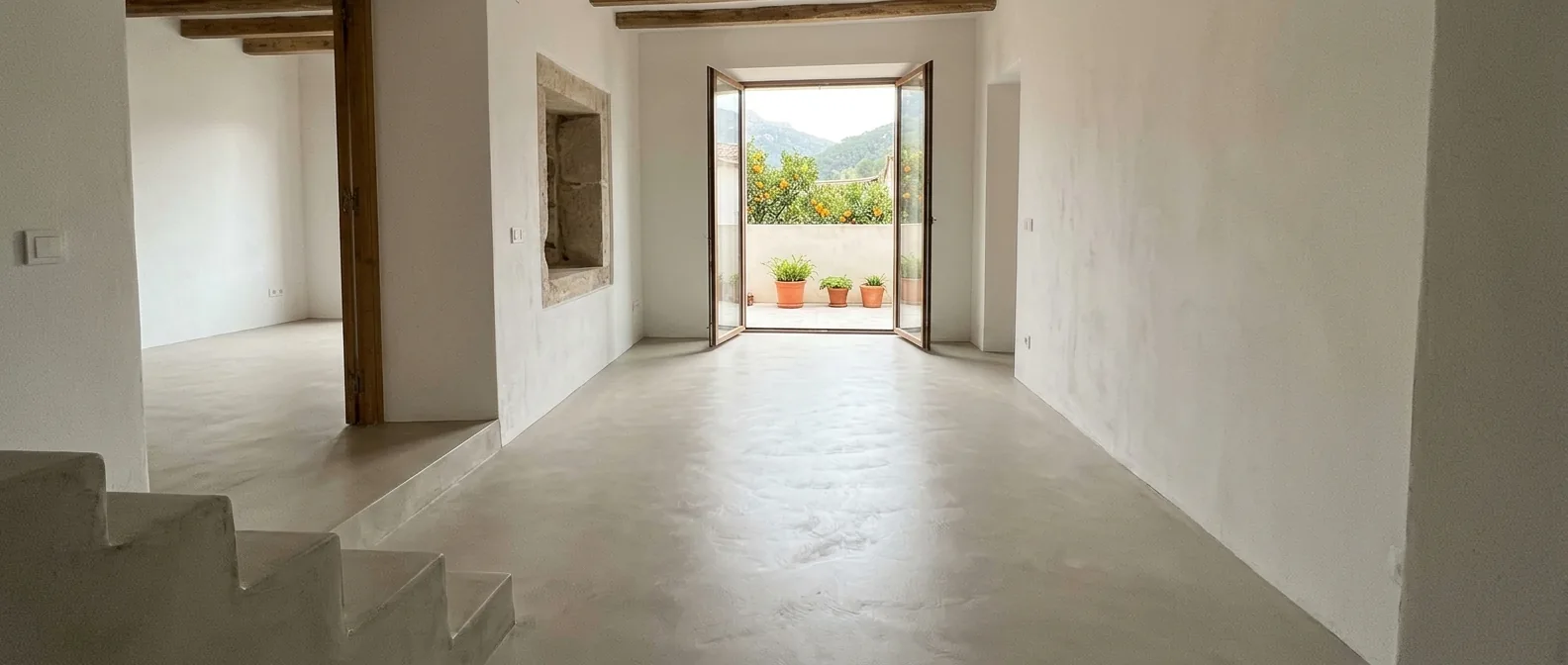
Microcement in Mallorca
Microcement is a continuous coating 2 to 3 mm thick, applied by hand over the substrate that is already there: a tiled floor, a plastered wall, a concrete staircase or a pool coping. No joints, no demolition and the same material indoors and out, provided the right system and sealer are chosen for each place.
Microcement is the most common way to renovate a bathroom, a kitchen or a living room without ripping out what is there. It is applied in thin coats, sanded and sealed, and the result is a continuous, jointless surface with the mineral look of cement and a thickness that means no trimming of doors and no plumbing work. Here we explain what it is, where it works, how it is applied, how long it lasts and where its limits are.
What microcement is
It is a cement based mortar mixed with polymer resins, very fine aggregates and pigments. The resin gives adhesion and a little flexibility; the cement gives hardness and appearance. It is trowelled on in several coats of under a millimetre each, up to a total of 2 to 3 mm, and protected with a sealer, almost always a two component water-based polyurethane, which is what actually resists water, stains and wear.
It is not polished cement or polished concrete: those are slabs several centimetres thick that are smoothed or ground in the mass and need building work and weeks of curing. Microcement is a coating that rests on something else, and its result depends as much on the substrate as on the material. Nor is it an epoxy resin floor, which is a plastic coating for floors only; the differences are set out in the guide microcement or epoxy resin.
Which surfaces microcement can go over
Almost any firm, stable, clean substrate: ceramic and porcelain tiles, terrazzo, cement screed, concrete, plasterboard, well bonded plaster, rigid timber boards and built in elements such as benches or built shower trays. What it will not take are substrates that move, that draw water from below or that are breaking up: floating floors, flaking paint, loose tiles or damp plaster.
The usual applications in Mallorca are:
- Floors in living rooms, kitchens, bedrooms and hallways, with or without underfloor heating. Covered in microcement floors.
- Walls, whole rooms or single panels, bedheads, kitchen splashbacks.
- Kitchens, with floor, splashback, worktops and islands, and built-in furniture such as benches, shelves or washbasins.
- Stairs, tread and riser, with a rounded or square nosing. Walls, kitchens and stairs are covered in microcement walls, kitchens and stairs.
- Bathrooms and showers, floor and wall, over the existing tiles. See microcement bathrooms.
- Terraces, porches and pool copings, with an exterior sealer and anti-slip finish. Explained in outdoor microcement and pools.
- Pool shells, with specific systems for permanent immersion.
Microcement over tiles without demolition
This is the most frequent enquiry: a new bathroom or kitchen without breaking out, without rubble and without weeks of building work. It is possible, on three conditions. First, the tiles must be well bonded; we tap each one and any that sounds hollow is removed and filled with mortar. Second, the joints are levelled with a regulating paste, otherwise they show through the microcement within a few months. Third, a bonding primer specific to non absorbent substrates is applied, which is what ties the mortar to the glaze of the tile. What we check, how much height it adds and when it is not advisable are covered in microcement over tiles.
How it is applied: layers and sealing
A complete system has seven steps, and skipping one shows after a year.
- Substrate preparation: cleaning, crack repair, joint levelling, sanding where needed.
- Primer: a bonding primer on closed substrates (tiles, terrazzo), a consolidating primer on porous ones (screed, plaster).
- Fibreglass mesh embedded in the first base coat, which spreads the stresses of the substrate and reduces cracking.
- Two coats of base microcement, coarser grained, which give body and flatness.
- Two coats of fine microcement, the finish coats, where the texture and the watermarking of the colour are defined.
- Sanding between coats and at the end.
- Sealing: a sealing primer that closes the pores and two coats of polyurethane, matt, satin or gloss. Outdoors, a polyurethane with UV filter and, wherever it is walked on wet, an anti-slip aggregate in the final coat.
Between coats there are 4 to 24 hours depending on the product and the humidity. A floor can be walked on in clean footwear 24 to 48 hours after sealing and takes furniture and water after 7 days, when the polyurethane reaches its working hardness. A complete bathroom usually takes five to eight calendar days.
How many years microcement lasts
The mortar, properly applied on a stable substrate, lasts as long as the substrate: it does not peel or crumble. What ages is the sealer, just as the sealer does on stamped concrete. In a living room or bedroom it can go more than a decade untouched; in a busy shower or kitchen the polyurethane starts to dull in specific spots after 5 to 8 years, and on a terrace in the Mallorcan sun sooner. The sealer is renewed: the surface is lightly sanded and the polyurethane coats are applied again, without touching the microcement.
Maintenance
Little, but specific. Cleaning with water and a pH neutral soap; no bleach, ammonia, vinegar, limescale remover or abrasive pads, which attack the polyurethane. Felt pads under chair and table legs. No water left standing on the floor for hours, and no plant pots without saucers. A water-based maintenance wax once or twice a year in walkways extends the life of the sealer. And watch the sheen: when dull areas appear or water stops running off, it is time to reseal, before stains reach the mortar. The guide how to clean and care for microcement goes through it product by product and stain by stain.
Drawbacks of microcement
We say them before starting, because they decide whether the material suits your case.
- It copies the substrate. An active crack in the slab, an expansion joint or a plasterboard panel that moves will eventually show through. The mesh reduces the risk; it does not remove it. If the substrate moves, microcement is not the answer.
- It is not waterproof on its own. The sealer repels water, but the mortar is cementitious. In showers and pools it needs waterproofing underneath, not on top.
- It scratches. It is harder than paint and softer than porcelain tile. Grit under a metal chair leaves a mark. Outdoors and in entrances with soil, accept it or choose a more textured finish.
- Standing water stains it. A permanent puddle eventually gets through the polyurethane. Outdoor floors need a fall and a drain.
- The colour is not uniform. Watermarking, trowel marks and tonal variation are part of the material. Anyone wanting a flat colour is better served by something else.
Microcement indoors and outdoors
Indoors, microcement works under stable conditions: controlled temperature, humidity and light. Outdoors in Mallorca, the summer sun heats the surface to temperatures that expand the substrate, autumn rain keeps it wet for days, salt reaches kilometres inland from the coast and pine needles release tannins that stain. An exterior system uses a higher strength microcement, an aliphatic polyurethane sealer with UV filter, anti-slip aggregate and, in pools, a specific treatment for immersion. We go into detail in outdoor microcement and pools and in the guide microcement outdoors. For a new outdoor surface that takes vehicles, the material is stamped concrete, not microcement.
Microcement colours and finishes
The colour is inside the mortar, with mineral pigment weighed into every batch, so a scuff in the sealer does not reveal a different colour underneath. We usually start from six families, off-white, sand, pearl grey, cement grey, taupe and anthracite, and any shade can be mixed to order. The sheen comes from the sealer, matt, satin or gloss, and the texture can be smooth or textured. Because the sealer and the light in each home change the shade, the colour is approved on a sealed sample viewed where it will go. The families, the finishes and what suits each space are covered in microcement colours and finishes.
What moves the price
More things than the square metres: the state of the substrate, the total area, the proportion of wall to floor, the junctions with shower trays, screens and sanitaryware, the number of colours and the type of sealer. A small bathroom with many cuts costs more per metre than an open living room. We do not give a figure without seeing the space; ask for a quote with measurements and a few photos and we itemise each part separately. Each of these factors, and how to compare quotes, is explained in microcement cost.
Microcement
Microcement colours
Six families to start from. The final shade is chosen on a sealed sample in your home.
 Off-whiteA warm white rather than a pure one. Makes bathrooms and small rooms feel larger and shows fewer marks than pure white.
 SandA warm tone that goes with marès, timber and lime. Works indoors and out, and stays cooler in the sun.
 Pearl greyA light, neutral grey. The look of cement without darkening the room, in modern flats with white walls.
 Cement greyThe mid grey most people picture as microcement. Kitchens, clean-lined living rooms and stairs.
 TaupeA brownish grey between sand and grey. Goes with timber and stone and hides dust very well.
 AnthraciteA very dark grey for contrast on a feature wall, a unit or a staircase. Shows dust and lime more.
Solera Mallorca
How we work
- 01
Visit and substrate
We check what is underneath, whether it sounds hollow, whether there are cracks or damp and where the junctions fall.
- 02
Preparation
We repair, level the joints and prime according to whether the substrate is absorbent or closed.
- 03
Base and mesh
Two coats of base microcement with fibreglass mesh embedded in the first.
- 04
Finish
Two coats of fine microcement, sanded between coats, colour and texture chosen from a sample.
- 05
Sealing
Sealing primer and two coats of polyurethane, matt, satin or gloss.
- 06
Handover
We tell you when to walk on it, when to wet it and what to clean it with, and when the sealer should be checked.
Microcement in detail
Floors
A microcement floor over tiles or screed: preparation, joints, thickness, sealing and cleaning.
Outdoor and pools
Microcement on terraces, porches and pool copings: a sealer with UV filter, an anti-slip finish and resealing.
Bathrooms
A microcement bathroom over the existing tiles: waterproofing underneath, shower tray, drain, walls and cleaning.
Over tiles
Microcement over existing tiles on floors, walls and kitchen splashbacks: checks, preparation, height added and limits.
Walls, kitchens and stairs
Microcement walls, kitchen splashbacks and worktops, built-in furniture and stairs: substrates, detailing and limits.
Colours and finishes
Microcement colours by family, how the colour is mixed and chosen from a sample, and matt, satin or gloss finishes.
Prices
What moves the price of microcement per m² in Mallorca, and what a bathroom, floor or terrace quote includes.
FAQ
Questions
Something else? Ask us when you request a quote.
Which surfaces can microcement be applied to?
Firm, stable, clean substrates: ceramic tiles, porcelain, terrazzo, cement screed, concrete, plasterboard, well bonded plaster and rigid timber boards. It is not applied over floating floors, flaking paint, loose tiles or substrates with active damp. Over tiles, a specific bonding primer is used and the joints are levelled before starting.
How many years does microcement last?
The mortar lasts as long as the substrate it is applied to. What ages is the polyurethane sealer: in normal interior use it usually lasts 5 to 8 years before needing renewal in walkways, longer in bedrooms and less in showers, kitchens and sunny terraces. Renewing the sealer means light sanding and two new coats, without touching the microcement.
What are the drawbacks of microcement?
It copies the movement and cracks of the substrate, it is not waterproof without a waterproofing layer underneath, it scratches more than porcelain tile, it stains if water is left standing and its colour has watermarks and variations that are part of the material. The result also depends heavily on substrate preparation and on the hand that applies it.
What maintenance does microcement need?
Cleaning with water and pH neutral soap, with no bleach, ammonia, vinegar or limescale remover. Felt pads on furniture legs, no standing water and no plant pots without saucers. A water-based maintenance wax once or twice a year in walkways, and renew the sealer when the sheen dulls or water stops running off.
Which is cheaper, microcement or tiles?
In a renovation over an existing finish, microcement usually works out cheaper than retiling, because it avoids demolition, rubble removal and new laying. In new build, a mid range tile laid usually costs less than microcement applied by a professional. A fair comparison includes maintenance: tiles need regrouting over the years and microcement needs its sealer renewed. We compare the two in the guide microcement or tiles.
How much does microcement cost per m² in Mallorca?
There is no honest figure without seeing the substrate, because preparation is the item that varies most. What weighs is the state of what is underneath, the total area, the share of walls, the cuts and junctions, the number of colours and the type of sealer. Ask for a quote with measurements and photos and we itemise every part of it.
What happens if microcement gets wet?
Nothing, if it is properly sealed: the polyurethane repels water and the floor dries without marks. What damages it is water that stays for hours, such as a permanent puddle or a plant pot without a saucer, because it eventually gets through the sealer. That is why showers and pools have waterproofing underneath, and outdoors it needs a fall and a drain. When water stops forming droplets and darkens the surface, the sealer is worn and due for renewal.
Can microcement go on walls, worktops and stairs?
Yes. On walls it goes over plaster, plasterboard, render or firm tiles; in the kitchen, over the splashback, the existing worktop or a new rigid board, with reinforced edges and a high resistance sealer; on stairs, over firm steps, with a protected nosing and anti-slip aggregate on the tread. Each surface has its limits, such as heat and acids on a worktop.
What colours of microcement are there?
Practically any, because the pigment is in the mortar. The usual starting point is a set of neutral families, off-white, sand, pearl grey, cement grey, taupe and anthracite, with the shade adjusted on a sealed sample in your own home. The sealer can be matt, satin or gloss, and the surface smooth or with a visible grain.
Guides
Related guides
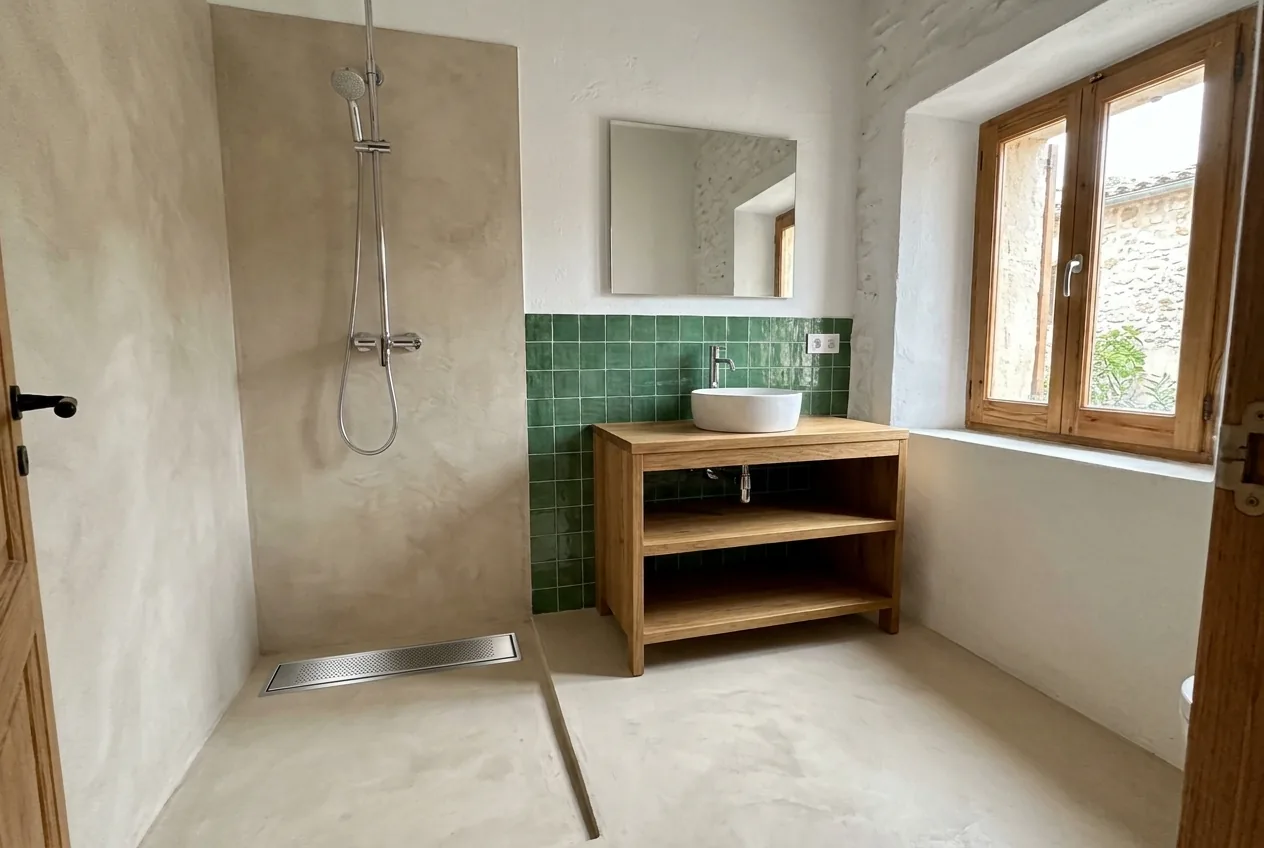
Microcement or tiles: which suits each case
Microcement versus tiles in bathrooms, kitchens, floors and outdoors: looks, building work, thickness, showers, wear, maintenance, repairs and cost.
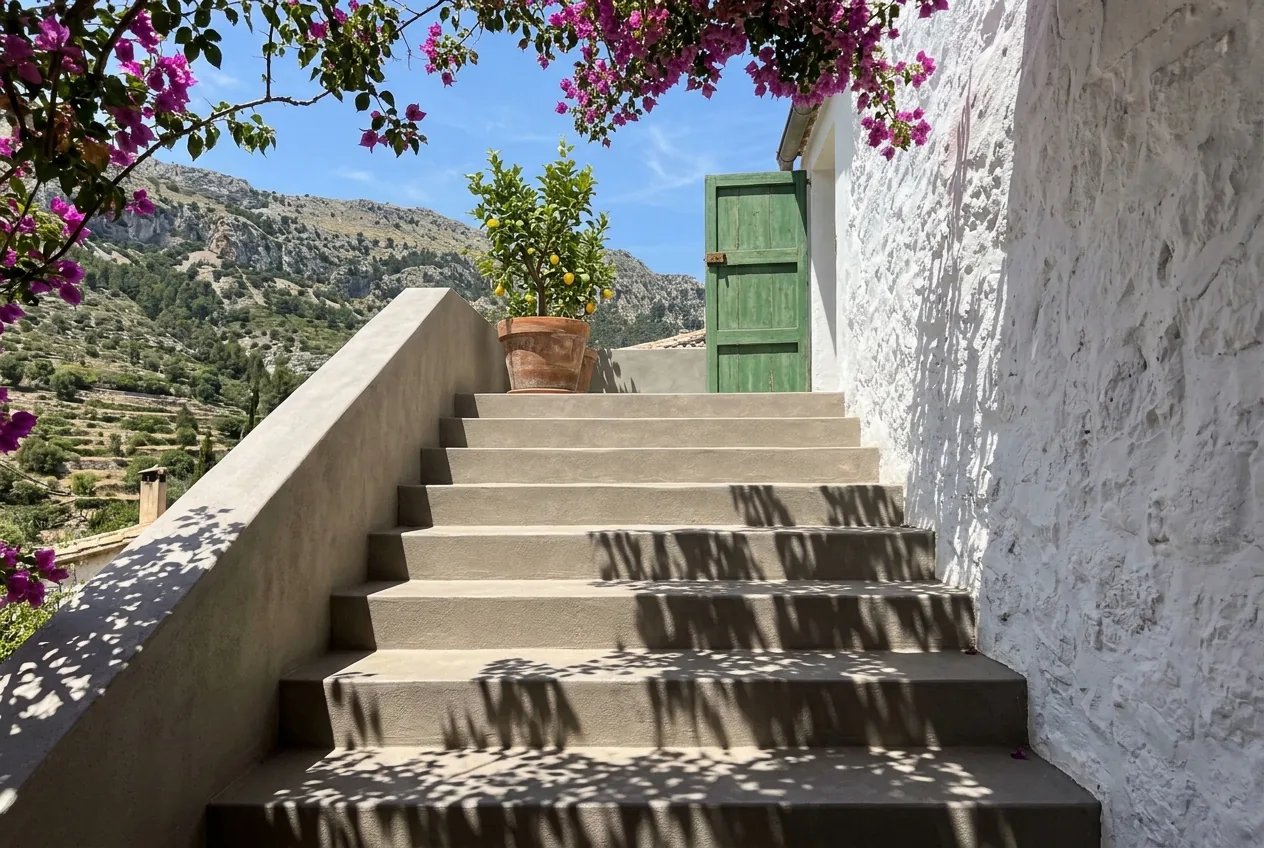
Does microcement last outdoors? Sun, salt, rain and pools
What microcement withstands outdoors and what it does not: sun, salt air, pools, torrential rain, thermal movement, sealers, slip resistance, maintenance and the base.
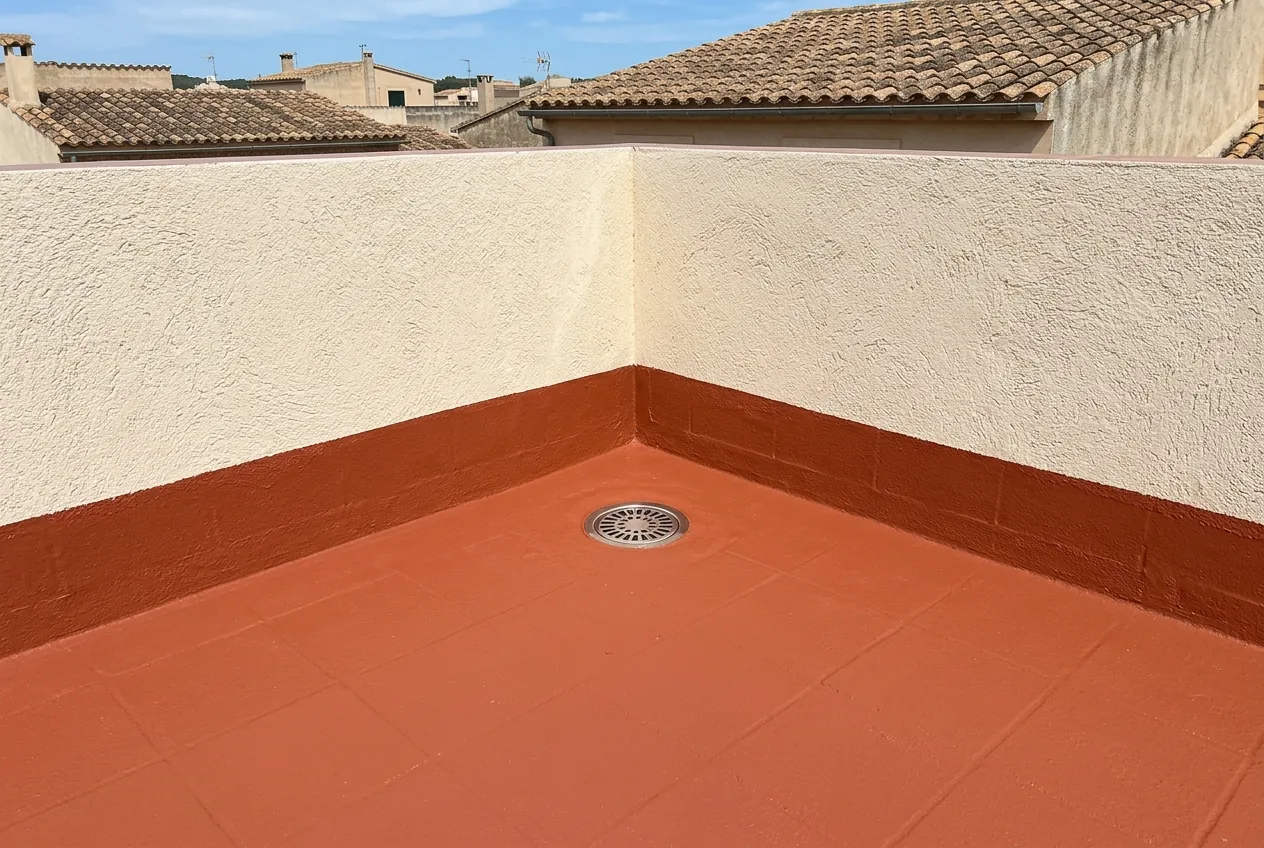
Waterproofing over the existing tiles: when it works and when it does not
When terrace waterproofing with a liquid membrane over the tiles works, when it does not, how the surface is prepared, what happens with drains and falls, and how long it lasts.
Solera Mallorca
Tell us where you want the microcement
A few photos of the space, the floor and wall areas in square metres and what is there now underneath are enough for us to advise on the system and the timing.