
Terrace waterproofing in Mallorca
A damp patch on the ceiling of the room below almost always comes from the terrace above. We find where the water gets in, choose the right membrane and apply it over the existing floor when the substrate allows, or lift the floor when it does not.
Waterproofing a terrace means placing a continuous watertight layer between rainwater and the structure of the building, and carrying that water to a drain without letting it stop on the way. It sounds simple and it often fails, because water does not get in through the surface of the terrace but through the details: an open tile joint, a badly finished drain, a crack in the parapet, a fall that does not exist. This page explains why terraces in Mallorca leak, which systems exist and how we decide between applying over the existing floor and lifting it.
Why a terrace leaks
- Spent or missing membrane. Many terraces from the seventies to the nineties have a bituminous felt that has reached the end of its life, and quite a few have nothing at all between the tiles and the slab. Bedding mortar is not waterproof; it holds water and lets it through slowly.
- Cracked and hollow tiles. A broken tile lets water in; a tile that sounds hollow is a reservoir of water underneath looking for a way out.
- Joints. The cement joint between tiles is the weak point of any tiled terrace: it cracks with summer expansion and is where most of the water enters.
- Drains and downpipes. A drain without a reinforcing collar, with a membrane that does not go down into the pipe, or blocked with pine needles, is the most common cause of the stains that appear in one corner of the ceiling below.
- Parapets and junctions. Water gets in through the crack between floor and wall, through the parapet coping or under the door threshold, and shows up far from where it entered.
- No fall. If water ponds, it sits on the membrane for hours and finds any pore. The torrential autumn rain in Mallorca tests all of the above in a single afternoon.
Waterproofing systems
Liquid membranes
Applied by roller, brush or spray, they form a continuous, jointless layer that follows drains, corners and parapets. They are the usual system when working over the existing floor.
- Liquid polyurethane. The reference for walk on terraces: elastic, UV resistant in its aliphatic version, 1.5 to 2 millimetres thick in two or three coats, reinforced with mesh at critical points. It takes a walk on finish, coloured or clear, and a new floor on top.
- Polyurea. Hot spray applied with specialist equipment and cured in minutes, which makes it possible to waterproof and return a terrace to use in one day. Very tough, normally 2 millimetres. We choose it on large community roofs or when the timetable is tight.
- Fibre reinforced acrylics. Cheaper and easier to apply, with less elasticity and a shorter life. We use them on non walk on roofs, for spot repairs and as maintenance over a compatible earlier system.
Sheet membranes
Bituminous sheets and synthetic PVC or TPO sheets are welded or bonded and protected with a screed and new tiles, or left exposed on non walk on roofs. They are the classic system when the floor is lifted and the terrace rebuilt with new falls. They give a guaranteed thickness and a very long life, at the cost of more building work.
Over the tiles or lifting them
If the substrate is sound, the tiles are firm, the fall carries water to the drain and the drains work, a liquid membrane over the existing floor solves the leak with little disruption and in a few days. If there are hollow tiles over a wide area, the terrace has no fall, the slab is damaged or the drain sits above floor level, the honest answer is to lift, rebuild the falls with a lightweight screed, lay a sheet or liquid membrane on the new substrate and finish with tiles, stamped concrete or microcement. We tell you at the visit, with the hollow tile test and the spirit level in hand.
Finding the leak
Before waterproofing, you need to know where the water is getting in, because a perfect membrane across the whole surface does not close a badly finished drain. We look at the stain below and place it on the plan of the terrace; we tap the tiles to hear the hollow ones; we check joints, parapets, copings, thresholds and the junction of the membrane with each downpipe; and where necessary we run a flood test by zones, plugging the drain and filling the terrace with a few centimetres of water to see where and when it appears below. On large community terraces, the leak is often metres away from the stain.
The flat below
Damp on the ceiling of the property below takes time to dry out after the water entry is fixed: weeks, and months if the slab has been saturated for a long time. Until the ceiling is dry it is not worth painting or repairing the plaster, because the stain comes back. We document the condition before and after, which helps with the community or the insurer when the terrace is for private use and the damage is in another property.
Falls and drains
The trade rule is a minimum fall of 1 to 2 percent towards the drain, with no back falls and no puddles. Each drain gets a reinforcing collar into which the membrane laps and goes down the pipe, and a grating that holds back leaves and pine needles without blocking the flow. Where a terrace has a single drain, we recommend an overflow through the parapet: if the drain blocks during a storm, the water goes out there and not through the living room door. If the terrace has no fall, one is formed with a lightweight screed before the membrane, which means lifting or building up.
Flat roofs and community roof terraces
On non walk on flat roofs, the priorities are durability under the sun and watertightness around chimneys, aerials and air conditioning units. We work with light coloured polyurethane or polyurea, which lowers the roof temperature, or with protected exposed sheet. For residential communities and property administrators we prepare a specification with the system, thicknesses, phases and guarantee, and organise the work so that the flats below lose access to the terrace for as short a time as possible.
About the guarantee
Every system we apply is handed over with a written guarantee stating the product, the thicknesses and the maintenance conditions that keep it valid: clean drains, nothing drilled through the membrane, the parapet seals checked. Its length depends on the system chosen and is set out in the quote, not here, because it is not the same for a maintenance acrylic as for a 2 millimetre polyurethane or a polyurea.
Solera Mallorca
How we work
- 01
Diagnosis
We look for the point of entry: joints, cracks, drains, parapets or a spent membrane.
- 02
Preparation
Cleaning, repair of hollow tiles and cracks, and drying of the substrate.
- 03
Critical points
Drains, wall junctions, expansion joints and downpipes, reinforced with mesh.
- 04
Membrane
Primer and two or three cross applied coats, or sheet membrane, depending on the system.
- 05
Finish
Walk on top coat, in colour, or a new floor on top.
- 06
Flood test
We flood the terrace before handing it over.
FAQ
Questions
Something else? Ask us when you request a quote.
What are the steps to waterproof a terrace?
Locate the water entry, prepare the substrate by cleaning, repairing hollow tiles and cracks and drying it, treat the critical points with mesh, apply the primer and two or three coats of membrane or lay the sheet, finish with the walk on coat and carry out a flood test before handover.
Can a tiled terrace be waterproofed without removing the tiles?
Yes, when the tiles are firm, the fall carries water to the drain and the drains work. The floor is cleaned, joints and loose pieces are repaired, a primer is applied and then a polyurethane membrane with a walk on finish, coloured or clear. If there are many hollow tiles or no fall, the floor has to be lifted.
Which waterproofing is right for a walk on terrace?
Aliphatic liquid polyurethane with a wearing coat is the reference system for walk on terraces: elastic, sun resistant and continuous. Polyurea is the alternative when the terrace must be back in use the same day. Acrylics are kept for non walk on roofs and maintenance.
How long does it take to waterproof a terrace?
A domestic terrace with a liquid membrane over the existing floor takes two to four days including drying between coats, and can be walked on 24 to 48 hours after the last coat. Lifting the floor and rebuilding the falls adds one or two weeks depending on size.
Why does the damp appear on the neighbour's ceiling and not on my terrace?
Because the water enters through a small point, a joint, a drain or the parapet junction, travels through the mortar and the slab and comes out wherever it finds a crack or a light fitting. The stain can be several metres from the entry. That is why we diagnose before applying anything.
Does a new concrete terrace need waterproofing?
Yes. Concrete is not waterproof: it has pores and it cracks. A concrete terrace or roof over a dwelling needs a membrane, with the falls and drains resolved, before the finished floor goes on.
Guides
Related guides
Does microcement last outdoors? Sun, salt, rain and pools
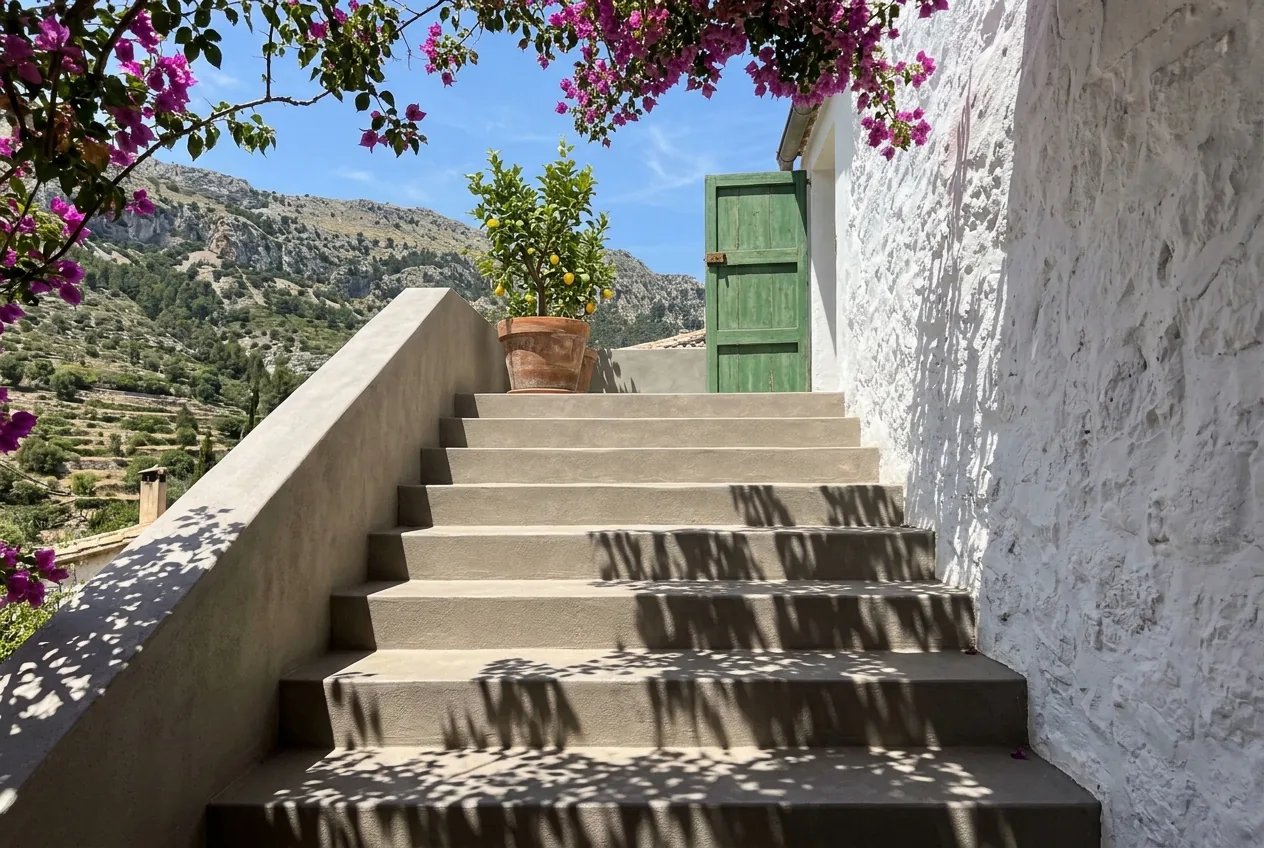
What microcement withstands outdoors and what it does not: sun, salt air, pools, torrential rain, thermal movement, sealers, slip resistance, maintenance and the base.
Waterproofing over the existing tiles: when it works and when it does not
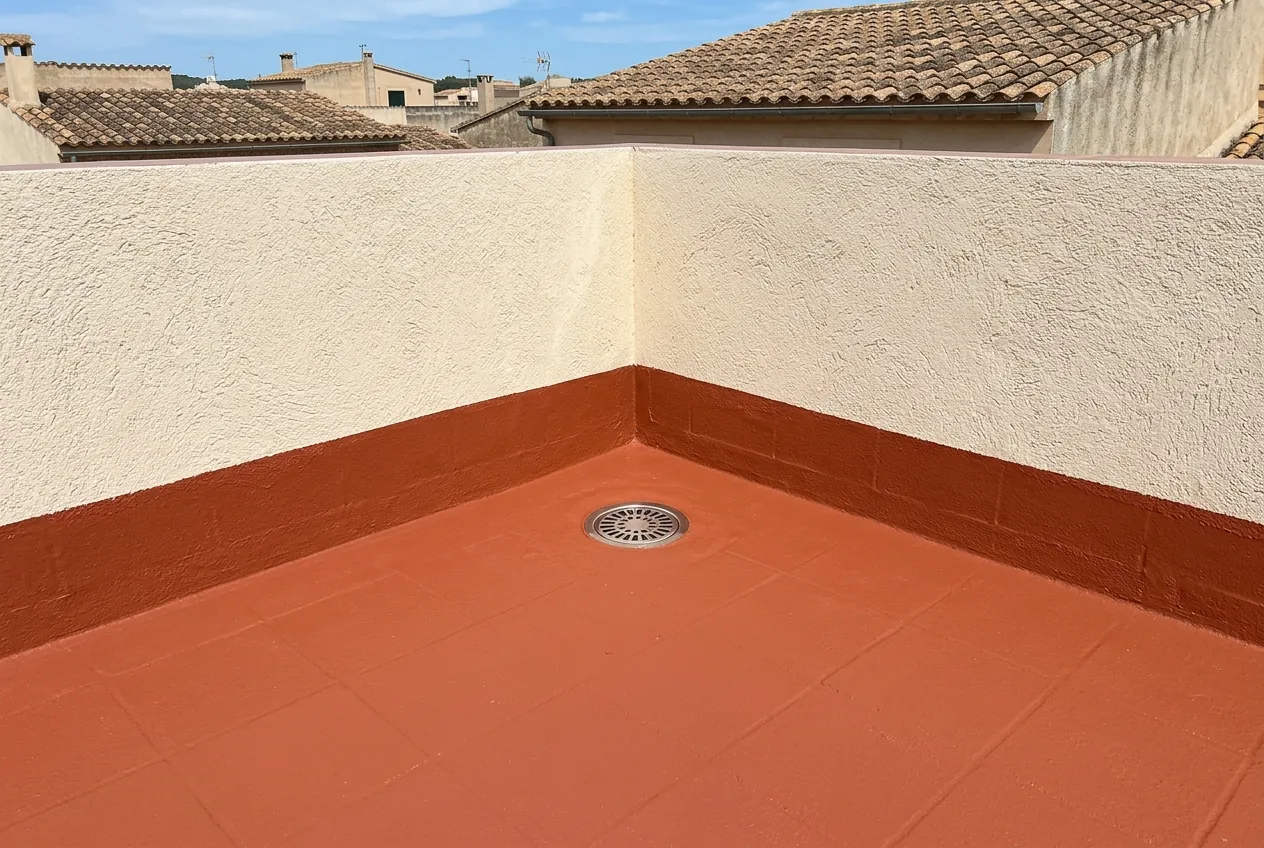
When terrace waterproofing with a liquid membrane over the tiles works, when it does not, how the surface is prepared, what happens with drains and falls, and how long it lasts.
Solera Mallorca
Tell us where the damp appears
A photo of the stain on the ceiling or wall below and another of the terrace above, showing its drains, help us locate the water entry before we visit.