
Resealing stamped concrete
The sealer is the layer that gives stamped concrete its colour, sheen and protection, and the only one that wears out. Resealing it in time is a short job; here we explain which sealer we use, how the floor is prepared and how long it takes before it can be walked on.
Resealing means applying a new coat of sealer to stamped concrete whose previous sealer has worn away but whose surface is still sound. It is the maintenance that separates a floor that lasts for decades from one that needs a full restoration after ten years. These are the decisions involved in resealing stamped concrete: which sealer, which sheen, how many coats, when, and how long to let it dry.
Types of sealer for stamped concrete
There are three families of sealer for stamped concrete, and each has its place.
- Solvent-based acrylic. The most used outdoors. It penetrates the pores, brings the colour to life and gives the wet-look that most people associate with stamped concrete. It recoats well over itself, because the solvent softens the previous coat and fuses with it. It smells during application and needs a completely dry floor.
- Water-based acrylic. No smell and fewer restrictions on application, but it enhances the colour less and usually gives a more matt finish. It is the option when houses are very close together, on enclosed terraces, or when the floor has some residual moisture that will not quite go. It is not always compatible with an earlier solvent-based acrylic; that has to be checked.
- Aliphatic polyurethane. Harder and more resistant to UV radiation, chlorine and hot car tyres. It is used on very exposed pool areas and on busy driveways. It needs a very well prepared surface and, over an old acrylic, a primer or stripping first.
The choice depends on the sealer already on the floor, the exposure and what you expect to see. The guide to water or solvent-based sealer compares them point by point.
Gloss, satin or matt
The level of sheen comes from the sealer and its solids content. Gloss enhances the colour but shows imperfections and dust more; satin is the most common middle ground; matt is discreet and hides wear. In Mallorca, where the red dust of the calima and limestone dust settle on everything, satin usually ages better than high gloss.
Anti-slip additive
A freshly applied sealer, especially a gloss one, is slippery when wet. That is why on pool surrounds, outdoor showers, steps and ramps we add an anti-slip additive to the last coat: polymer microspheres or a very fine aggregate that stays suspended in the film and gives grip without changing the look. You feel it with bare feet and you do not see it.
Preparation
Eighty per cent of a good reseal is preparation. First we identify which sealer the floor has with a solvent test in a corner. Then controlled pressure washing removes dirt, green algae, chlorine residue and any film that is loose. Where the old sealer is flaking, it is stripped completely; a new coat over a layer that is coming away will come away with it. Cracks and broken edges are repaired first, not afterwards. And the floor is left to dry: not just the surface but the pores too, because moisture trapped under the sealer is what causes white patches.
How many coats, and how
Two thin coats, applied crosswise. The first by short pile roller or sprayer, spread out until there is no pooling; the second 4 to 8 hours later depending on the temperature, at right angles to the first. A single thick coat is the most common mistake: it is slow to dry, traps solvent and turns white or peels within months. Two thin coats form a continuous, flexible and even film.
Drying and traffic
- Touch dry: 1 to 4 hours depending on the sealer and the temperature.
- Foot traffic: 24 hours after the last coat.
- Furniture and planters: 48 hours, with felt pads underneath.
- Vehicles: 48 to 72 hours. Hot tyres on a sealer that is still curing leave marks.
- Full hardness: 7 to 10 days.
In low temperatures or high humidity, all of these times get longer.
When stamped concrete can be sealed in Mallorca
The sealer needs a dry surface, a temperature between 10 and 30 degrees and no risk of rain in the following 24 hours. That rules out the middle of the day in July and August, when the floor goes above 40 degrees and the solvent evaporates before the sealer has penetrated, leaving bubbles and roller marks. In summer we work early in the morning or towards evening. In autumn we watch for storms and do not seal the day before one. The best windows are usually April to June and September to November, always with the forecast in front of us.
What resealing recovers and what it does not
A reseal brings back the depth of the colour, the sheen you choose, water repellency and protection against sun, salt air and stains from oil or pine needles. What it does not do is fill cracks, replace colour where the pigment has gone completely or disguise a chipped patch: that is repair and colour restoration work, both part of a full restoration. If your floor has only lost its sheen and water no longer beads on it, resealing is enough. If it is also white, cracked or peeling, it needs the earlier steps first.
Solera Mallorca
How we work
- 01
Check
We identify the existing sealer and its condition with a solvent test.
- 02
Cleaning
Controlled pressure washing, and stripping where the film is loose.
- 03
Drying
The floor has to be dry right through, not just on the surface.
- 04
First coat
Thin, by roller or sprayer, at a time of day with moderate temperatures.
- 05
Second coat
Crosswise, with anti-slip additive on pool surrounds, steps and ramps.
- 06
Curing
24 hours without foot traffic, and a guide date for the next reseal.
FAQ
Questions
Something else? Ask us when you request a quote.
How long does stamped concrete sealer take to dry?
It is touch dry in 1 to 4 hours, can be walked on 24 hours after the last coat and takes vehicles after 48 to 72 hours. Full hardness comes after 7 to 10 days. In cold weather or high humidity, the times get longer.
Water or solvent-based sealer for stamped concrete?
Solvent-based acrylic enhances the colour more and recoats well over itself; water-based acrylic has no smell, tolerates some moisture and gives a more matt finish. If the floor already has a solvent-based sealer, the normal choice is to stay with the same family.
How many coats of sealer does stamped concrete need?
Two thin coats applied crosswise, 4 to 8 hours apart. A single thick coat traps solvent, is slow to cure and is the most frequent reason a sealer turns white or peels.
Can stamped concrete be sealed in summer in Mallorca?
Yes, but not in the middle of the day. With the floor above 30 to 35 degrees the solvent evaporates too quickly and leaves bubbles and marks. The work is done early in the morning or towards evening.
Does resealing make the floor slippery?
A freshly applied gloss sealer is slippery when wet. On pool surrounds, steps and ramps we add anti-slip additive to the last coat, which gives grip without changing the look.
Guides
Related guides
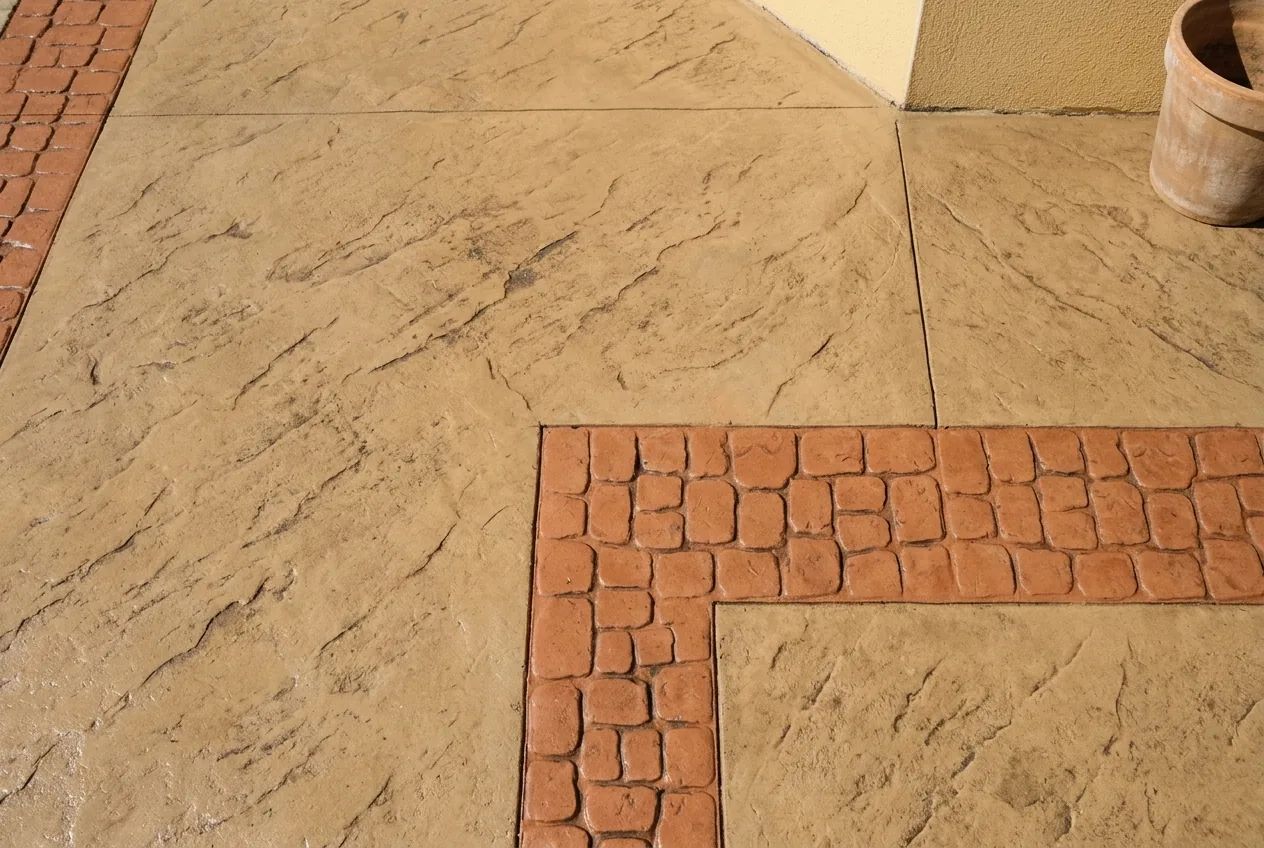
How to choose the colour and pattern of your stamped concrete
How to choose the colour and pattern of stamped concrete: colour and pattern families, how the colour is built up, how it ages in the sun and what suits houses in Mallorca.
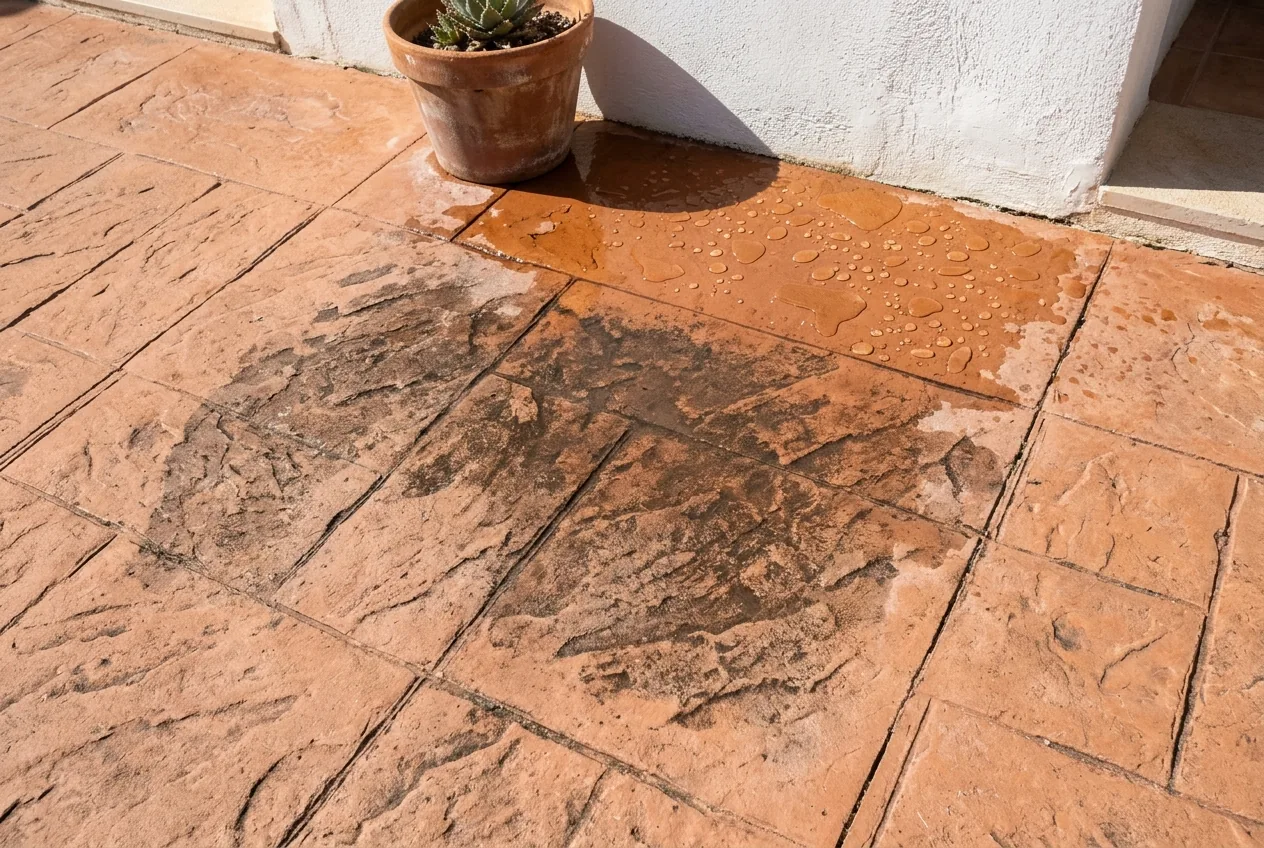
How to seal stamped concrete and how often to reseal it
The resealing cycle for stamped concrete in Mallorca, the signs that it is due, the right steps and the mistakes that ruin a coat of sealer.

White patches and grey areas on stamped concrete
Four different causes make stamped concrete look white or grey, each with its own diagnostic test and its own solution.
Solera Mallorca
Ask for a quote to reseal your floor
Tell us the approximate square metres, whether the floor is in sun or shade and when it was last sealed, and we tell you which sealer suits it.