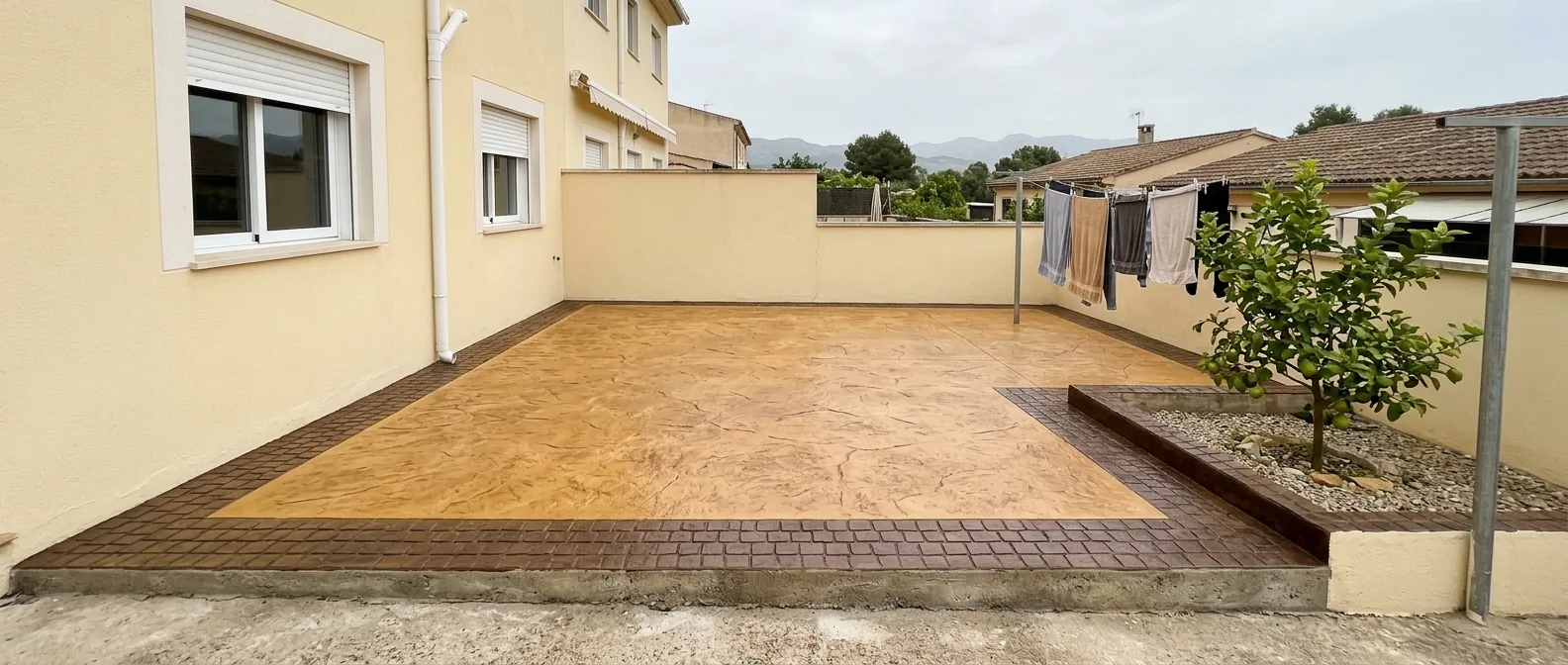
Stamped concrete colours and patterns
Three things decide how stamped concrete finally looks: the base colour, the tone of the release agent left in the joints and the mould that gives the texture. Here we explain how each one works and how to combine them for a house in Mallorca.
Colours
 SandLight, warm tone. Stays cooler in the sun and hides limestone dust. The most requested on terraces and around pools.
 StoneWarm grey close to Santanyí stone. Goes with marès and white façades.
 TerracottaThe red of Mallorcan roof tiles. Needs a sealer with a UV filter and timely resealing to keep the tone.
 OchreBetween sand and terracotta. Works well on driveways and finca tracks.
 GreyNeutral mid grey. For driveways, garages and through routes where tyre marks show less.
 SlateDark grey. Strong contrast with white; it gets hotter in the sun, so it suits shaded areas better.
Moulds and textures
 Random stoneSlabs of different sizes and shapes with a marked joint. The most natural pattern for terraces and gardens.
 CobbleSmall pieces in rows or fans. For driveways, paths and traditional patios.
 Large slabSlabs of 60 to 90 cm with a fine joint. A clean, modern look, often chosen around pools.
 SlateSplit slate texture with little relief. Non-slip and easy to clean.
 TimberBoards with a grain. The look of decking without its upkeep, on terraces and porches.
 FanCobbles laid in arcs. A classic on driveways and squares; it takes more stamping work.
When someone searches for "sand coloured stamped concrete" or "stone effect patterned concrete", they are asking about two different decisions that are made at the same time. This page separates them so that you can choose with good judgement. The full system is on the page on stamped concrete.
How stamped concrete is coloured
The colour of stamped concrete is not a paint or a tinted varnish: it is part of the surface. A colour hardener, a dry mix of cement, fine aggregate and mineral pigments, is broadcast over the freshly spread concrete and trowelled in until it becomes part of the top few millimetres. Those millimetres are what you see and walk on, which is why the colour lasts through decades of use without disappearing, although it does dull if the sealer protecting it wears out.
Before stamping, the release agent goes on: another powder, normally a shade darker than the base, that stops the mould sticking to the fresh concrete. The next day most of it is washed off, and what stays in the joints and the hollows of the texture gives the aged shading and the sense of depth. A sand base with a brown release agent looks like old stone; the same base with a light grey release agent looks like new stone. Changing the release agent changes the floor as much as changing the base colour.
Finally, the sealer brings the colour to life, like water on a wet stone, and gives it a matt, satin or gloss finish. A matt sealer leaves the tone more natural; a gloss one saturates it.
The colour families
- Sands and beiges. The most requested in Mallorca. They go with marés (the island's golden sandstone), dry stone walls and white or ochre facades. They stay relatively cool in the sun, which is why they are the usual choice around pools.
- Terracottas and reds. They recall fired clay and the floors of old village houses. They look good in inner courtyards and porches, but they get hotter and we avoid them around pools.
- Greys. From light grey to dark cement. They work with contemporary architecture, aluminium and glass. Mid greys hide tyre marks well on driveways.
- Slates and anthracites. The darkest. Elegant in large slabs and slate textures, but they hold the most heat and show the island's limestone dust the most.
- Ochres and earths. Between sand and terracotta, with golden hints. They blend into gardens with pines, olive trees and the reddish soil of the interior.
Within each family there are several shades. Bear in mind that a small sample always looks darker than the same colour across a 60 square metre terrace in the sun.
The usual moulds
- Random stone. Flags of different sizes with winding joints. The most used in Mallorca, because it imitates the island's natural stone and hides the expansion joints well.
- Cobble. Small setts in rows, herringbone or arcs. It gives the feel of an old street and grips well on ramps and driveways.
- Slate. Rectangular slabs with a fine, cleft texture. A tidier look, suited to terraces and porches with straight lines.
- Timber. Grained planks. It calls for a toasted or weathered grey colour and works on porches and walkways; it has less relief, so around pools it gets anti-slip aggregate.
- Fan. Small setts laid in arcs. Traditional and striking in squares and wide driveways, less suited to narrow spaces.
- Large slab. 60 x 60 cm or larger with a fine joint. The most contemporary finish; it goes with greys and slates.
There are also English stone, river pebble and brick moulds, and matching edge moulds for steps and pool copings.
How the colour ages and how it is recovered
Summer after summer, the sealer wears away with sun, water and traffic. Once it has gone, the colour is left unprotected: the surface turns porous, the tone lightens and white patches appear, along with green algae in shaded areas and marks that no longer clean off. Many people then think the colour has gone; in fact it is still there, only dulled.
A thorough clean and two coats of new sealer almost always bring back the original tone, just as wetting a dry stone does. If the wear has reached the colour hardener, a pigmented sealer or a stamped concrete stain is applied to put the colour back before the clear sealer. That work is described on the page on resealing stamped concrete, and it is the reason we treat resealing as part of the floor, not as a repair.
How to choose for a house in Mallorca
Three pieces of advice we repeat at every visit. First, choose the colour by looking at the facade, the stone and the window frames, not the catalogue: a mid sand with a light brown release agent suits almost any house on the island, and a grey with anthracite almost any modern one. Second, choose the mould for the use: a pronounced texture around pools and on ramps, a quiet format on large terraces, cobble or stone on driveways. Third, ask to see a large sample, a square metre if possible, with the sealer already on and in full sun, because a catalogue sample is seen indoors and dry. For more detail, see the guide on choosing stamped concrete colours and patterns.
FAQ
Questions
Something else? Ask us when you request a quote.
What are the most common stamped concrete colours?
Sands and beiges, followed by terracottas, greys, slates and ochres. In Mallorca sand tones dominate because they suit marés stone and stay relatively cool in the sun, with greys on houses of contemporary design.
What types of stamped concrete moulds are there?
The most common are random stone, cobble, slate, timber, fan and large slab, with variants such as English stone, river pebble and brick. There are edge moulds for steps and pool copings to match each texture.
Can the colour of stamped concrete be changed after it is laid?
The tone can be altered with a pigmented sealer or a specific stain, which allows it to be darkened or evened out; going from a dark colour to a light one is harder and the result looks less natural. The usual course is to recover the original colour with cleaning and new sealer.
Why does stamped concrete turn white?
For two different reasons. If the sealer was applied over damp concrete or with rain about to fall, moisture is trapped and the sealer turns milky; it is corrected by removing it and applying it again. If the sealer has simply worn away over the years, the pores are left open and the surface lightens; it is corrected by cleaning and resealing. More in the guide to white patches on stamped concrete.
Does timber effect stamped concrete look like wood?
Up close you can tell it is concrete, but from two metres away a plank texture in a toasted colour with a dark release agent is convincing, without the upkeep or the splinters of real wood. It has less relief than stone, so around pools it gets anti-slip aggregate in the sealer.
Guides
Related guides
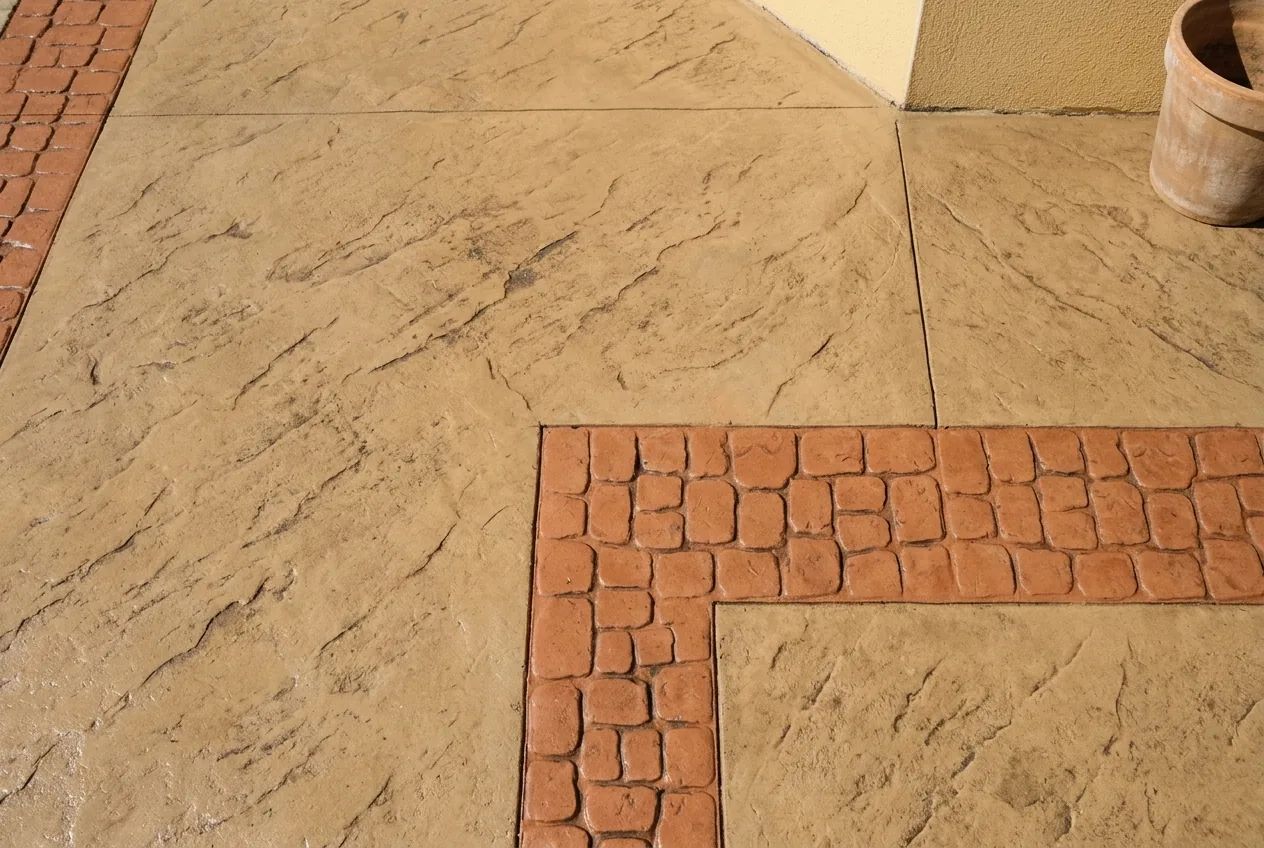
How to choose the colour and pattern of your stamped concrete
How to choose the colour and pattern of stamped concrete: colour and pattern families, how the colour is built up, how it ages in the sun and what suits houses in Mallorca.
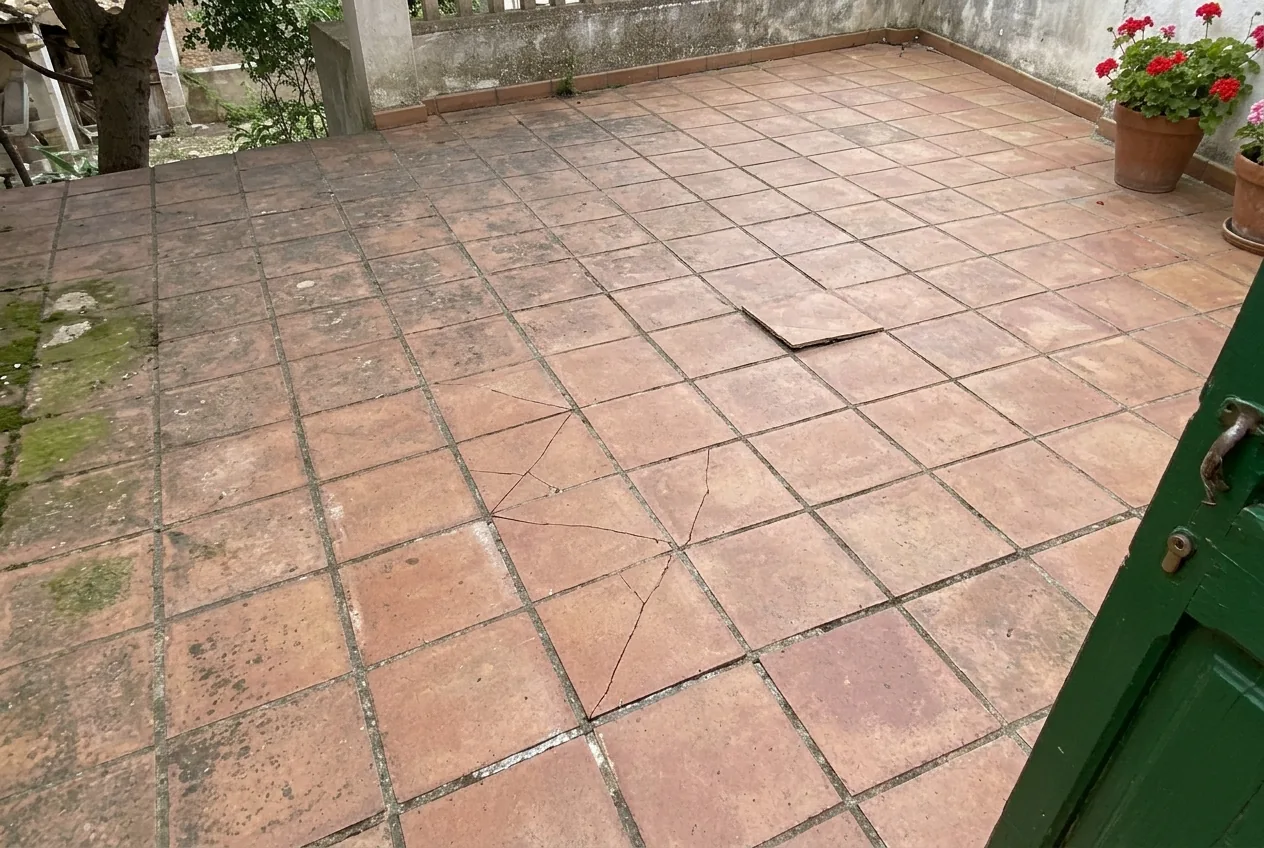
Stamped concrete or tiles for terraces and pools
Stamped concrete versus ceramic and stone tiles on terraces and pool surrounds: joints, slip resistance, heat, cost factors, repairs and lifespan.
Solera Mallorca
Choose the colour and mould with us
Send us photos of the facade, the stone and the garden. We suggest two or three combinations of colour and texture that suit what you already have.