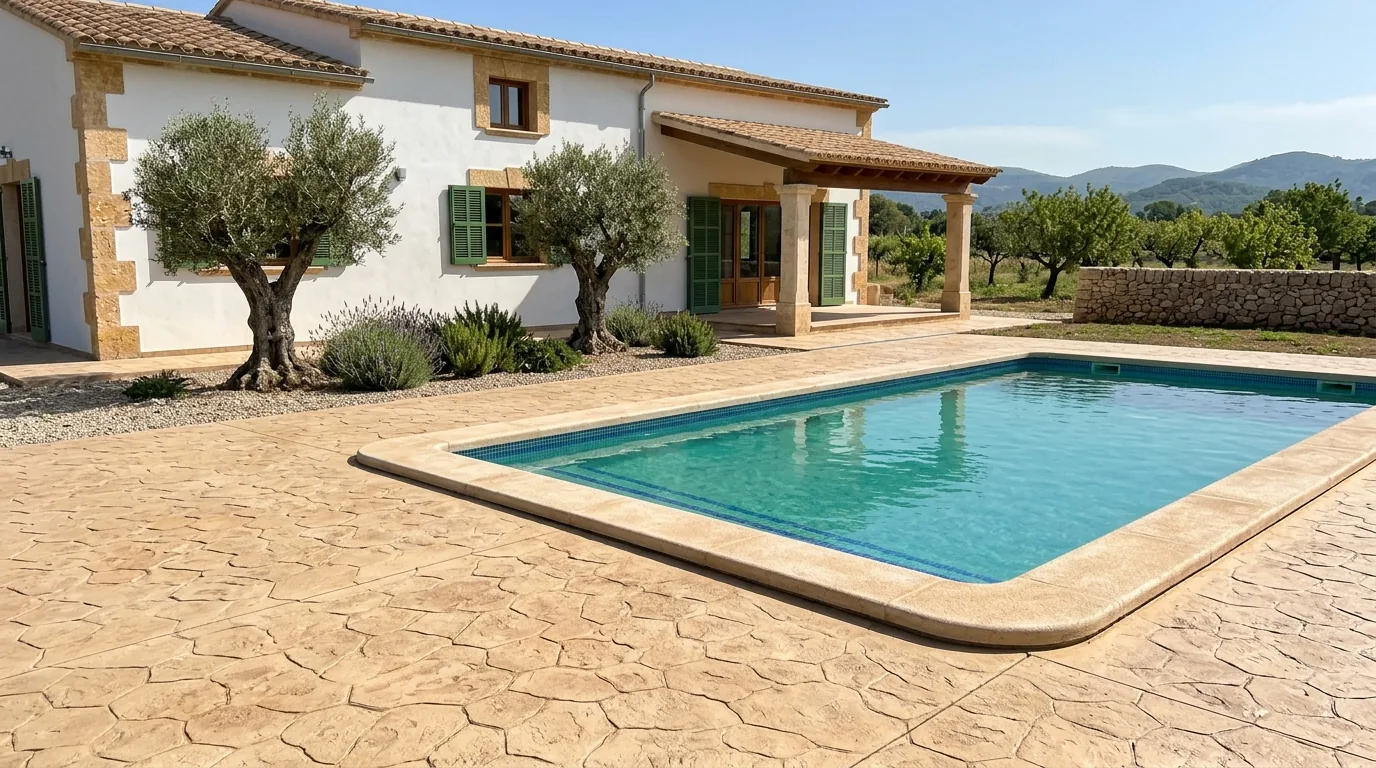
Paving and exterior surfaces
Stamped concrete and microcement in Mallorca
Solera Mallorca installs and protects exterior surfaces across the whole island: stamped concrete, microcement, restoration and resealing, terrace waterproofing and pavement sealing. We build it, we protect it and we restore it, because an outdoor surface in Mallorca needs all three.
Services
Five services, one standard
We install new surfaces and protect the ones you already have. Everything you walk on outside the house.
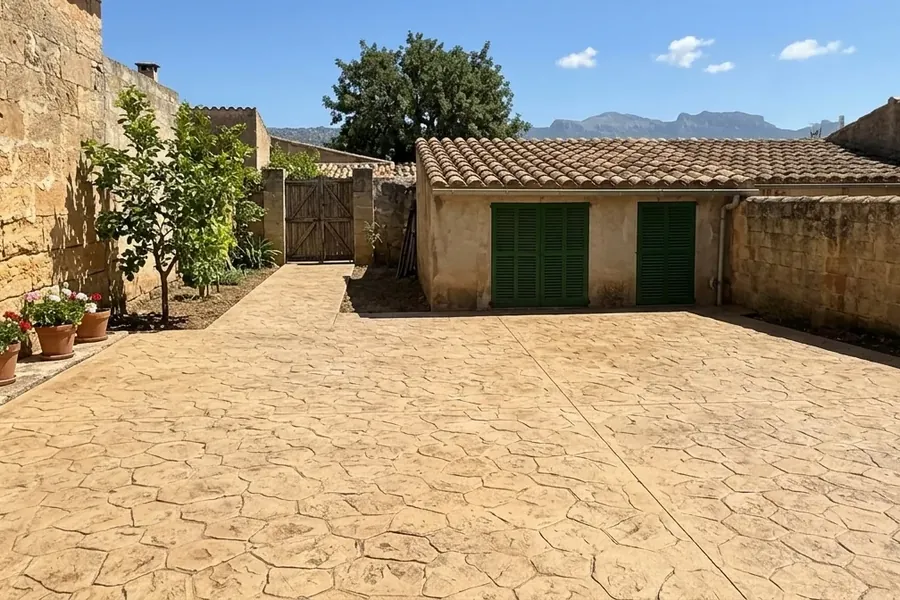
Stamped concrete
terraces, pool surrounds, driveways and paths
See the service →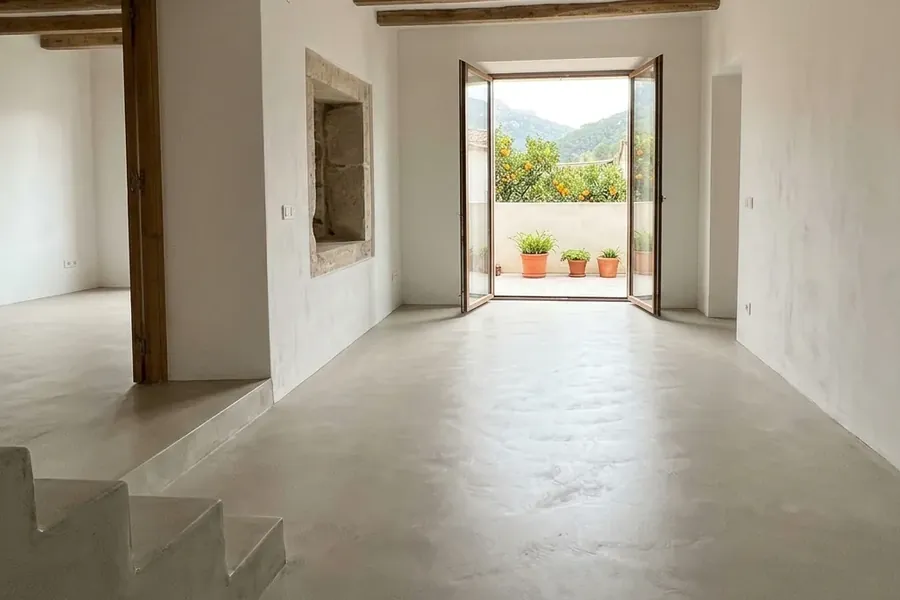
Microcement
floors, walls, stairs and pools
See the service →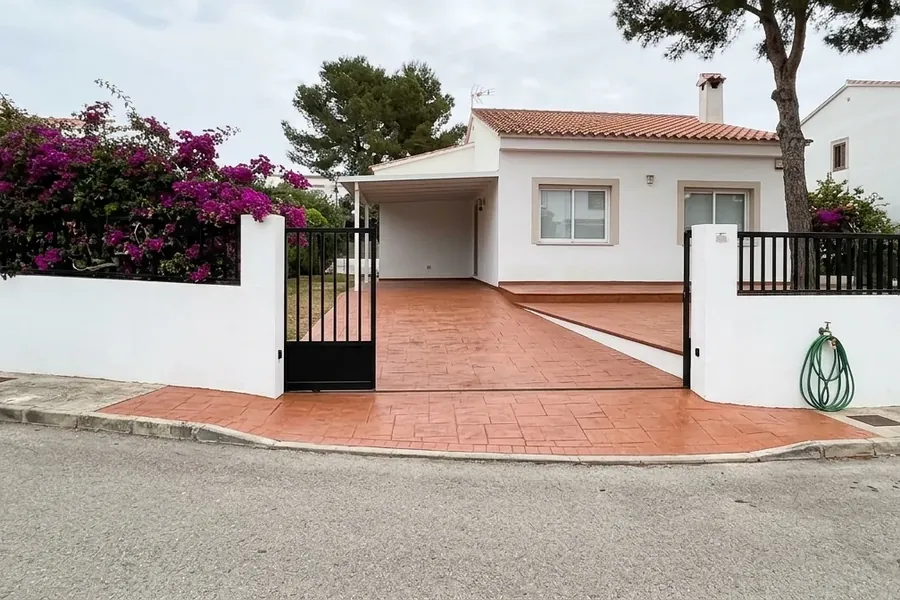
Restoration and resealing
cleaning, cracks, colour and new sealer
See the service →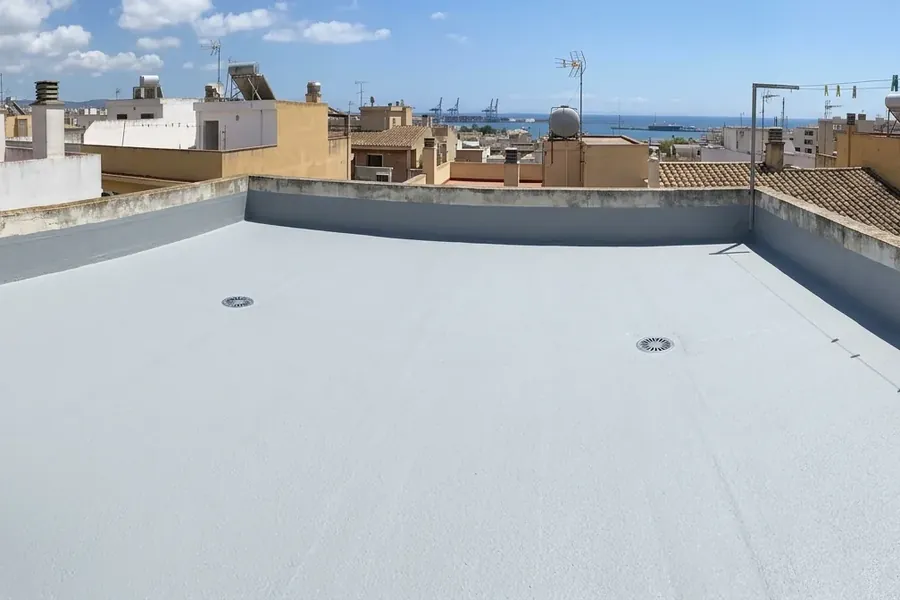
Terrace waterproofing
liquid membranes, with or without lifting the floor
See the service →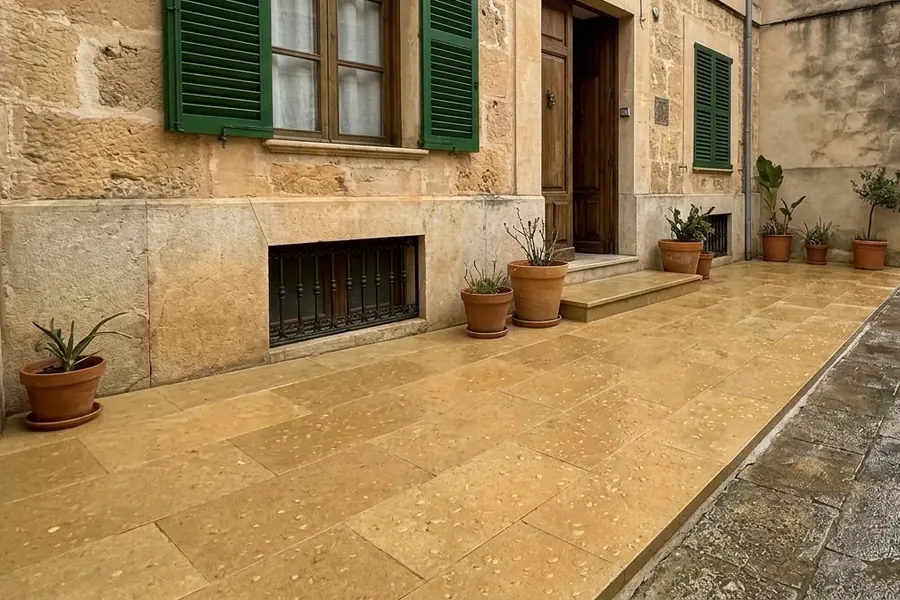
Pavement sealing
concrete, private asphalt, stone and pavers
See the service →One team for the whole exterior
Stamped concrete, microcement, waterproofing and sealing with the same person in charge, the same standards and a single quote.
Quotes with the sub-base and the sealer in writing
Every line itemised: excavation, compacted gravel, mesh, thickness, colour, pattern, joints and sealing. That is how quotes can be compared.
We come back
Stamped concrete needs resealing every few years. We note it down and let you know when it is due, instead of letting the floor fade.
Made for Mallorca
Sun, salt, torrential rain and pine trees. We choose finishes, sealers and falls for this island, not from a catalogue.
Solera Mallorca
How we work
The same route on every job, from the first message to the handover.
- 01
Photos or a visit
Send us photos and square metres, or we come out when the site calls for it.
- 02
Itemised quote
Sub-base, thickness, finish and sealing, each as a separate line.
- 03
The work
One team prepares, pours, stamps and seals.
- 04
Curing and handover
We tell you when to walk on it, when to park on it and how to clean it.
- 05
Resealing
We come back when the sealer needs it, not when the floor has already turned white.
Colours
Stamped concrete and microcement colours
Stamped concrete is chosen by colour and by texture, and microcement by colour family and finish. These are the ones most asked for in Mallorca.
Stamped concrete
Colours and patterns → SandLight, warm tone. Stays cooler in the sun and hides limestone dust. The most requested on terraces and around pools.
 StoneWarm grey close to Santanyí stone. Goes with marès and white façades.
 TerracottaThe red of Mallorcan roof tiles. Needs a sealer with a UV filter and timely resealing to keep the tone.
 OchreBetween sand and terracotta. Works well on driveways and finca tracks.
 Random stoneSlabs of different sizes and shapes with a marked joint. The most natural pattern for terraces and gardens.
 CobbleSmall pieces in rows or fans. For driveways, paths and traditional patios.
Microcement
Colours and finishes → Off-whiteA warm white rather than a pure one. Makes bathrooms and small rooms feel larger and shows fewer marks than pure white.
 SandA warm tone that goes with marès, timber and lime. Works indoors and out, and stays cooler in the sun.
 Pearl greyA light, neutral grey. The look of cement without darkening the room, in modern flats with white walls.
 Cement greyThe mid grey most people picture as microcement. Kitchens, clean-lined living rooms and stairs.
 TaupeA brownish grey between sand and grey. Goes with timber and stone and hides dust very well.
 AnthraciteA very dark grey for contrast on a feature wall, a unit or a staircase. Shows dust and lime more.
Stamped concrete is a continuous concrete slab that is coloured while fresh, textured with moulds and protected with a sealer. It has been used on Mallorca for decades on terraces, pool surrounds, driveways and finca tracks, for good reasons: there are no joints for weeds to grow through, it carries vehicles, it follows any plot shape and, properly sealed, it stands up to sun, salt and the autumn rains.
Why stamped concrete works well in Mallorca
The island is hard on outdoor surfaces in specific ways. The July and August sun heats and bleaches; sea air leaves salt on terraces in Calvià, Andratx, Alcúdia and Santanyí; the torrential rain of September and October carries soil and finds any open joint; in the shade of pine trees, algae and needles build up. A tiled terrace fails at its joints, gravel washes away, and timber decking needs constant attention.
Stamped concrete answers each of those problems if it is built properly: a compacted sub-base that does not move, a thickness suited to the use, steel mesh or fibres according to the load, expansion joints cut on time and, above all, a sealer, which is what really protects the colour and the surface. That sealer wears away over the years, and that is why we talk about protecting and restoring, not only building.
New stamped concrete
Terraces, pool copings, driveways, garden paths and finca tracks. We choose the mould and colour with you, prepare the sub-base and hand over the surface sealed and with curing instructions. The full detail is on stamped concrete.
Microcement
A continuous coating a few millimetres thick for floors, walls, stairs and pools, indoors and out, including over existing tiles. Indoors, the most common job is renewing a bathroom, a kitchen or a floor without breaking anything out: microcement over tiles adds 2 to 3 mm and leaves no rubble, and a microcement bathroom is finished in five to eight days. On floors it gives a jointless surface from one room to the next, and the same colour can carry on up walls, kitchens and stairs.
Outdoors, on terraces, porches and pool edges, it takes a sealer with a UV filter and anti-slip aggregate where people walk wet. The colour is chosen from a sample in your home, from six colour families or mixed to order, and microcement cost explains what moves the price. What you need to know about substrates, finishes and limits is on microcement.
Restoration and resealing
Stamped concrete that has turned whitish, lost its colour or shows cracks and chipped edges can almost always be recovered without breaking it out. Cleaning, crack repair, colour restoration and a fresh sealer bring back the original look. We explain it on stamped concrete restoration.
Terrace waterproofing
When a terrace or flat roof leaks into the room below, lifting the floor is not always necessary. Continuous liquid membranes are applied over the existing tiles, run up the parapets and seal around the drains. When that is possible and when it is not: terrace waterproofing.
Pavement sealing
Sealing protects what you already have: concrete slabs, private asphalt on finca tracks and community car parks, natural stone and pavers. A sealed surface cleans more easily, absorbs less water and ages more slowly. More on pavement sealing.
Why we insist on protecting and resealing
Most of the problems we see on stamped concrete around the island do not come from the concrete but from the sealer: applied in a single coat, applied over damp concrete, or simply worn out after several summers without renewal. Once the sealer is gone, the colour is exposed to sun and water, the surface becomes porous and the floor starts to stain and whiten. Resealing on time costs a fraction of a full restoration, which is why it is part of the conversation from the first quote.
How a job runs
We start with photos and measurements, or with a visit where there are level changes, difficult access or doubts about drainage. The quote lists sub-base, thickness, reinforcement, finish and sealing as separate items, so you can compare it with others. One team carries out the whole job: excavation or preparation, formwork, pour, colour, stamping, joint cutting, cleaning and sealing. At handover we give you the curing times, how to clean and when the sealer should be checked. We work across the whole of Mallorca from Palma, from Andratx to Manacor and from Llucmajor to Pollença, and we are used to dealing with owners who are abroad for part of the year and with property managers acting on their behalf.
Areas
Across Mallorca
From Palma we work across the island: Calvià and Andratx, Marratxí and Llucmajor, the Raiguer, the Llevant and the bay of Alcúdia.
Palma
Penthouse terraces, community courtyards, villas in Son Vida and Gènova, and the seafront from Es Molinar to Cala Major.
Calvià and Andratx
Villas with pools, steep ramps and salt air from Portals Nous to Camp de Mar, with owners abroad and property managers.
Marratxí and Llucmajor
Estates of detached houses with a front parking area, from Pòrtol and Sa Cabaneta to S'Arenal, Badia Blava and Sa Torre.
Inca and the Raiguer
Fincas with long tracks, clay soils that move and village houses with courtyards, from Santa Maria to Sa Pobla and Muro.
Manacor and the Llevant
Holiday villas from Porto Cristo to Cala Ratjada, east coast estates, Santanyí stone and large fincas.
Pollença and Alcúdia
The foot of the Tramuntana, humidity from the bay, houses closed in winter, and salt and wind from Port de Pollença to Can Picafort.
Guides
Outdoor sealing guide
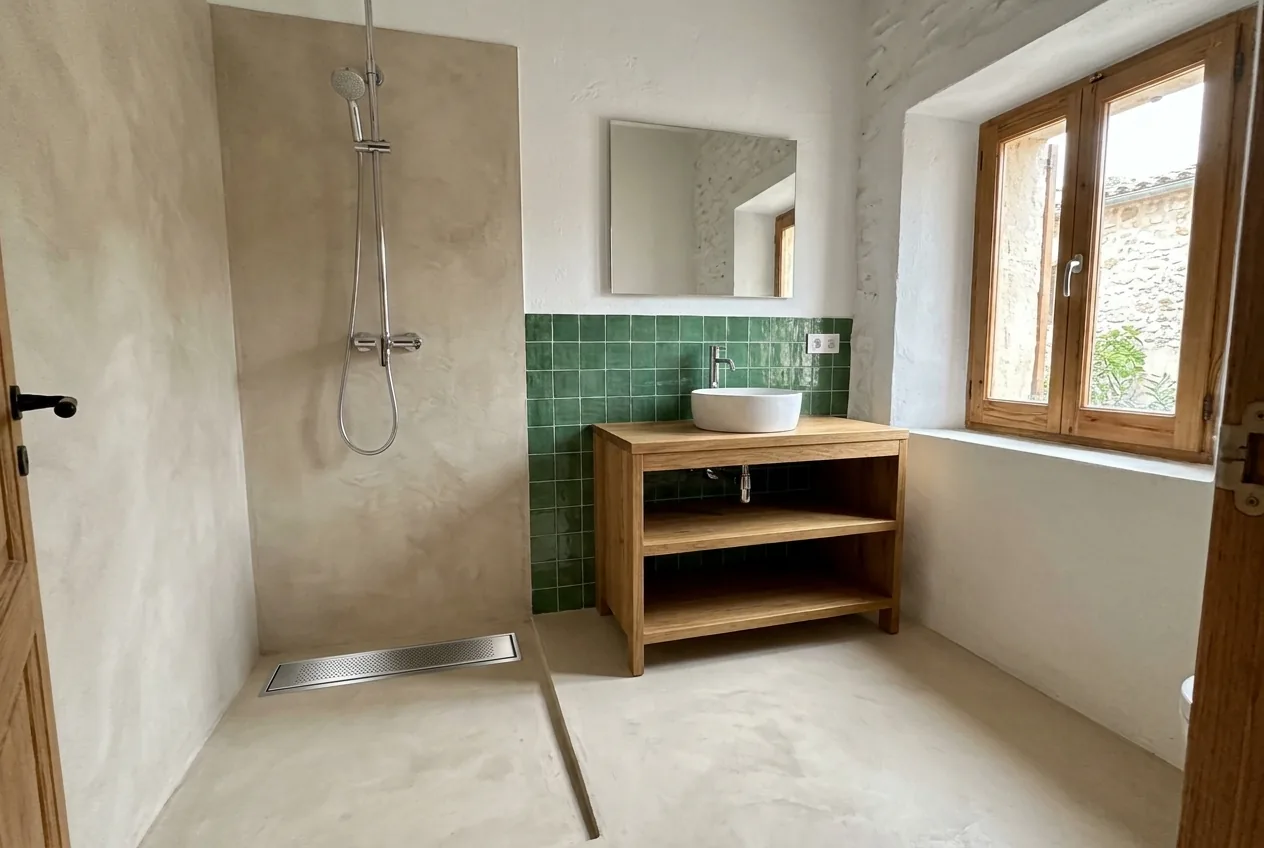
Microcement or tiles: which suits each case
Microcement versus tiles in bathrooms, kitchens, floors and outdoors: looks, building work, thickness, showers, wear, maintenance, repairs and cost.
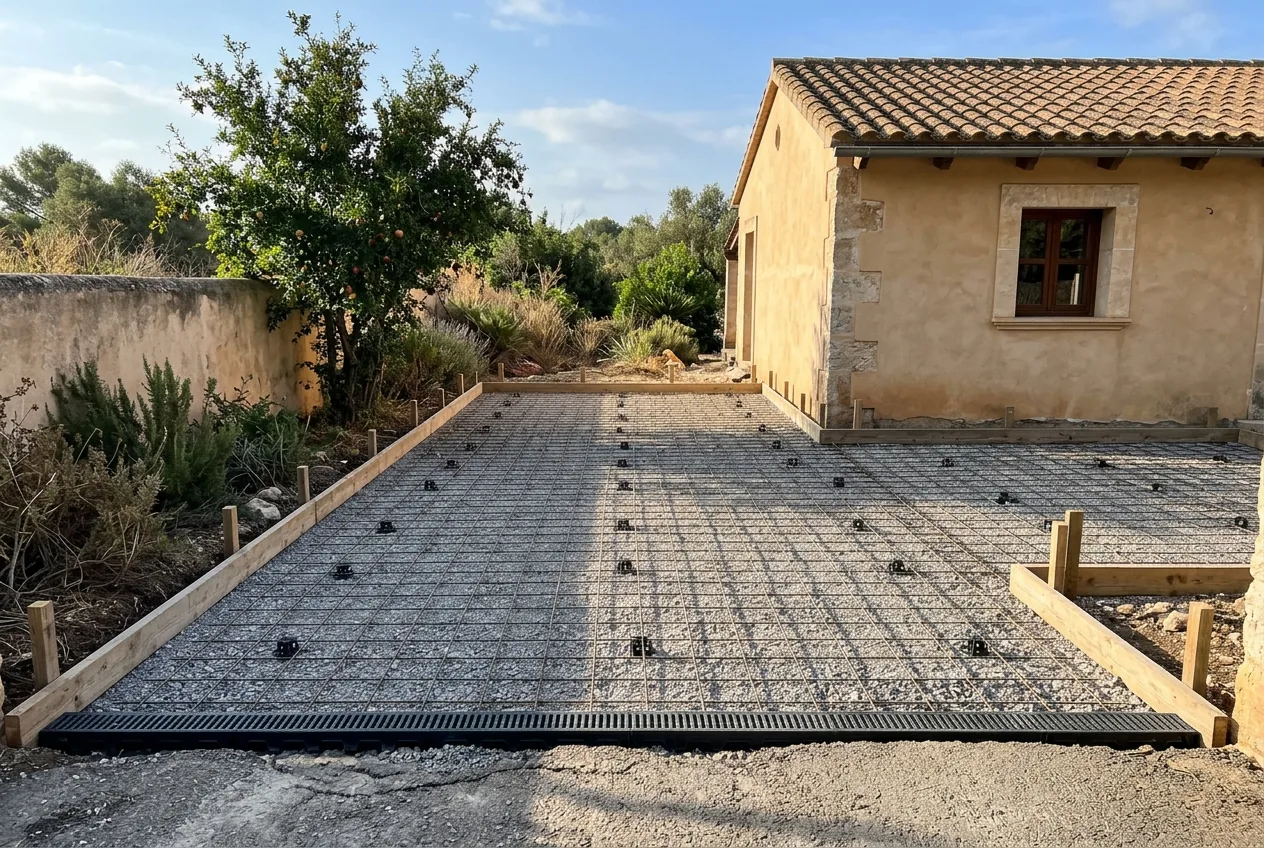
Stamped concrete quotes: what goes into them and how to compare them
The items that make up the price of stamped concrete per square metre in Mallorca, how to read a quote, why cheap ones cut the sub-base or the sealer, and how to compare.
Does microcement last outdoors? Sun, salt, rain and pools
What microcement withstands outdoors and what it does not: sun, salt air, pools, torrential rain, thermal movement, sealers, slip resistance, maintenance and the base.
FAQ
Questions before we start
Something else? Ask us when you request a quote.
Which is better, stamped concrete or polished concrete?
It depends on the use. Stamped concrete has texture, colour and relief, so it is slip resistant and hides dirt; it is the usual choice outdoors around pools, on slopes and where cars pass. Polished concrete is smooth and plainer in appearance, more slippery when wet, and is usually kept for interiors, garages and covered porches.
Which is cheaper, stamped concrete or tiles?
On medium and large areas, stamped concrete usually works out cheaper than good quality exterior tiles laid on a slab, because the slab and the finish are the same piece and there are no joints to grout. On very small areas the difference narrows because of the fixed costs of machinery and moulds.
Microcement or stamped concrete for a terrace?
It depends on what is underneath and how the terrace is used. Stamped concrete is a new slab, 8 to 10 cm thick for foot traffic and 12 to 15 cm for cars: it is the choice when starting from bare ground or when the old surface has to come up, and for driveways. Microcement is a 2 to 3 mm coating over a sound surface that is already there, such as tiles or a concrete slab, with a smooth, continuous finish that can carry on indoors; outside it takes a sealer with a UV filter and anti-slip aggregate. We do both, so we recommend one when we see the terrace.
Can microcement go over tiles?
Yes, if the tiles are sound and dry. Each tile is tapped, hollow ones are removed, the joints are levelled, the glaze is sanded and an adhesion primer goes on; the system adds 2 to 3 mm and doors almost never need trimming. In the shower, waterproofing goes underneath as well. We explain it on microcement over tiles.
How long does stamped concrete take to cure?
It can be walked on with care after 24 hours, it is sealed between 7 and 28 days later depending on humidity and temperature, and it takes light vehicles from 7 days, preferably after sealing. The concrete keeps gaining strength for four weeks.
How often does stamped concrete need resealing?
In Mallorca, with strong sun and pool areas, the sealer usually needs renewing every 2 to 4 years. In shaded areas with little traffic it lasts longer. The sign is visual: when the floor loses its sheen or the colour fades, it is time to reseal.
Is stamped concrete slip resistant?
Yes, because of its relief, and it can be improved further by adding an anti-slip aggregate to the sealer. On pool copings and ramps we choose moulds with a pronounced texture and a sealer with anti-slip additive to reach the slip class the use requires.
Solera Mallorca
Tell us about the surface you have in mind
A few photos of the space, the approximate square metres and the municipality are enough for us to advise on the system and the timing.
Let's talk about your exterior
A few photos and the approximate size are enough to start. We'll tell you what the surface needs, what it doesn't, and how long it takes.