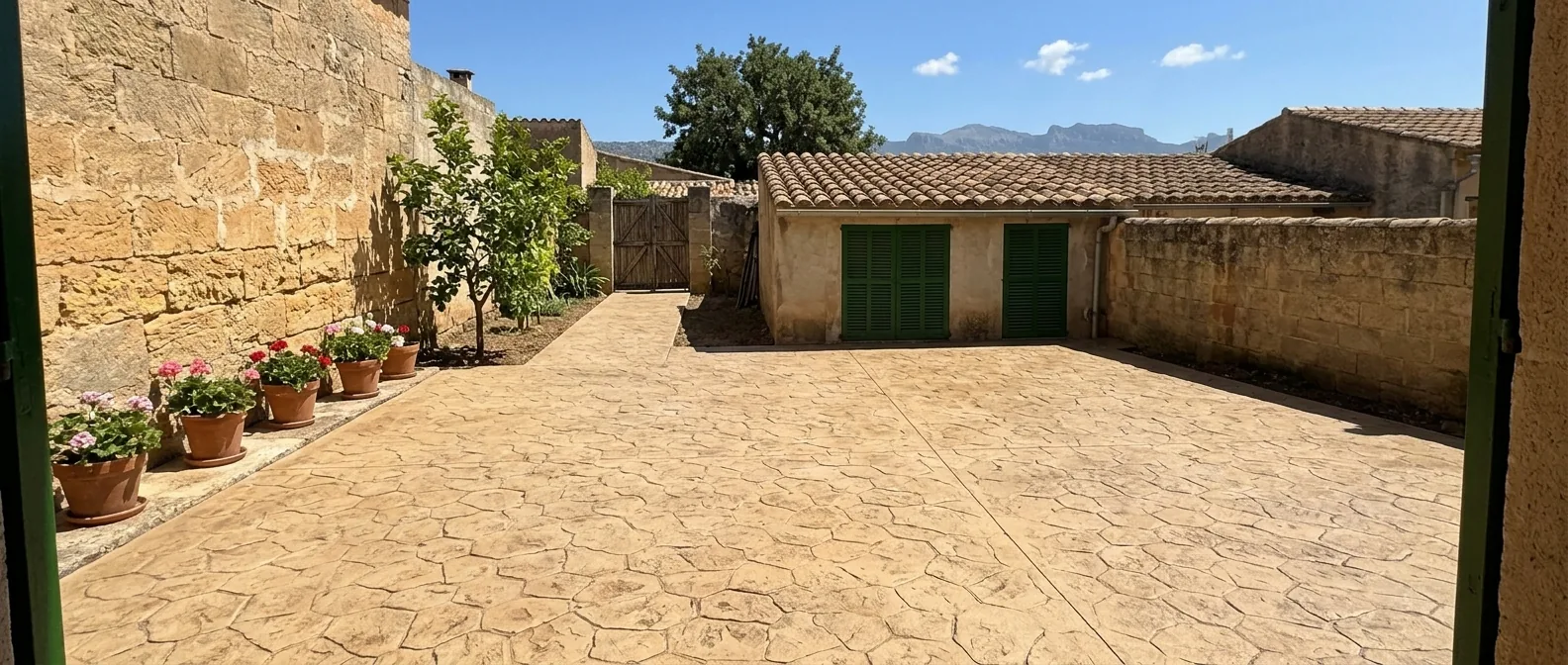
Stamped concrete in Mallorca
Stamped concrete paving for terraces, pool copings, driveways, paths and finca tracks. Compacted sub-base, thickness to suit the use, colour hardener, your choice of mould and a sealer, with resealing planned from the start.
Stamped concrete, also called imprinted or pattern imprinted concrete, is a concrete slab that is coloured on the surface while still fresh, pressed with polyurethane moulds that reproduce stone, slate, cobbles or timber, and protected with a sealer. The result is a continuous surface with no loose pieces and no mortar joints, with the strength of a slab and the look of the material it imitates.
Where it is used in Mallorca
On the island, stamped concrete turns up mainly in four places. On terraces and pool surrounds, because there are no joints for chlorinated water to get into and no pieces that lift in the heat. On driveways and parking areas of villas and residential communities, because it takes the weight of a vehicle without sinking the way badly bedded pavers do. On finca tracks and paths, where it replaces gravel that washes away with every storm. And in gardens, courtyards and porches, as a walkway that sits well with marés stone and Mediterranean planting.
What goes into stamped concrete
A well built stamped surface has five layers, and each one is there for a reason.
- The sub-base. Compacted crushed aggregate, normally 10 to 20 cm, on firm ground with no topsoil. This is the layer that stops the concrete settling and cracking. On the clay soils of the interior or on recent fill it needs more depth or a geotextile.
- The concrete. A slab of 8 to 10 cm for foot traffic and 12 to 15 cm where vehicles pass, with welded steel mesh or polypropylene fibres to spread the stresses.
- The colour hardener. A powder of cement, fine aggregate and pigment that is broadcast over the fresh concrete and trowelled in. It gives the base colour and hardens the surface.
- The release agent. A second, darker powder that stops the mould sticking and leaves the shading in the joints and relief. It is partly washed off the next day, and what remains gives the pattern its depth.
- The sealer. An acrylic sealer, solvent or water-based, in two coats. It closes the pores, fixes the colour, repels water and dirt and gives the matt, satin or gloss finish.
Finishes, colours and moulds
The moulds most often requested in Mallorca are random stone, slate, cobble, timber plank and fan, plus large slabs for more contemporary terraces. In colours, sands and beiges dominate, because they sit well with marés stone and white facades, followed by terracottas, greys and slates. The base colour, the release agent and the sealer finish combine, and the same texture changes a great deal depending on that combination. We bring samples to the visit.
There is also smooth or fine textured stamped concrete, which is trowelled and coloured but barely imprinted. It looks more restrained, but it is more slippery when wet and we do not recommend it on pool copings.
Sub-base and thickness
The question of how thick stamped concrete needs to be has a short answer and a long one. The short one: 8 to 10 cm for people, 12 to 15 cm for cars. The long one: thickness is of little use if the sub-base is not compacted, if the concrete has no reinforcement or if the expansion joints are not cut in time. Most of the cracked stamped concrete we restore has the right thickness and an inadequate sub-base.
That is why our quotes separate the sub-base from the concrete. A price per square metre that does not say how many centimetres of aggregate it includes, or whether it is compacted with a roller or a plate, cannot be compared with another.
Curing: when you can walk on it
Concrete sets in hours but cures in weeks. It can be walked on with care after 24 hours; the joints are cut between 24 and 48 hours; the sealer goes on once the concrete has lost its moisture, normally between 7 and 28 days depending on the season; vehicles wait at least 7 days and preferably until after sealing. In summer we water or cover the surface for the first few days so that it does not dry too fast, because rapid drying under the Mallorcan sun produces fine shrinkage cracks.
Sealing and maintenance
The sealer is what separates stamped concrete that ages well from stamped concrete that turns white and porous after three years. Two thin coats protect better than one thick one, and applying it over damp concrete is the usual cause of white patches. In pool areas and on ramps we add an anti-slip aggregate to the second coat.
Maintenance is simple: sweep or blow off leaves and pine needles, hose down with water and a neutral detergent, avoid acids such as hydrochloric acid, and do not use a pressure washer close to the sealer. And renew the sealer every 2 to 4 years, before it disappears altogether. That renewal is part of our work and we raise it at the first visit; once the floor has already lost its colour, we are talking about restoration.
Stamped concrete, polished concrete or tiles
Compared with polished concrete, stamped concrete is slip resistant through its relief, hides dirt better and comes in more colours; polished concrete is smoother and cleaner looking but slippery when wet, so it is kept for interiors and covered areas. Compared with exterior tiles, stamped concrete has no joints to get dirty and no pieces to lift, it follows curves and level changes and, on medium and large areas, usually costs less per square metre. Tiles win when you want to be able to replace individual pieces or when format and texture matter more than continuity.
What moves the price
The price per square metre of stamped concrete depends on the total area, the state of the ground and the sub-base it needs, access for the mixer lorry, thickness and reinforcement, the mould and colour chosen, edges and joints, and the sealer. For a specific figure, ask for a quote with photos and measurements and we itemise each part.
Solera Mallorca
How it is done
- 01
Visit and setting out
We measure, check access for the mixer lorry and mark falls towards the drains.
- 02
Sub-base
We excavate or clear, spread aggregate and compact it in layers.
- 03
Formwork and reinforcement
We fix the edges, the mesh or fibres and the separation sheets.
- 04
Pour and colour
We spread and level the concrete and apply the colour hardener while fresh.
- 05
Stamping
With release agent applied, we press the chosen mould before the concrete hardens.
- 06
Joints and cleaning
After 24 to 48 hours we cut the expansion joints and wash off the excess release agent.
- 07
Sealing
Once the concrete is dry, two coats of sealer, with anti-slip additive where needed.
More on stamped concrete
Terraces and pool surrounds
Non-slip stamped concrete for terraces and pool surrounds: textures, cool colours, falls and joints.
Driveways and paths
Stamped concrete driveways, parking areas and finca tracks: thickness, steel mesh, falls and drainage.
Colours and patterns
Stamped concrete colours and patterns: sands, terracottas, greys and slates with stone, cobble, timber or fan moulds.
Prices
What moves the price of stamped concrete per m² in Mallorca, and how to read a quote before comparing it.
FAQ
Questions
Something else? Ask us when you request a quote.
How long does stamped concrete take to cure?
It can be walked on with care after 24 hours and without restriction after 3 or 4 days. Joints are cut within the first 48 hours. The sealer is applied once the concrete is dry, between 7 and 28 days depending on humidity and temperature, and vehicles wait at least 7 days. The concrete reaches its design strength at 28 days.
How thick does stamped concrete need to be?
Between 8 and 10 cm for terraces, paths and pedestrian areas, and between 12 and 15 cm for driveways, parking areas and tracks used by vans or small tractors. Always on a compacted aggregate sub-base and with mesh or fibres.
Why does stamped concrete crack?
The most common causes are a poorly compacted sub-base or one containing topsoil, expansion joints cut too late or too far apart, drying too fast in summer and a lack of reinforcement. Fine surface cracks are normal and are hidden by resealing; cracks that go through the slab point to a sub-base problem and are repaired with specific resins or mortars.
How do you maintain stamped concrete?
Sweep regularly, hose down with water and neutral soap, avoid acids and high pressure washing close to the surface, and renew the sealer every 2 to 4 years. If white patches appear or the colour fades, the sealer has aged or was applied over moisture and should be checked.
Is stamped concrete slip resistant?
Yes. The relief of the mould already gives grip, and on pool copings, ramps and steps an anti-slip aggregate is added to the sealer to reach slip class 3, which the Spanish building code requires in outdoor and pool areas. Smooth or very finely textured moulds do not achieve it on their own.
Guides
Related guides
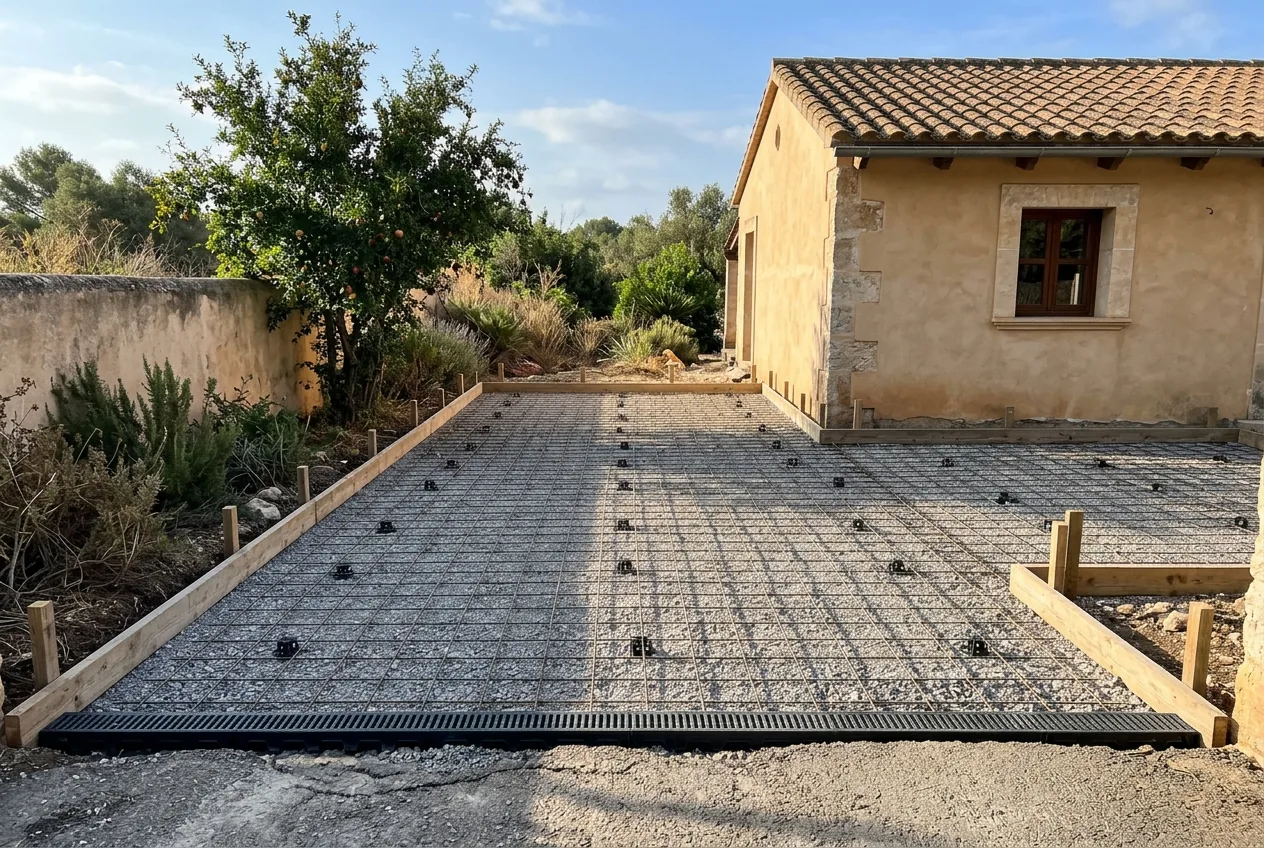
Stamped concrete quotes: what goes into them and how to compare them
The items that make up the price of stamped concrete per square metre in Mallorca, how to read a quote, why cheap ones cut the sub-base or the sealer, and how to compare.
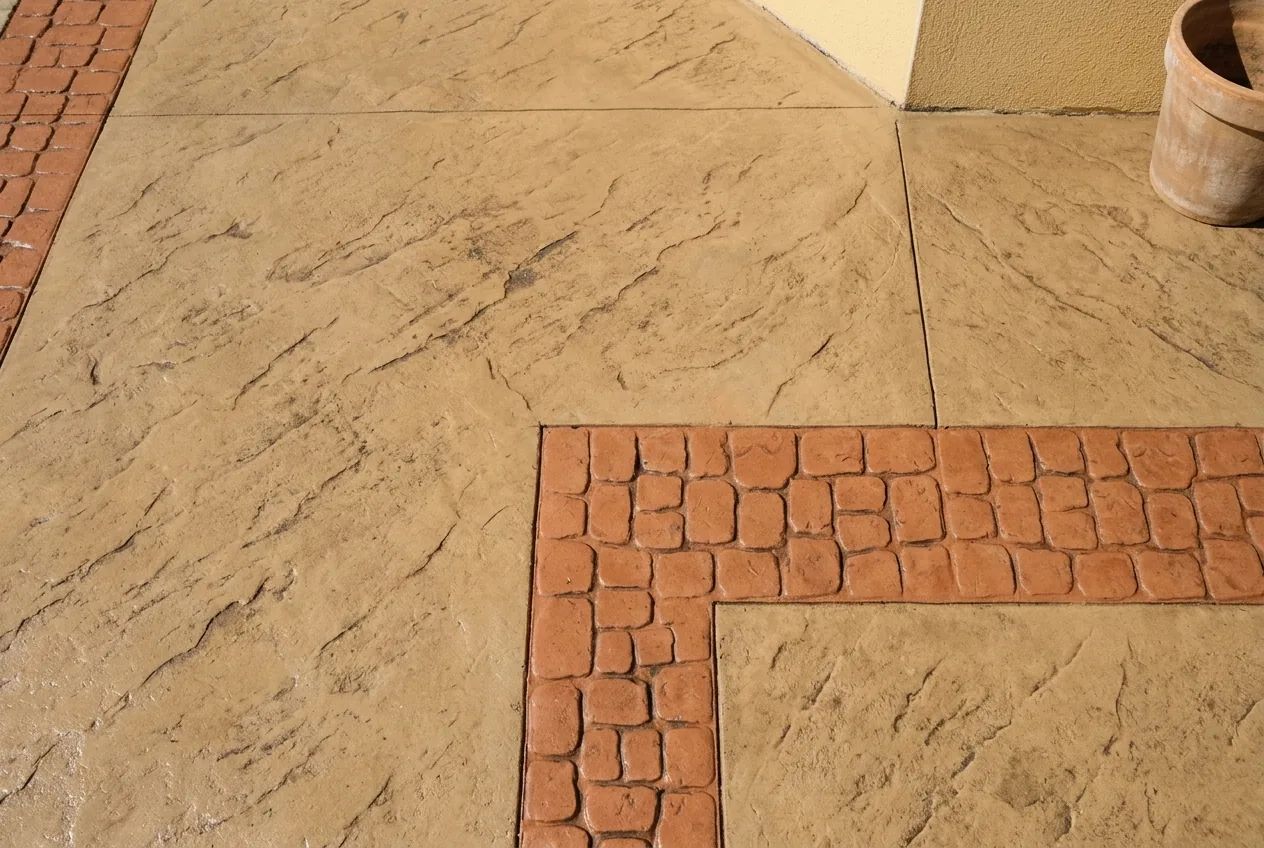
How to choose the colour and pattern of your stamped concrete
How to choose the colour and pattern of stamped concrete: colour and pattern families, how the colour is built up, how it ages in the sun and what suits houses in Mallorca.
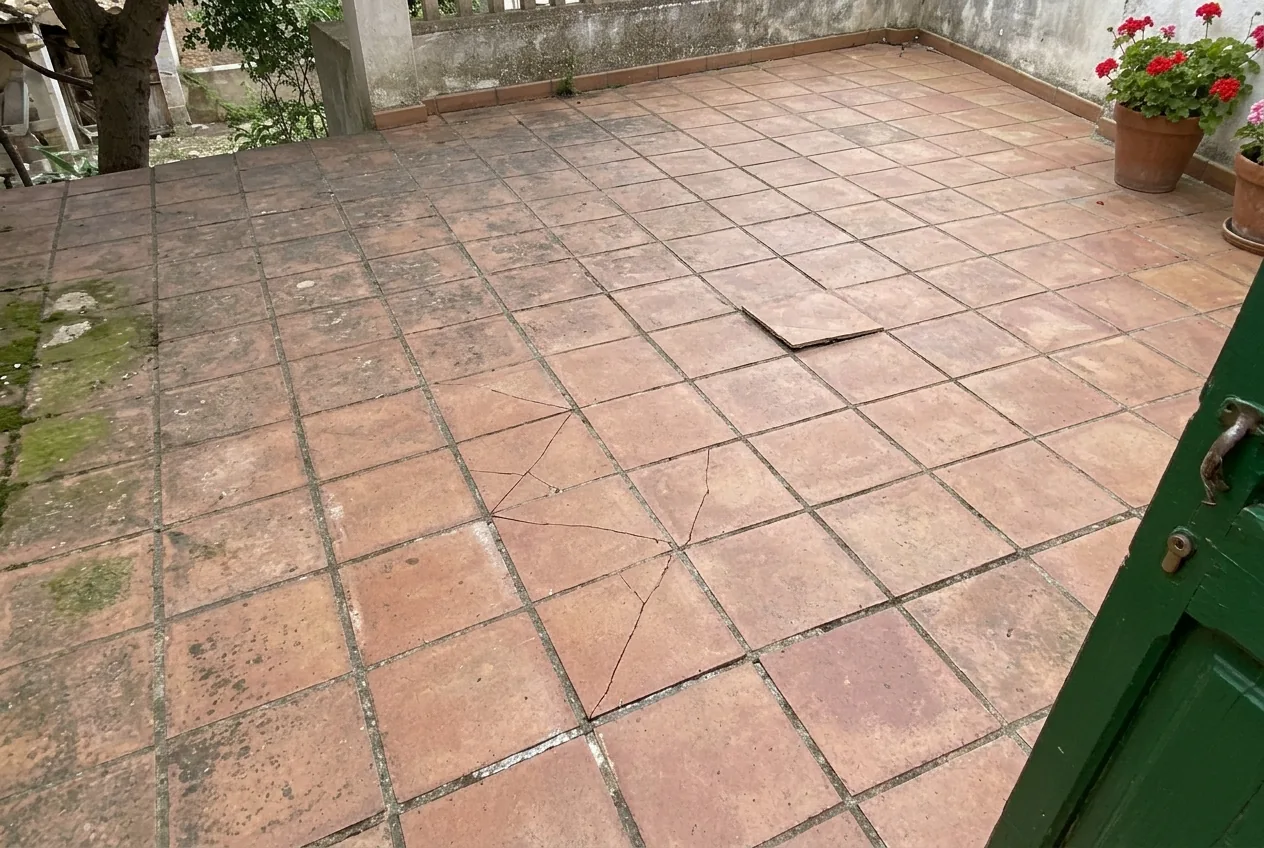
Stamped concrete or tiles for terraces and pools
Stamped concrete versus ceramic and stone tiles on terraces and pool surrounds: joints, slip resistance, heat, cost factors, repairs and lifespan.
Solera Mallorca
Ask for a quote for your stamped concrete
Send us photos of the space, the approximate square metres and the municipality. We tell you which sub-base, thickness and finish suit it and itemise the quote line by line.