Microcement
How to clean and care for microcement
Everyday cleaning of microcement, products that damage the sealer, limescale and stains, kitchens and outdoors, the water test and how often the sealer is renewed.
A microcement floor is cleaned with water and a pH neutral soap, with a microfibre or well wrung mop. The rest of the care is short: no bleach, ammonia, acids or scouring pads, felt pads under furniture, no puddle left standing for hours, and a new coat of sealer when water stops beading. Everything revolves around the polyurethane sealer, the only part that wears.
How to clean a microcement floor
Grit does more harm than dirt. Before mopping, use a dry microfibre mop or a vacuum with a soft brush: dragged along by a wet mop, the grains scratch the sealer like sandpaper. Then warm water with pH neutral soap at the dose on the bottle; too much leaves a film and dulls the sheen. Wring the mop out well: the floor should be damp, not wet. On walls and built-in furniture, use a microfibre cloth. In walkways, a water-based maintenance wax once or twice a year wears away instead of the polyurethane.
Products to avoid, and why
Polyurethane copes with water and soap, not harsh chemicals:
- Bleach and ammonia, common in multi-purpose cleaners: they dry out the sealer and leave it dull and brittle.
- Limescale remover, vinegar, lemon and hydrochloric acid (salfumán): they are acids and attack the polyurethane and, where it is worn, the cement underneath.
- Scouring pads and abrasive powders: they scratch the film.
- Steam cleaners: heat and moisture under pressure can whiten the sealer and push water through a micropore.
- Acetone, solvents and strong degreasers: they dissolve or cloud the polyurethane.
If the label does not say pH neutral, test it first somewhere hidden.
Mallorca's hard water and limescale in the bathroom
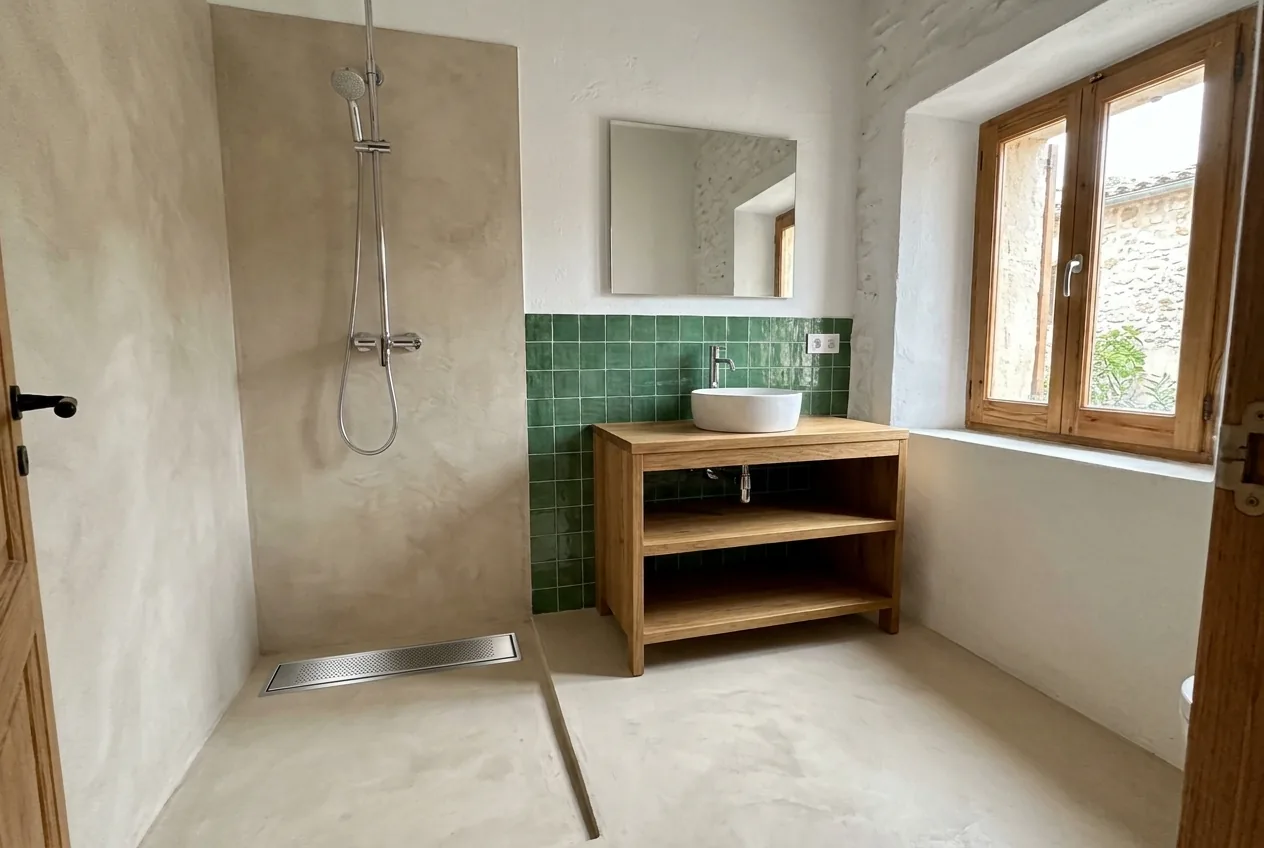
Mallorca's water is hard and leaves a white film in the shower and around the taps. That limescale sits on top of the sealer; the damage comes from removing it with limescale remover or vinegar. A squeegee or a damp cloth after each shower and neutral soap for the weekly clean are enough. If it has built up, neutral soap, warm water and a soft brush, over several passes. Ventilating reduces limescale and mould in the corners. Shower screen silicone should always be neutral cure: acid cure attacks the polyurethane.
Stains: what to use and what to avoid
With a sound sealer, nearly all stains come off with neutral soap if dealt with promptly: what fixes them is time. Blot first with kitchen paper, without rubbing.
| Stain | What to use | What to avoid |
|---|---|---|
| Wine, coffee, juice | Kitchen paper, then neutral soap and warm water | Scouring pads, bleach |
| Oil and grease | Kitchen paper, then a stronger mix of neutral soap | Strong degreasers, ammonia |
| Rust from planters or iron | Move the object, neutral soap, get advice if the mark stays | Acid rust removers, hydrochloric acid |
| Marker or ink | A little alcohol on a cloth, quickly, then rinse | Acetone, thinners |
| Pine resin | Let it harden, plastic spatula, alcohol for any residue | Blades, solvents |
| Mould in the bathroom | Neutral soap, a soft brush and ventilation | Bleach, chlorine cleaners |
If a stain will not come off with neutral soap, do not reach for stronger products: the sealer has probably worn through there, and the answer is a light sanding and a reseal.
Kitchen worktops
A microcement worktop is the surface that works hardest. Always cut on a board, because a blade scratches the polyurethane; put hot pans on a trivet, because direct heat marks the film; wipe up lemon, vinegar, wine or tomato straight away, which are acidic; and do not leave water or wet cloths by the sink. Kitchens and built-in furniture are covered in microcement walls and kitchens.
Furniture, grit and the front door
Sealed microcement does not break up, but it scratches, especially in gloss finishes and dark colours. Felt pads under chairs and tables, checked often; a mat under an office chair with castors; heavy furniture lifted, never dragged. At the entrance, one doormat outside and another inside catch grit from the street and sand from the beach. For the first 7 days, while the polyurethane cures, no dragging and no rugs. More on wear in microcement floors.
Outdoor microcement: pines, salt and pools
Outside it is cleaned the same way; what changes is what lands on it:
- Pines. Damp pine needles release tannins that stain: sweep often, especially in autumn.
- Salt. Near the coast, rinse with fresh water after storms.
- Chlorine. Rinse the pool coping and steps from time to time and check the sealer every season.
- Pressure washer. Low pressure only, fan nozzle, no closer than 30 cm, always moving. Never a pencil jet or a rotary nozzle.
More in the guide to outdoor microcement and in outdoor microcement and pools.
What happens if microcement gets wet
If it is properly sealed, nothing: mopping water, a spilt glass or rain run off and dry. But the sealer repels water; it is not a membrane. A puddle left for hours or days finds a micropore, reaches the mortar and leaves a dark ring. Hence plant pots on saucers with feet, no wet bath mat left down all day and leaks dried at once. In the shower, the real protection is a waterproofing mortar under the microcement, as we explain under microcement bathrooms. Outdoors, the floor needs a fall towards the drain.
How to tell the sealer is worn
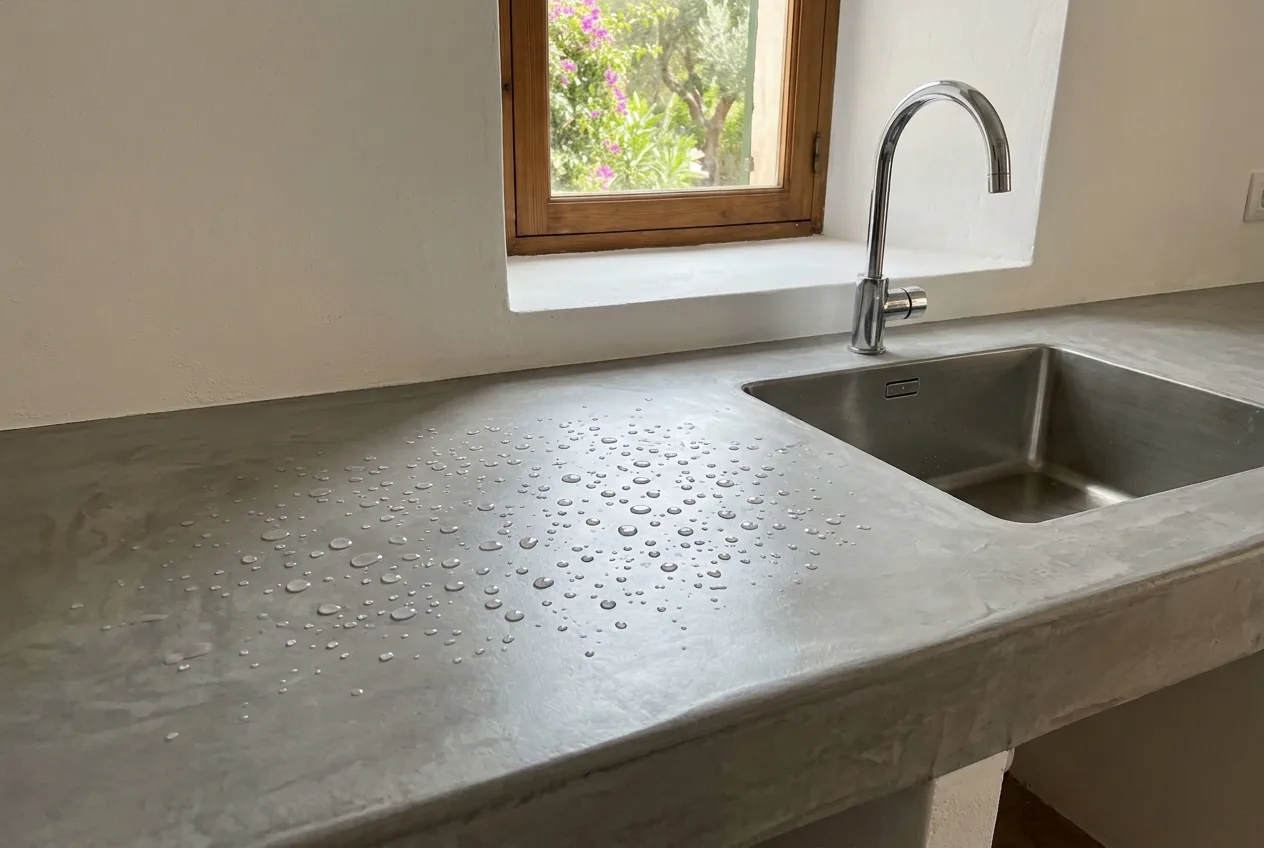
The water test used on stamped concrete works here too: on a clean, dry floor, drip a little water onto a walkway, wait a minute and wipe it off.
- It beads and runs off. The sealer is working.
- It darkens the surface and soaks in. The sealer is spent. It is time to renew it.
- It beads in some places and darkens in others. It has worn where use is heaviest: by the sink, at the entrance, in the shower tray. Those areas are due now.
Other signs: dull patches and stains that no longer come off with neutral soap.
How often the sealer is renewed
Use and sun decide, not the calendar:
- Bedrooms and quiet living rooms: more than a decade.
- Hallways, entrances and kitchens: 5 to 8 years, sooner by the sink.
- Shower tray: 3 to 5 years, with a check every 2 or 3.
- Terrace in the sun: 2 to 4 years; in shade or under a covered porch, 3 to 5.
- Pool surround and seafront: 2 to 3 years.
What renewing involves
The microcement itself is not touched. The surface is cleaned and left to dry, the old polyurethane is lightly sanded and two new coats of a compatible polyurethane go on, in the same sheen; outdoors, an aliphatic polyurethane with a UV filter and anti-slip aggregate where people walk wet. A shower tray is one day's work. You can walk on it after 24 to 48 hours; water and furniture after 7 days. Leave it too long and water gets into the mortar, and the repair is bigger.
When to call a professional
Cleaning, limescale and fresh stains are yours to deal with. It is worth calling an applicator when the water test darkens walkways or the shower tray, when a stain will not come off with neutral soap, when the sealer lifts by the drain or blisters, cracks or a white haze appear underneath it, or when a terrace or pool surround is due for resealing. Renewing means sanding without reaching the mortar and using a polyurethane compatible with the existing one. How we approach it is on the microcement page.