
Stamped concrete restoration and resealing in Mallorca
Stamped concrete that has lost its colour, turned white or is flaking can almost always be recovered without lifting it. We clean, repair, bring back the colour and seal again, and we tell you plainly which parts cannot be fixed.
Stamped concrete is a concrete surface with colour and texture on top, protected by a layer of sealer. The concrete lasts for decades. What ages is the top layer: the sealer, and with it the colour it protects. That is why repairing stamped concrete rarely means lifting it. It means cleaning, repairing what has broken, bringing back the colour and sealing again.
This page explains the four symptoms we see on terraces, driveways and pool areas across Mallorca, why they appear here sooner than elsewhere, what the treatment involves and how often the sealing should be repeated.
The four symptoms and what each one means
Colour faded by the sun
The pigment in stamped concrete sits in the top few millimetres, and the sealer is what gives it depth and protects it from ultraviolet radiation. When the sealer is spent, the colour looks washed out, greyish and flat, especially in full sun. The concrete is fine; it is only missing the layer that made it look good. This is the easiest symptom to resolve and the one that changes the appearance most.
White film or white patches
White or milky stamped concrete usually has one of two causes. The first is moisture trapped under an acrylic sealer: water rose from the sub-base or was left in the pores at sealing, and the sealer turned opaque. The second is efflorescence, salts from the concrete itself that come to the surface with water and crystallise. You can tell them apart because trapped moisture forms veils and clouds, while efflorescence forms a white powder that can be scraped off. Each is treated differently.
Sealer that peels or flakes
When the sealer lifts in flakes or sheets, it is almost always because it was applied too thickly, applied over a damp or dirty floor, or an incompatible product was put over the previous one. Before resealing, everything loose has to come off; a new coat over a sealer that is letting go will let go with it.
Cracks and broken edges
Fine shrinkage cracks, joints that have opened, and chipped edges and steps are damage to the concrete, not the sealer. They are repaired with mortar and resin, given back the texture of the mould and the colour, and then sealed with the rest. A crack that is growing, that has one side higher than the other or that runs across a whole slab is a different matter and is assessed separately at the visit.
Why it happens sooner in Mallorca
- Sun and UV. Many hours of sun a year and high summer radiation break down acrylic sealers faster than inland on the mainland. A south-facing terrace in Llucmajor or Calvià ages before one in shade.
- Salt air. Near the coast, from Andratx to Alcúdia, salt settles, dissolves in the dew and crystallises, attacking the sealer film.
- Torrential autumn rain. Water from the September and October storms gets in through cracks and joints, saturates the sub-base and comes back out through the pores, carrying salts with it.
- Pressure washing with the wrong nozzle. A pencil jet held a few centimetres away cuts the sealer and strips the colour from the surface. It is the most common cause of the striped marks we see on garage approaches.
- The wrong sealer, or badly applied. An interior product, a coat that is too thick or an application on a damp floor turns into white film or flaking within months.
The treatment, step by step
- Controlled pressure cleaning. Pressure washing with a fan nozzle at a constant distance, to remove dirt, algae and loose sealer without damaging the surface. Where the old sealer is poorly bonded, we apply a stripper and remove it entirely. The floor is then left to dry.
- Repair. Cracks, open joints, edges and chips are filled with repair mortar or resin according to their size, and the texture of the mould is pressed into them so they do not show.
- Colour restoration. Where pigment has been lost, we apply a stain or pigmented sealer in the original tone, sampled on the floor itself. If you would rather change the colour, this is the moment.
- Two coats of sealer. Two thin, cross applied coats of solvent-based acrylic, water-based acrylic or polyurethane, depending on exposure and use. On pool copings, steps and ramps we add anti-slip additive to the final coat.
- Curing. 24 hours without foot traffic and 48 to 72 hours without vehicles, somewhat longer in cool or humid weather.
We avoid the middle of the day in summer and never work with rain forecast in the following 24 hours, because the sealer needs a dry floor and a moderate temperature to form a proper film.
How often resealing is needed
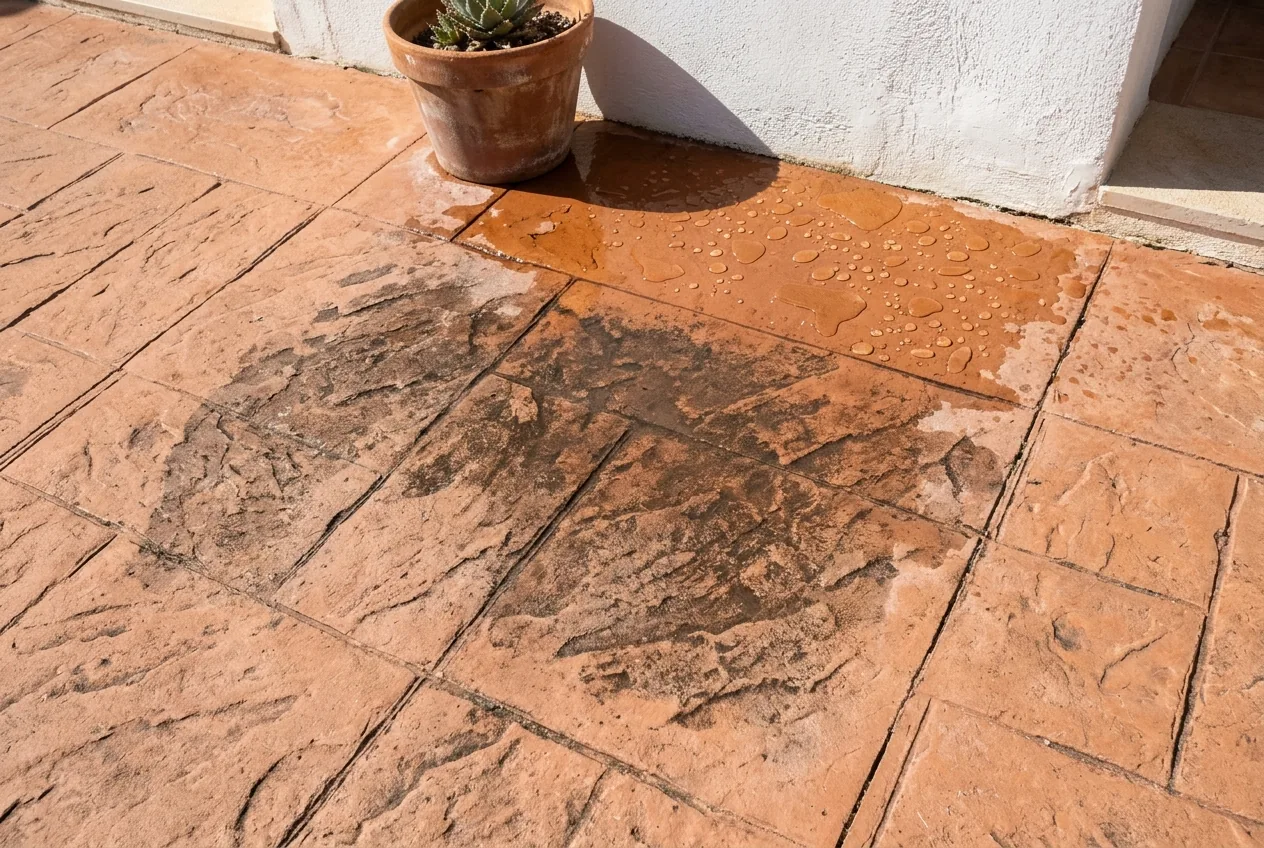
The trade talks about resealing stamped concrete every 2 to 4 years. In Mallorca, what moves the figure is exposure: a pool area in full sun with chlorine is closer to 2 years, a shaded finca track with little traffic can reach 4. The sign to act is when water stops beading on the surface and starts to darken it as it soaks in. Resealing on time is a thin coat over a sound floor; resealing late is a full restoration.
Maintenance plan for communities and villas
For residential communities, property administrators and managers of rental villas, we propose a written maintenance plan: an annual inspection of the surface, controlled pressure cleaning before the season, repair of small defects as they appear and resealing in the year each area is due, on dates agreed outside the occupancy season. The plan breaks the work into short, predictable visits and stops a community in Marratxí or a villa in Pollença reaching full restoration because two cycles were missed. Ask for a quote and we send a proposal fitted to your surfaces.
What cannot be fixed
We are straightforward at the visit. Stamped concrete that was badly built, too thin, without mesh or on a sub-base that has sunk can crack slab by slab, and there resealing solves nothing: the affected slab is cut out and poured again. Widespread loss of the colour layer, with aggregate showing over large areas, can be covered with a new imprinted overlay but cannot be recovered with sealer. And a floor that has been painted with plastic paint will need to be stripped completely before any treatment. If your case is one of these we tell you before quoting, and we point you to the option that does work, including new stamped concrete over the affected area.
Solera Mallorca
How we work
- 01
Diagnosis
We look at the floor, its exposure and the sealer it has, and tell you what can be recovered.
- 02
Cleaning
Controlled pressure washing, stripper where the old sealer is loose, and drying.
- 03
Repair
Cracks, joints, broken edges and chips, rebuilt with the texture of the mould.
- 04
Colour
Restoration of the original tone or a change of colour with pigmented sealer.
- 05
Sealing
Two thin coats, with anti-slip additive on pool copings and ramps.
- 06
Curing and handover
24 hours without foot traffic, and a guide date for the next resealing.
More on restoration and resealing
Resealing
Acrylic or polyurethane sealer, two thin coats, anti-slip additive and the drying times that are really needed.
Crack repair
Hairline cracks, open joints, broken edges and steps, repaired with the texture and colour of the original mould.
Pressure washing
What a pressure washer does to the sealer on stamped concrete, how to clean without stripping it, and why a clean floor can still need resealing.
FAQ
Questions
Something else? Ask us when you request a quote.
Why has my stamped concrete turned white?
Almost always because of moisture trapped under the acrylic sealer, which turns opaque, or because of efflorescence, salts from the concrete that come to the surface with water and crystallise. The first forms veils and clouds; the second a white powder that can be scraped off. Both can be treated, but with different methods.
Can it be restored without lifting the floor?
Yes, in the great majority of cases. The concrete is sound; what has degraded is the sealer and the surface colour, and both are recovered in place with cleaning, repair, pigment and two coats of new sealer.
How long does a stamped concrete restoration take?
A medium sized terrace or driveway takes two or three working days: a day of cleaning and repairs, drying, and one or two days of colour and sealing. From the last coat, 24 hours without foot traffic and 48 to 72 hours without vehicles.
How often does stamped concrete need resealing in Mallorca?
Between 2 and 4 years. Pool areas and terraces in full sun or by the sea are at the low end of the range; shaded paths with little traffic at the high end. The warning is when water stops running off and starts to darken the floor.
Can the colour be changed during restoration?
Yes. With a pigmented sealer or a stain the original tone can be recovered or a different one chosen, normally within the same range or darker. We make a sample on the floor itself before applying.
What does driveway restoration involve?
On a stamped concrete driveway it is the same sequence as any restoration: controlled pressure cleaning, stripping loose sealer, repairing cracks and broken edges, restoring the colour and two coats of sealer, with polyurethane where hot tyres and oil are the main wear. The driveway stays closed to cars for 48 to 72 hours after the last coat. The page on pressure washing explains why the cleaning step decides how long the result lasts.
Can I clean stamped concrete with a domestic pressure washer?
Yes, with a fan nozzle, at a distance of 30 centimetres or more and without dwelling on one spot. A pencil or rotary jet close to the floor cuts the sealer and strips the colour, and is one of the most common causes of striped marks.
Guides
Related guides
How to seal stamped concrete and how often to reseal it
The resealing cycle for stamped concrete in Mallorca, the signs that it is due, the right steps and the mistakes that ruin a coat of sealer.

White patches and grey areas on stamped concrete
Four different causes make stamped concrete look white or grey, each with its own diagnostic test and its own solution.
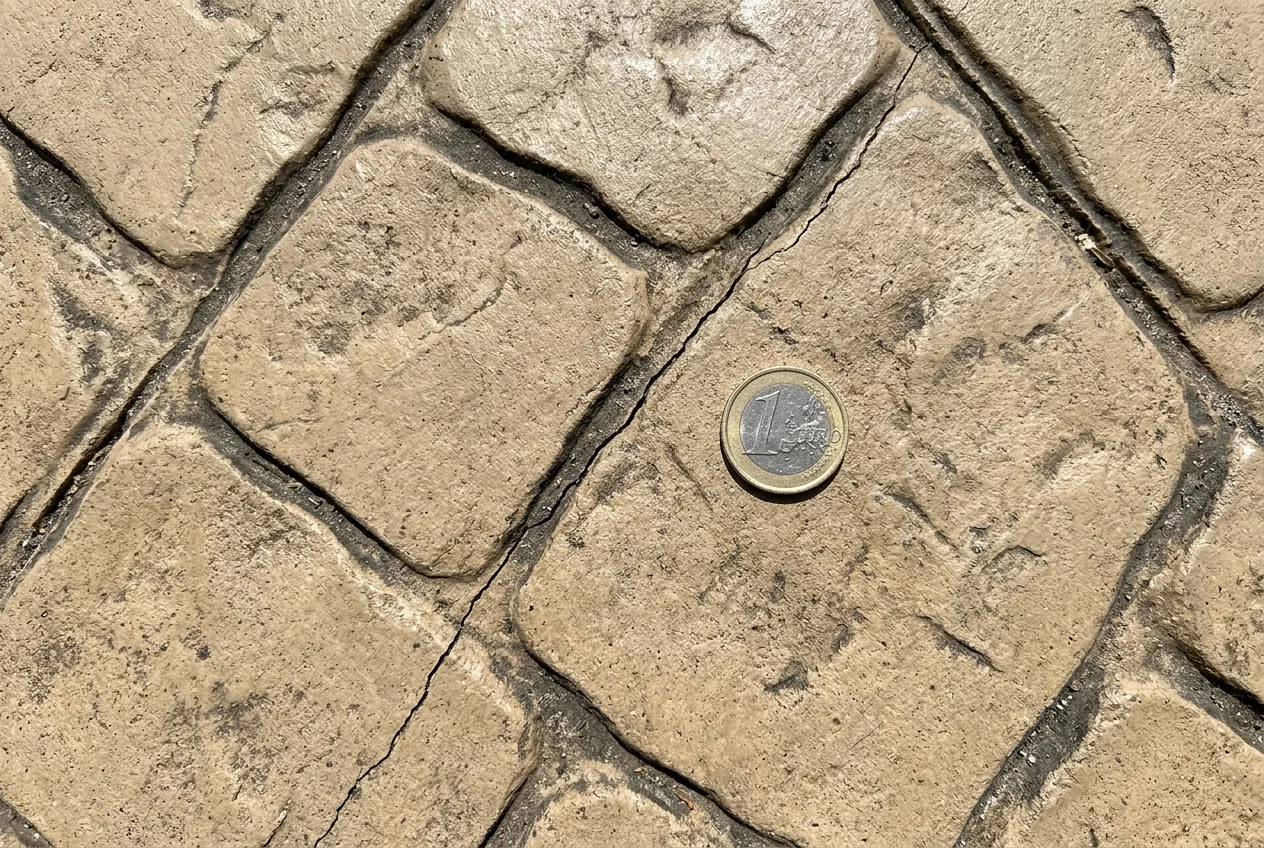
Cracks in stamped concrete: why they appear and how they are treated
Which cracks appear in stamped concrete, what causes them, how they are repaired and disguised, and when a section has to be replaced.
Solera Mallorca
Tell us how your floor looks
A few photos of the surface, of the most damaged area and of the part that has kept best are enough for us to advise you and prepare a quote.