Restoration
Water-based or solvent-based sealer for stamped concrete
What separates solvent-based acrylic, water-based acrylic and polyurethane sealers for stamped concrete, and when each one makes sense.

For most outdoor stamped concrete, solvent-based acrylic sealer is still the standard: it brings out the colour, can be recoated over itself and stands up well to the sun. Water-based sealer makes sense where the smell is a problem or where a matt, breathable finish is wanted. Polyurethane is kept for high-wear areas such as ramps and driveways, in exchange for a more demanding application. The choice depends on what was on the floor before, where the floor is and what finish you want.
The three families
Solvent-based acrylic
An acrylic polymer carried in an organic solvent, usually xylene. As the solvent evaporates, the polymer forms a film of 50 to 100 microns that soaks into the surface pores of the concrete. It gives the "wet-look" people associate with freshly laid stamped concrete: it darkens and saturates the colour and adds gloss or satin depending on the product.
Its great practical advantage is that each new coat softens the one before. That is why it can be resealed without stripping, as long as the old coat is well bonded. Its great drawback is the smell during application and for the 24 hours after, and the ventilation it needs in enclosed courtyards.
Water-based acrylic
The same type of polymer, but emulsified in water. It barely smells, tools are cleaned with water and it is more breathable: it lets water vapour out of the concrete, which reduces the risk of white veils on floors with moisture underneath. The finish is matt or soft satin; it brings out the colour less than the solvent version.
The trade-off is in adhesion to earlier coats and in toughness. It does not soften an old solvent-based sealer, so it may not grip on top of one. And in general it forms a slightly softer film, which wears sooner where there are wheels or sand.
Polyurethane
Polyurethanes for outdoor floors are aliphatic, almost always two-component, and form a film that is harder and more resistant to abrasion, oils and chemicals than any acrylic. They do not yellow and they stand up to wheels turning on a driveway. They can be clear gloss, satin or matt.
In return they demand a perfectly dry, well prepared surface. They do not fuse with what is underneath, so over an old acrylic you have to strip or prime, depending on the system. Patch repairs are difficult because the patches show. And once the two components are mixed, the batch has to be used within one or two hours.
Comparison
| Criterion | Solvent-based acrylic | Water-based acrylic | Aliphatic polyurethane |
|---|---|---|---|
| Finish | Wet-look, satin or gloss | Matt or soft satin | Gloss, satin or matt |
| Colour enhancement | High | Medium | High |
| Lifespan outdoors in sun | 2 to 4 years | 2 to 3 years | 4 to 6 years |
| Breathability | Medium | High | Low |
| Smell during application | Strong, 24 hours | Very low | Medium |
| Over an old solvent-based coat | Yes, fuses with it | Doubtful, test first | Not without stripping or priming |
| Over an old water-based coat | Yes, after cleaning | Yes | Not without preparation |
| Resistance to wheels and oils | Medium | Medium to low | High |
| Slipperiness when wet | High in gloss, needs additive | Medium | High in gloss, needs additive |
| Patch repair | Easy | Easy | Difficult |
What can go over what
This is the question that prevents the most problems. The rule of thumb:
- Solvent over solvent: the safest combination. The new coat reactivates the old one.
- Solvent over water: works if the water-based coat is clean and well bonded.
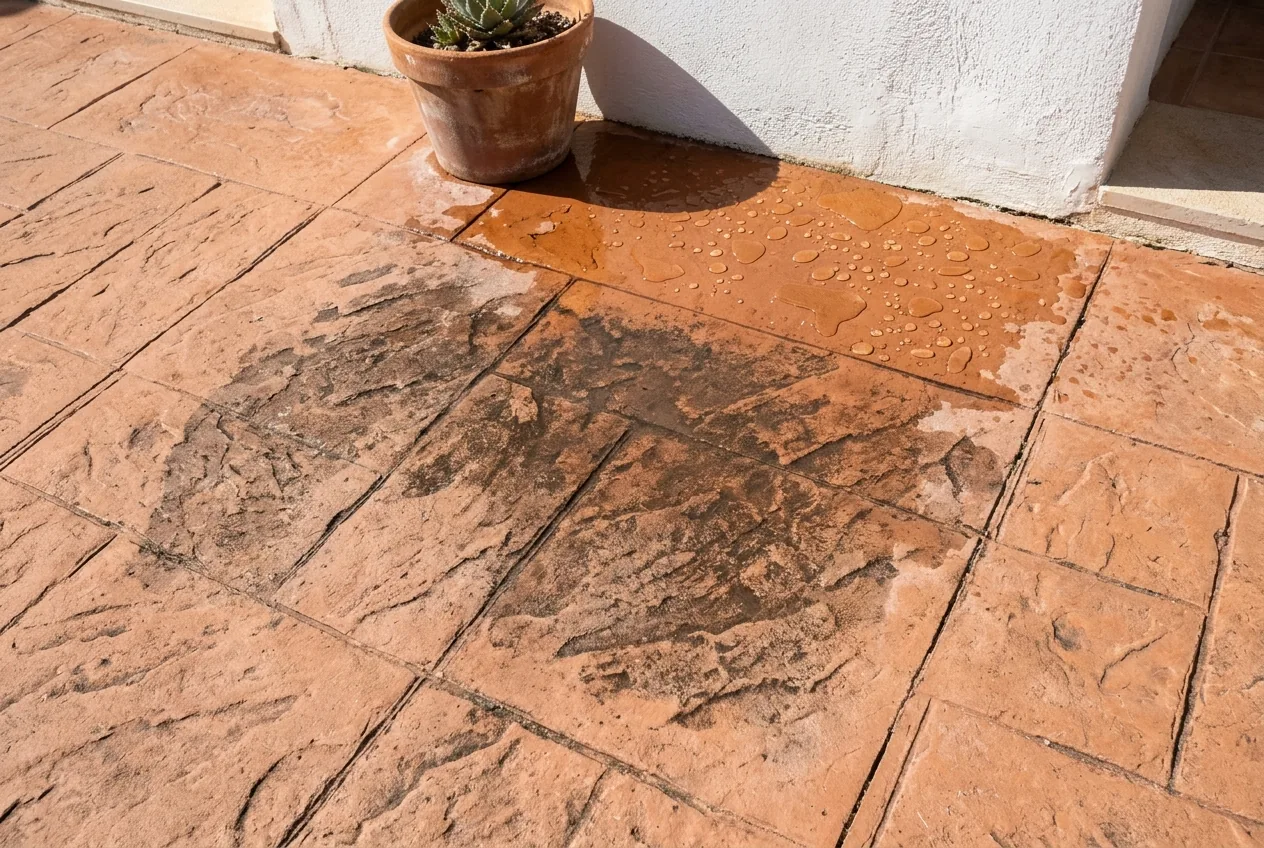
- Water over solvent: risky. The water-based film does not penetrate the one below and can peel off in sheets in the first summer. If you want to switch to water-based, the old coat has to be stripped or, at the very least, an adhesion test done on one square metre and left for two weeks.
- Polyurethane over acrylic: only after stripping, or with the primer specified by the system's manufacturer.
- Acrylic over polyurethane: it does not grip. Polyurethane is too closed.
If you do not know which sealer your floor has, there is a simple test: dampen a cloth with xylene thinner and rub it on an out-of-the-way corner. If the surface turns sticky and the cloth picks up colour, it is solvent-based acrylic. If nothing happens, it is water-based or polyurethane.
Slip resistance: the point people forget
Any sealer that forms a film reduces the roughness of the concrete. On a dry terrace it does not matter; around a pool, on a ramp or on a shaded path with algae, it does. The answer is an anti-slip additive, usually polymer microspheres, mixed into the final coat, which leaves a fine texture you do not notice by eye. Matt finishes are a little less slippery than gloss. The guide on non-slip pool surrounds goes into the slip classes the regulations require.
Which suits each case
Terrace or footpath in the sun: solvent-based acrylic, two thin coats, satin. It gives the best balance of colour enhancement, lifespan and ease of resealing every 2 to 4 years. If the floor already has a solvent-based sealer, there is no reason to change.
Enclosed courtyard, neighbours close by, house occupied: water-based acrylic. The smell of solvent in a Palma courtyard without cross-ventilation is a real problem for a whole day.
Floor with moisture underneath (no membrane under the slab, ground that drains poorly, areas where white veils have appeared before): water-based acrylic, for its breathability.
Driveway, garage ramp, turning area: aliphatic polyurethane, or at least a high-hardness solvent-based acrylic with more frequent resealing where the wheels turn.
Pool surround: solvent or water-based acrylic in a matt or satin finish, always with anti-slip additive in the final coat.
Lost colour: all three families come in pigmented versions. A pigmented sealer brings back the tone of a faded floor, with the limitation that it covers the shading of the release agent and flattens the pattern somewhat.
When to call a professional
Maintenance resealing with the same sealer family the floor already has is manageable for a patient owner. It is worth calling in a company when you need to switch families (from solvent to water-based or to polyurethane), because the stripping and the adhesion test are the real work; when two-component polyurethane has to go down over more than a few dozen square metres, because of the pot life of the mix; when the colour has gone and a pigmented sealer has to be chosen and applied evenly; or when the floor has white veils whose cause is not clear. The page on resealing stamped concrete explains how we choose the sealer on each job.