Stamped concrete
Stamped or polished concrete: which to choose
Stamped and polished concrete compared on terraces, pool surrounds, driveways and interiors: looks, grip, heat, maintenance and repairs.
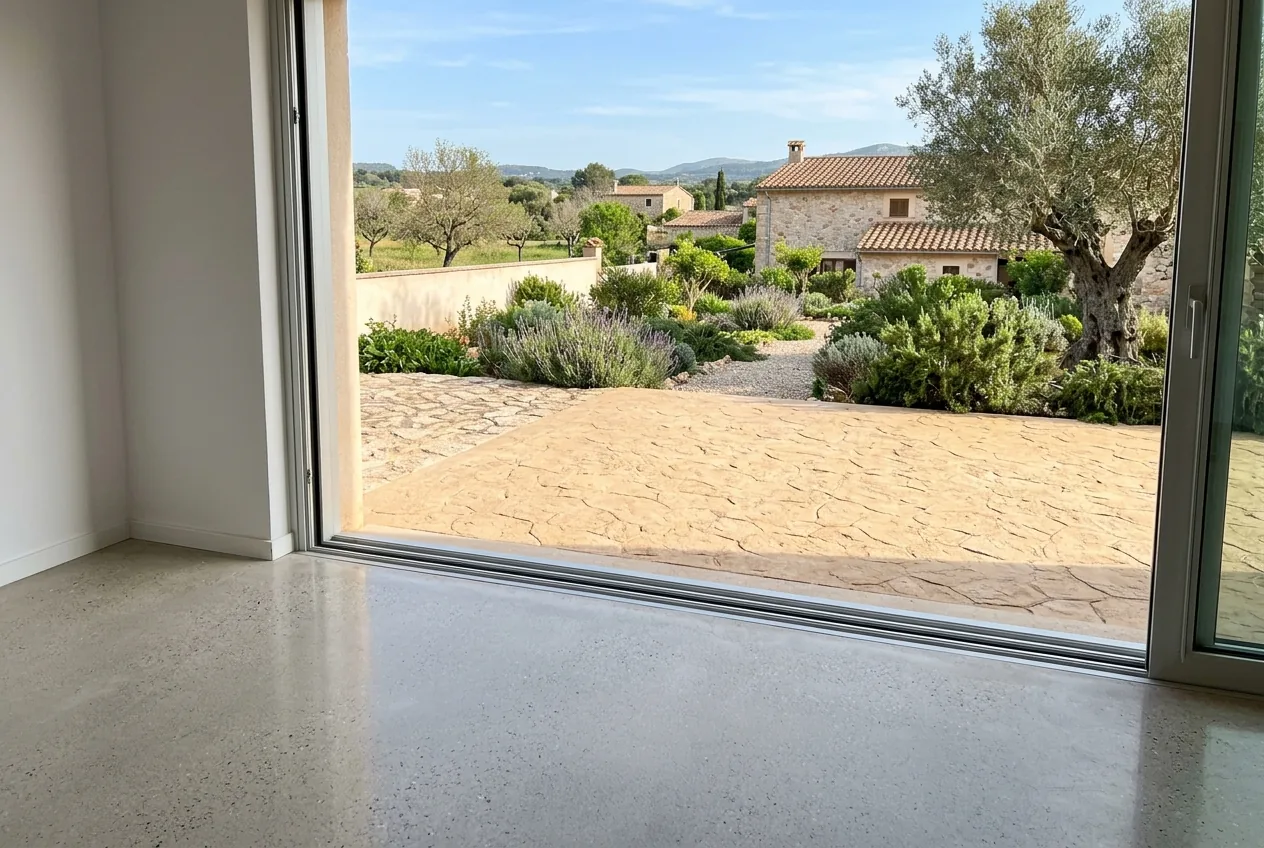
For an outdoor terrace, pool surround or path, stamped concrete is usually the more practical choice: it has texture, is not slippery when wet and hides cracks and repairs in the pattern. Polished concrete wins indoors, in garages and in warehouses, where its smooth surface is easy to clean and a continuous look is the point. Neither is better than the other in the abstract; each one fails where the other succeeds, and it is worth choosing area by area.
What each one is
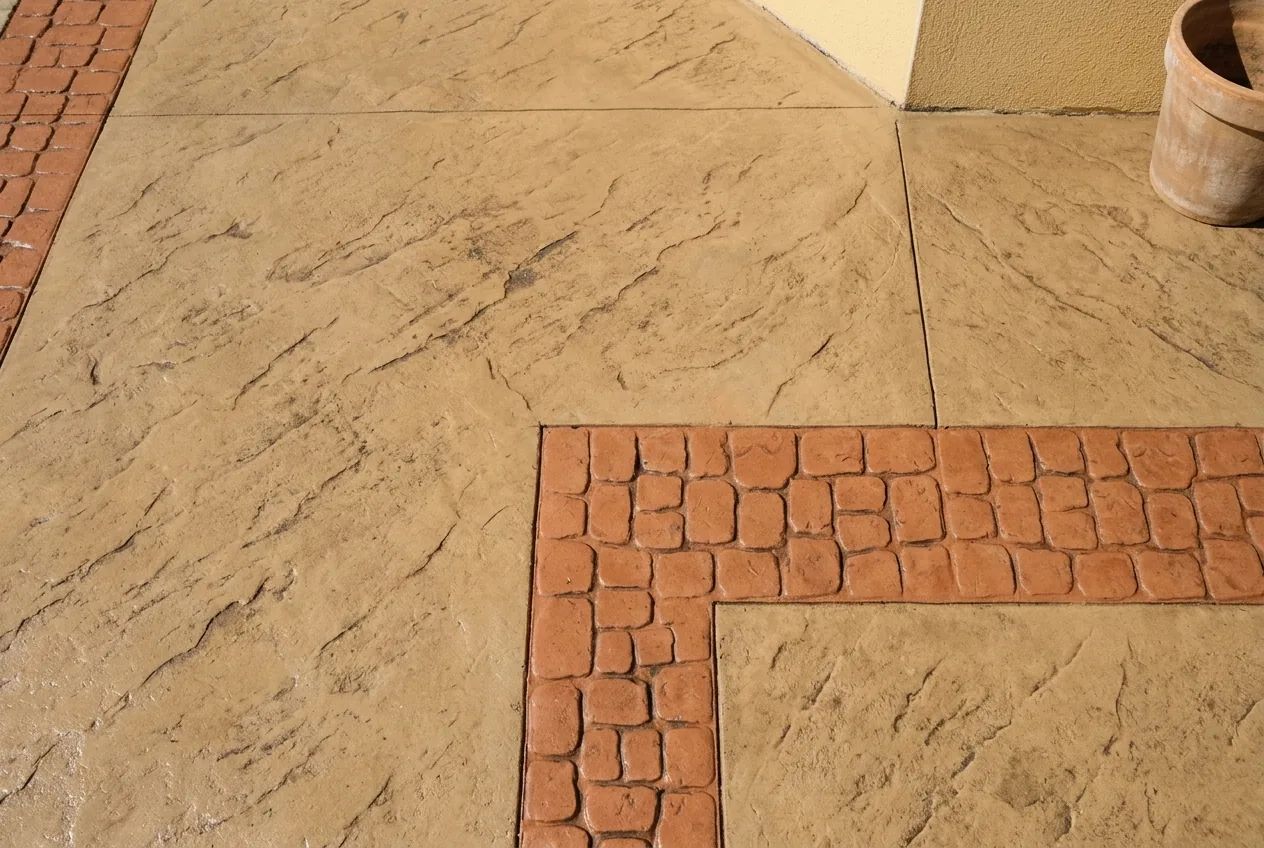
Stamped concrete (hormigón impreso in Spanish) is a concrete slab over which, while it is still fresh, a colour hardener is broadcast and polyurethane moulds are pressed in, leaving the texture of stone, cobbles, timber or slabs. It is then cut into joints, the release agent is washed off and it is sealed. The result is a continuous floor with relief and colour.
Polished concrete is used for two different finishes that are often confused. Outdoors it almost always means power-floated concrete: the slab is smoothed mechanically while fresh, sometimes with a quartz dry-shake that hardens it, leaving a smooth grey or coloured surface that is then sealed. Indoors the term also covers diamond-polished concrete: a cured slab that is ground and polished by machine to a stone-like sheen and treated with a lithium densifier. Both versions are smooth, and that is what sets them apart from stamped concrete outdoors.
Comparison
| Criterion | Stamped concrete | Polished or power-floated concrete |
|---|---|---|
| Appearance | Imitates stone, cobbles, timber; rustic or modern depending on the mould | Smooth, continuous, industrial or minimalist |
| Grip when wet | High thanks to the texture; with anti-slip additive in the sealer it reaches class 3 | Low; outdoors it needs a rough finish or an anti-slip treatment |
| Heat underfoot | Depends on colour; light shades stay walkable | The same, but the smooth surface concentrates more heat to the touch |
| Cleaning | The texture holds some dust and pine needles; cleaned with water at moderate pressure | Very easy; swept and mopped like an indoor floor |
| Maintenance | Resealing every 2 to 4 years | Resealing every 2 to 4 years outdoors; indoors, polished with lithium, almost none |
| Cracks | Hidden in the joints of the pattern | Any crack shows on the smooth surface |
| Repairs | Disguised with colour and texture | Hard to disguise; the patch shows |
| Usual thickness | 8 to 10 cm for foot traffic, 12 to 15 cm for vehicles | The same |
| Interiors | Unusual | Common, diamond polished |
| Driveways | Common, with a cobble or stone mould | Common, power-floated with quartz |
Terraces and gardens
Stamped concrete has the advantage of texture and pattern. It comes in sand and ochre tones that go with Santanyí stone and the marés, the local sandstone of Mallorcan houses, and its roughness prevents slips on wet pine needles in autumn. Its drawback is that the texture collects limestone dust in the hollows of the mould and needs cleaning with water at moderate pressure once or twice a year.
Smooth power-floated concrete on a terrace gives a more contemporary look, the one seen on new villas in Son Vida or Andratx. It works if the terrace is covered or drains very well, because wet and in shade, with a little algae, it is slippery. It can be given a fine broom texture, which solves the grip but changes the look.
Pool surrounds
Here the balance tips clearly towards stamped concrete, or towards power-floated concrete with a pronounced texture. The Spanish building code (Código Técnico de la Edificación) requires slip class 3 in pool areas for public use, and smooth polished concrete does not reach it without treatment. Stamped concrete with a stone or slate mould and anti-slip additive in the sealer does. On top of that, a pool surround gets chlorine or salt, water every day and bare feet: stamped concrete in a light shade stays walkable and hides splashes. The guide on non-slip pool surrounds compares the options in more detail.
Driveways and paths
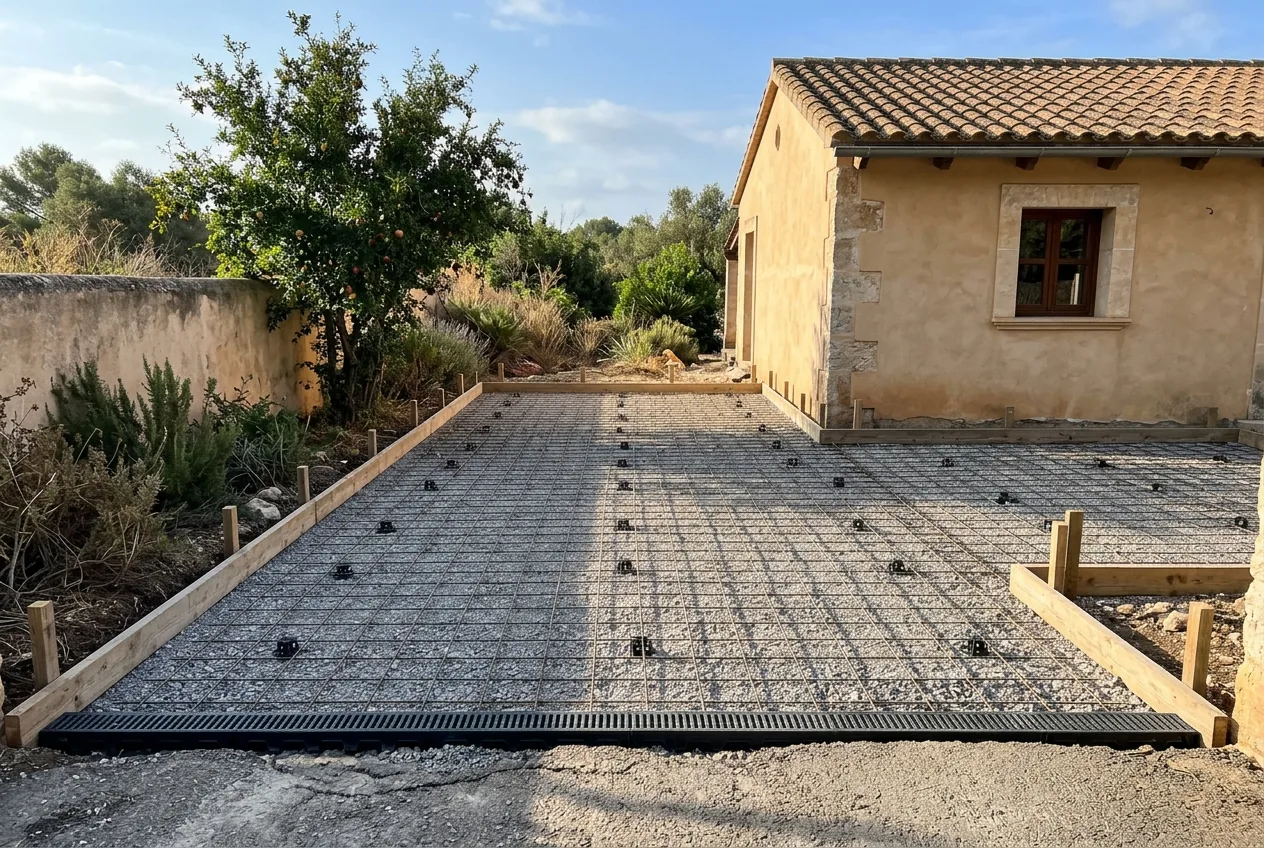
Both work if the thickness and sub-base are right: 12 to 15 cm on compacted aggregate, with mesh or fibres. Stamped concrete with a cobble or stone mould hides tyre marks in the pattern and cracks in the joints, which is why it is the usual choice for villa driveways and finca tracks. Power-floated concrete with quartz is harder and easier to sweep; it is the choice for car parks, warehouses and garages. On a sloping ramp, power-floated concrete needs a grooved finish so that the car does not slide in the wet.
Interiors
Diamond-polished concrete is an indoor floor in its own right: smooth, with no visible joints apart from the shrinkage joints, a stone-like sheen and almost no maintenance. Stamped concrete indoors is rare, because the texture gets in the way of furniture and cleaning. If what you want is a continuous indoor floor over an existing one, without lifting anything, the answer is usually microcement, which is applied 2 to 3 mm thick over the existing tiles.
Cracks and repairs, the real difference
This is the criterion least considered when choosing and the one most noticed after ten years. Both concretes crack in the same way, because they are the same material; the difference is where it shows. In stamped concrete, the joints are cut along the lines of the mould and hairline cracks are lost in the texture. In polished concrete, every line is drawn on a smooth surface, and a repair, however well done, leaves a patch of a different tone. If the ground is clay or there are trees nearby, this matters.
Cost
There is no fixed rule on which is cheaper. Stamped concrete adds colour hardener, moulds, release agent and sealer, and needs more labour on the day of the pour. Power-floated concrete with quartz saves on that, but diamond polishing indoors adds several machine passes and the lithium treatment. The sub-base, the thickness and access weigh more in the total than the finish. The guide on what sets the price of stamped concrete per m² breaks down each item.
When to call a professional
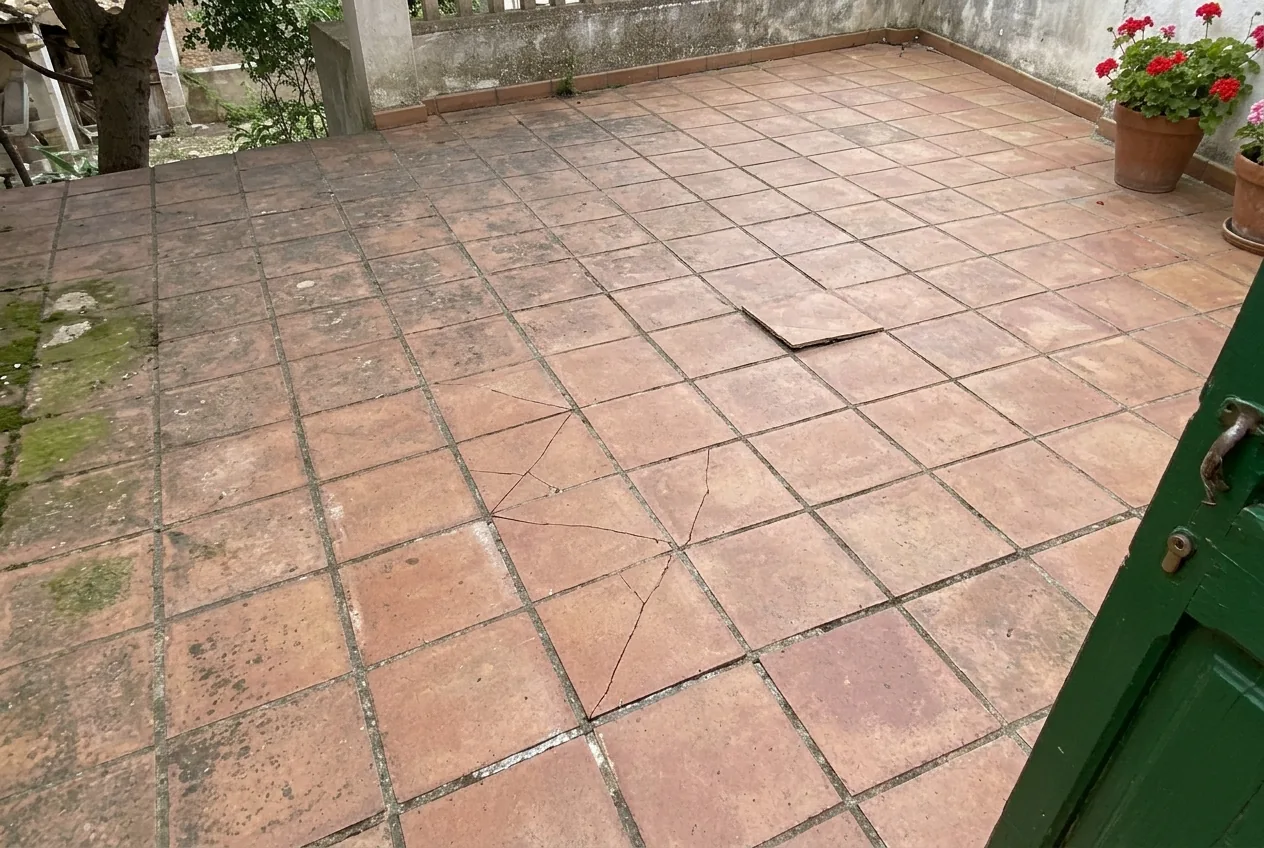
Neither is a weekend job: both need a compacted sub-base, a continuous pour of ready-mixed concrete, joints cut on time and proper sealing. The choice between them is best made with someone who sees the ground, the orientation, the shade and the intended use. If slip resistance is a concern, ask for the slip class of the finished surface. If there is an old floor worth keeping, the first question is whether it can be restored rather than replaced. The pages on stamped concrete for terraces and pool surrounds and on driveways and paths explain how each case is approached.